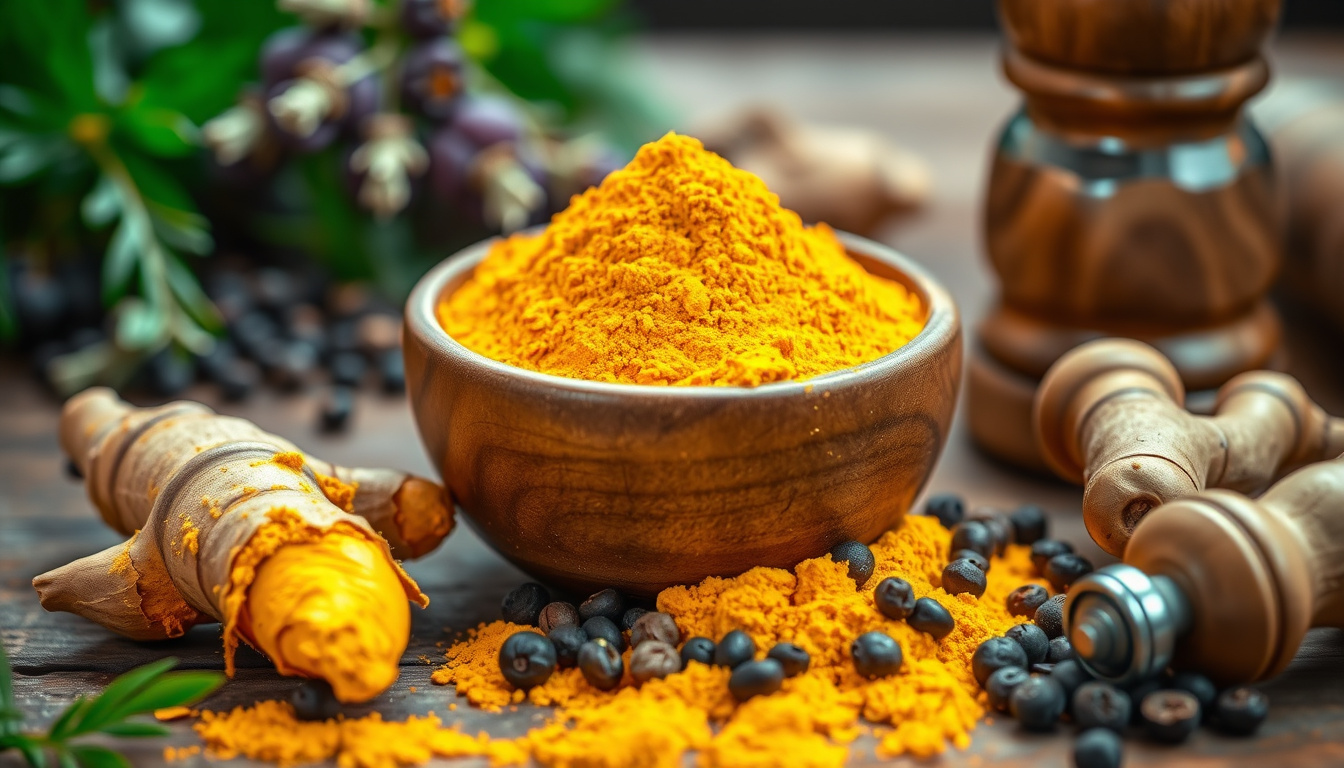

You’ve probably seen turmeric lattes and “golden milk” recipes all over social media, but the real secret behind turmeric’s health punch isn’t the spice alone — it’s the black pepper that often sits right next to it. That simple pairing is backed by real science: a compound in black pepper called piperine can boost your body’s absorption of turmeric’s active ingredient, curcumin, by up to 2000% (NutritionFacts.org (nonprofit science resource)). This guide walks through the proven benefits, proper dosage, who should be cautious, and how the duo interacts with medications like Mounjaro — so you can decide if it’s right for you.
Active compound in turmeric: Curcumin (2–5% of turmeric by weight) ·
Absorption enhancer in black pepper: Piperine increases curcumin absorption by up to 2000% ·
Daily curcumin dose range: 500–2000 mg in studies ·
Historical use in Ayurveda: Over 4,000 years
Quick snapshot
- Curcumin blocks inflammatory pathways (Healthline (trusted health publisher))
- May reduce arthritis pain and swelling (Harvard Health (medical research arm))
- Neutralizes free radicals (Healthline (trusted health publisher))
- Supports cellular health (PMC Study (peer-reviewed research))
- Stimulates bile production (Healthline (trusted health publisher))
- May relieve bloating (Harvard Health (medical research arm))
- Improves endothelial function (Healthline (trusted health publisher))
- May lower LDL cholesterol (PMC Study (peer-reviewed research))
Five key facts capture the core of the turmeric–black pepper synergy — each backed by clinical or regulatory data.
| Fact | Value |
|---|---|
| Active compound in turmeric | Curcumin (diferuloylmethane) (Harvard Health (medical research arm)) |
| Active compound in black pepper | Piperine (Healthline (trusted health publisher)) |
| Absorption boost from piperine | Up to 2000% increase in curcumin bioavailability (NutritionFacts.org (nonprofit science resource)) |
| Curcumin content in turmeric | Typically 2–5% by weight (Harvard Health (medical research arm)) |
| Common supplement form | Standardized curcumin extract (95% curcuminoids) with piperine (GoodRx (clinical pharmacy resource)) |
What are the benefits of taking turmeric with black pepper?
Anti-inflammatory and antioxidant effects
- Curcumin blocks NF-kB, a protein complex that drives inflammation (Healthline trusted health publisher).
- Piperine enhances curcumin’s bioavailability, allowing more of the compound to reach tissues (NutritionFacts.org nonprofit science resource).
- A 2024 study found that adding black pepper and turmeric to breakfast reduced postprandial glycemia and hunger (PMC Study (peer-reviewed research)).
For people managing chronic low-grade inflammation, combining turmeric with black pepper may amplify the anti-inflammatory effect without requiring high doses of either spice — a practical advantage over single-spice regimens.
Joint and muscle health
- The Arthritis Foundation recommends 500 mg of curcumin extract twice daily for joint pain relief (Harvard Health medical research arm citing Arthritis Foundation guidelines).
- Clinical studies show improvement in arthritis symptoms with curcumin-piperine combinations (Healthline trusted health publisher).
Digestive support
- Curcumin stimulates bile production, which aids fat digestion (Healthline trusted health publisher).
- Black pepper may reduce bloating by enhancing gastric enzyme activity (PMC Study (peer-reviewed research)).
The implication: the combination offers broad support for inflammation, joint comfort, and digestion, but the strength of evidence varies — strongest for inflammation and weakest for digestive claims, which rely on smaller studies.
How much turmeric and black pepper should you take daily?
Typical supplement dosages
- Clinical studies typically use 500–2000 mg of curcumin per day (GoodRx clinical pharmacy resource).
- For arthritis, the Arthritis Foundation suggests 500 mg of standardized curcumin extract twice daily (Harvard Health medical research arm).
Black pepper (piperine) amounts
- To boost absorption, supplements often include 5–20 mg of piperine per dose (Healthline trusted health publisher).
- Just 1/20th teaspoon of black pepper can significantly raise curcumin blood levels (NutritionFacts.org nonprofit science resource).
Safety upper limits
- The FDA classifies curcumin as generally recognized as safe (GRAS) up to 8 grams per day (Harvard Health medical research arm).
- High doses may cause abdominal pain, nausea, or diarrhea (Harvard Health medical research arm).
The trade-off: effective doses for inflammation (500–2000 mg) fall well below toxic thresholds, but individual tolerance varies — start low and increase gradually to avoid GI upset.
Who should not take turmeric and black pepper?
Gallbladder disease
- Turmeric can stimulate bile production, which may worsen gallstones or bile duct obstruction (Healthline trusted health publisher).
Bleeding disorders and surgery
- Curcumin may slow blood clotting (Healthline trusted health publisher).
- Avoid high doses at least two weeks before scheduled surgery (Harvard Health medical research arm).
Pregnancy and breastfeeding
- High doses of turmeric may stimulate uterine contractions (Healthline trusted health publisher).
- Pregnant women should avoid concentrated extracts; culinary amounts are considered safe (Harvard Health medical research arm).
Stomach ulcers
- Curcumin can irritate the stomach lining in sensitive individuals (Harvard Health medical research arm).
The pattern: the risks are concentrated in people with gallbladder problems, bleeding tendencies, or digestive sensitivity. For most healthy adults, moderate doses pose little danger.
Is it okay to take turmeric with Mounjaro?
Potential interaction with Mounjaro (glucose control)
- No direct clinical evidence of an interaction exists (Healthline trusted health publisher).
- Theoretically, turmeric may lower blood sugar, potentially adding to Mounjaro’s glucose-lowering effect (GoodRx clinical pharmacy resource).
Recommendation from Welsh Medicines Advice Service
- The Welsh Medicines Advice Service advises caution with turmeric supplements alongside diabetes medications, recommending blood sugar monitoring and a consultation with a healthcare provider (Healthline reporting Welsh Medicines Advice Service).
For people on Mounjaro, the risk of hypoglycemia makes the addition of turmeric supplements a decision best made with a doctor’s input — especially at doses above 500 mg of curcumin per day.
The catch: while the interaction is only theoretical, the stakes — potential hypoglycemia — justify a conservative approach. Always inform your prescriber before adding turmeric to a Mounjaro regimen.
What happens if I drink turmeric and black pepper every day?
Short-term effects
- Daily consumption may lower inflammation markers (Healthline trusted health publisher).
- A study found that a breakfast with black pepper and turmeric reduced hunger after meals (PMC Study (peer-reviewed research)).
Long-term safety and benefits
- No major long-term risks at moderate doses (up to 2000 mg curcumin per day) (Harvard Health medical research arm).
- Some people report improved joint mobility after weeks of consistent use (Healthline trusted health publisher).
Possible adverse effects
- Digestive irritation, including bloating or diarrhea, occurs in some individuals — especially at high doses (Harvard Health medical research arm).
- Absorption of curcumin builds over time when taken with piperine (NutritionFacts.org nonprofit science resource).
The evidence supports moderate daily use for most adults, with attention to personal tolerance.
Confirmed facts and what remains unclear
- Piperine significantly increases curcumin absorption in humans (NutritionFacts.org (nonprofit science resource))
- Turmeric has anti-inflammatory effects in clinical trials (Harvard Health medical research arm)
- High doses may cause gastrointestinal discomfort (Harvard Health medical research arm)
- Whether long-term daily use causes any serious adverse effects (Healthline trusted health publisher)
- Clinical efficacy for conditions beyond arthritis and inflammation (PMC Study peer-reviewed research)
- Magnitude of interaction with specific medications like Mounjaro (GoodRx clinical pharmacy resource)
Ongoing research continues to refine our understanding of these areas.
Expert perspectives
“Turmeric is one of the most potent anti-inflammatory foods in existence. Used for centuries in Ayurveda, modern research now confirms its ability to modulate inflammation at the molecular level.”
“Piperine makes curcumin up to 2000% more bioavailable. Without black pepper, most of the curcumin you consume passes through your body unabsorbed.”
— Healthline nutrition team (editorial health authority)
“We advise patients on diabetes medications to monitor blood glucose closely if they start turmeric supplements. The theoretical interaction is worth respecting until more data emerges.”
— Welsh Medicines Advice Service (regional drug safety advisory)
For American consumers considering the turmeric–black pepper supplement route, the choice is clear: start with a standardized extract containing 500 mg of curcumin and 5 mg of piperine, taken with a fat-containing meal for best absorption, and monitor your body’s response — or miss out on the synergy that science has validated for nearly two decades.
Related reading: Is Sparkling Water Good for You? Benefits and Risks Explained
Frequently asked questions
Can turmeric and black pepper help with weight loss?
Limited evidence suggests the combination may reduce post-meal hunger and improve metabolic markers, but it is not a standalone weight-loss aid (PMC Study (peer-reviewed research)).
Is it safe to take turmeric and black pepper during pregnancy?
Culinary amounts appear safe, but high-dose supplements are discouraged due to potential uterine stimulation (Healthline trusted health publisher).
Does turmeric and black pepper affect blood pressure?
Some studies suggest curcumin may modestly lower blood pressure, but the effect is small and inconsistent (Harvard Health medical research arm).
Can I take turmeric and black pepper with other supplements?
Yes, but be cautious with other blood-thinning or blood-sugar-lowering supplements. Consult a pharmacist (GoodRx clinical pharmacy resource).
What is the difference between curcumin and turmeric?
Turmeric is the spice; curcumin is the active polyphenol that gives turmeric its yellow color and most of its health benefits (Healthline trusted health publisher).
How long does it take for turmeric and black pepper to work?
Some people notice reduced joint pain within 4–8 weeks of consistent supplementation (Healthline trusted health publisher).
Are there any food sources of piperine besides black pepper?
Long pepper (Piper longum) and other Piper species also contain piperine, but black pepper is the most common dietary source (Healthline trusted health publisher).
Can turmeric and black pepper improve skin health?
Preliminary research suggests curcumin may help with acne and wound healing due to anti-inflammatory properties, but human trials are limited (Harvard Health medical research arm).
Related stories





Sophie Marlowe covers culture, lifestyle and society stories across the UK.