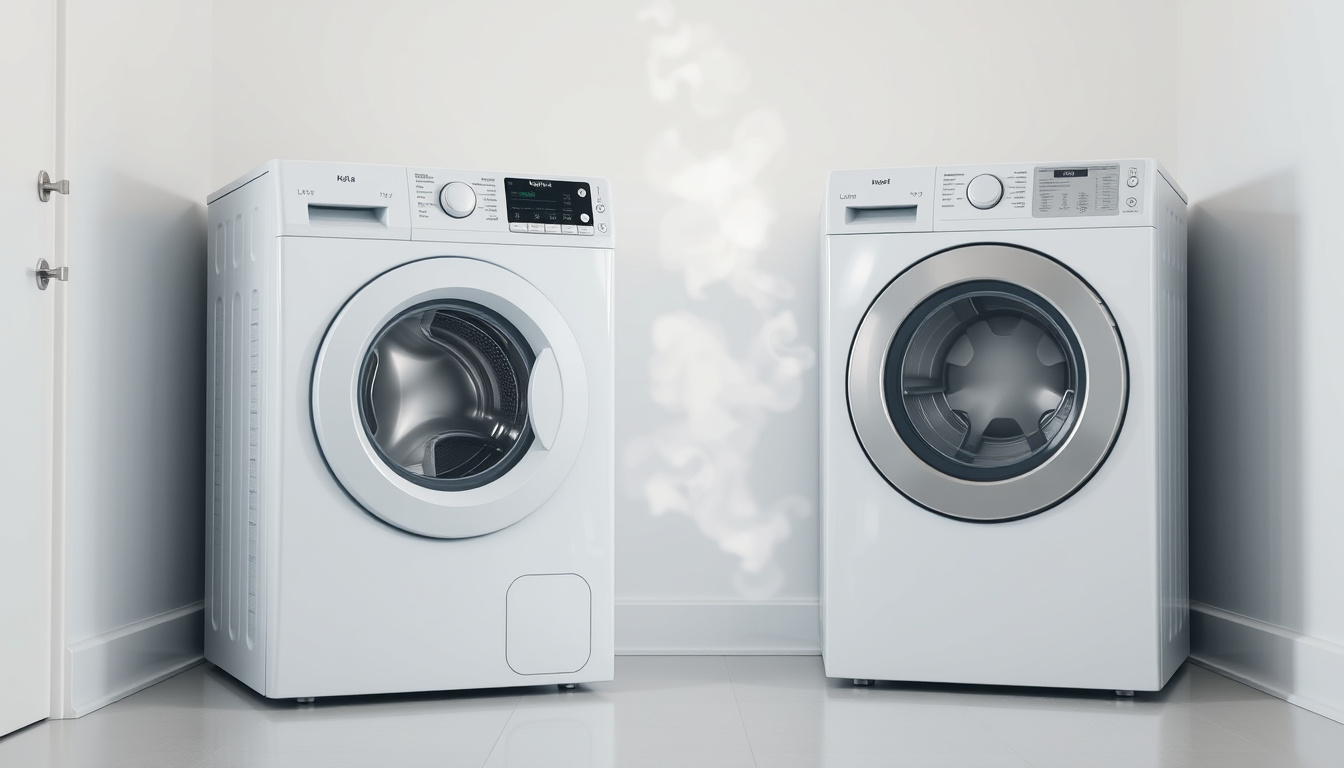
If you’ve been eyeing a new tumble dryer lately, you’ve probably noticed the term “heat pump” popping up everywhere—and with good reason. These machines use a closed-loop system that reuses hot air instead of venting it outside, which means they sip energy rather than gulp it. For Irish households watching their electricity bills, that difference adds up fast. Here’s what you need to know before you buy.
Energy Efficient: Heat pump technology · Plumbing Needed: No · Top Brands: Samsung, Bosch, Zanussi · Available In: Ireland retailers
Quick snapshot
- No plumbing required for installation (Beko Ireland)
- More energy efficient than condenser dryers (Irish Examiner)
- Exact drying times vary significantly by model (Choice)
- Performance can fluctuate with Ireland’s variable room temperatures (YouTube Tumble Dryers Truth)
- Heat pump prices have dropped in recent years (Choice)
- EU/UK phasing out less efficient dryer types (YouTube Tumble Dryers Truth)
The specifications below draw from manufacturer data and Irish retailer guides to give you the full picture before you decide.
| Specification | Value |
|---|---|
| Technology | Closed-loop heat pump |
| Plumbing Required | No |
| Popular Brands | Samsung, Bosch, Electrolux |
| User Feedback | Quieter, no humid air (Boards.ie users) |
| Annual kWh (7kg heat pump) | 211.4–242.6 kWh |
| Annual kWh (7kg condenser) | 504.2 kWh |
| Annual kWh (9kg heat pump) | 194.4–287.4 kWh |
| Annual kWh (9kg condenser) | 615.7–617 kWh |
| Heat Pump Max Temp | 50°C |
| Condenser Max Temp | 70–75°C |
Is it worth getting a heat pump tumble dryer?
For most Irish households, the answer is increasingly yes—particularly if you do laundry several times a week. Heat pump dryers carry A+ to A+++ energy ratings, compared to B ratings typical for condenser models (Beko Ireland). That efficiency gap translates directly into lower running costs.
Efficiency and running costs
The numbers are striking. For a 9kg load—the size that fits most family weekly washes—an Irish household using a heat pump dryer consumes roughly 258 kWh annually, compared to 617 kWh for a condenser model (Irish Examiner). Given Ireland’s relatively high electricity prices, that difference means a heat pump dryer pays for its higher upfront cost over time through cheaper bills.
“A household appliance that is more energy efficient will save money on energy bills. In fact, a heat pump tumble dryer can save households quite a chunk of money,” wrote Caitríona Redmond in the Irish Examiner.
Irish households doing 4+ loads weekly will typically recoup the premium price within 3-5 years through lower electricity costs alone.
Long-term savings
“Heat pump dryers offer all the same benefits as condensers, plus more,” an expert noted in Choice analysis. “They’ve also come down in price in the last few years and you’ll be paying less in running costs in any case” (Choice).
The implication: if you’re buying a dryer today and plan to keep it for five years or more, a heat pump model makes financial sense for most Irish buyers. Energy prices in Ireland run above the EU average, which amplifies the savings compared to countries with cheaper electricity.
What are the downsides of a heat pump dryer?
No technology is perfect, and heat pump dryers come with trade-offs worth knowing before you commit.
Drying time
The biggest complaint is speed. Heat pump dryers work at lower temperatures—around 50°C versus 70–75°C for condensers (Beko Ireland)—which is gentler on fabrics but takes longer. Condenser dryers can have quick programs that dry 1kg of clothing in 15–30 minutes. Heat pump models typically take two to two-and-a-half times longer per load.
For busy households where speed matters, this can be a genuine inconvenience. You won’t want to start a heat pump dryer at 9 pm expecting dry clothes by 11.
Heat pump and condenser performance both fluctuate depending on room temperature, which matters in Ireland’s poorly insulated or cold utility spaces.
Upfront cost
Heat pump dryers still carry a price premium over condenser models. Condensers cost more than vented dryers but less than heat pumps initially (Choice). However, prices have fallen in recent years as the technology has matured and more manufacturers enter the market.
The catch: repairs, if needed, tend to be more complex and costly for heat pump models than for condensers, since the heat pump system involves more components.
What is the difference between a heat pump dryer and a condenser dryer?
Understanding the core technology helps explain why one type uses far less energy.
Technology basics
A heat pump tumble dryer uses a closed-loop heat exchange system that recirculates hot air, removing moisture and reheating the same air rather than generating fresh heat continuously (Beko Ireland). It essentially captures and reuses heat that would otherwise be vented outside.
A condenser dryer uses a heating element to generate heat up to 70–75°C, then condenses moisture into water that’s collected in a tank or drained away. It recycles hot air but expels some heat in the process (Beko Ireland).
Think of it this way: a condenser dryer is like a kettle that boils water repeatedly, while a heat pump dryer is like a thermos that keeps water hot by trapping the heat inside.
Energy use
Condensers draw over 2.5 kW when the heating element is active, while heat pumps operate more efficiently by reusing heat rather than generating it anew (YouTube Tumble Dryers Truth). Choice analysis found condensers use roughly three times more energy per load than heat pump models.
For 7kg loads, Beko Ireland data shows heat pump dryers consuming 211.4–242.6 kWh annually versus 504.2 kWh for condenser models—roughly half the energy.
Do heat pump dryers need to be plumbed in?
One of the biggest selling points of heat pump dryers is installation flexibility. Neither heat pump nor condenser dryers require plumbing in the traditional sense—they don’t connect to water pipes. Both collect condensation in a tank that you empty manually, or you can plumb them to drain directly into a sink or waste pipe if preferred.
Installation requirements
Heat pump dryers “offer flexible installation without external venting, ideal for Irish homes without external walls” (Beko Ireland). This makes them particularly suitable for apartments, terraced houses, or utility rooms without exterior walls.
Both types are also suitable for stacking on top of washing machines in compact Irish homes—a practical consideration for anyone with limited floor space (Choice).
The implication: installation complexity drops significantly when you don’t need to route ducting through walls or windows.
Venting options
Since neither type requires external venting, you don’t need to worry about routing ducting through walls or windows. This makes heat pump dryers especially convenient for rental properties or homes where drilling through walls isn’t practical.
The pattern: if you can plug it in, you can use it—regardless of your home’s layout or whether you have an outside wall.
Which is better, a heat pump or condenser tumble dryer?
The answer depends entirely on your priorities. Here’s how to think through it.
For energy savings
Heat pump wins without contest. “Heat pumps use heat pump to warm clothes instead of electricity, most energy-efficient” (Irwins Megastore). They use roughly half the electricity of condenser models (DID.ie).
For Irish households specifically, where electricity costs are above the EU average, the savings compound. An Irish forum user documented real-world figures of 236 kWh for a heat pump versus 520 kWh for a condenser over comparable usage periods.
For speed
Condenser dryers have the advantage here. “Condensers dry quicker, beneficial for busy Irish households” (Irish Examiner). If you regularly need laundry done on short notice—school uniforms, gym kit, unexpected guests—a condenser model’s quick programs may matter more than the energy savings.
Upsides
- A+++ energy rating versus B for condensers
- Lower running costs, especially in Ireland’s high electricity market
- No external venting required
- Quieter operation, especially with inverter motors
- Gentler on fabrics at lower temperatures
- Both types require water tank emptying unless drained (LG product guide)
Downsides
- Significantly longer drying cycles (2–2.5× condenser time)
- Higher upfront purchase price
- More complex repairs if something goes wrong
- Performance varies with room temperature
- Condensers use 3× more energy per load (Choice)
What this means: heat pumps are better for your wallet and your clothes long-term; condensers are better if speed is non-negotiable.
It’s quieter, doesn’t chuck humid air into the room, and it’s better for clothes.
— Reddit user, Boards.ie discussion on heat pump dryers
Heat pumps are kinder to the environment and clothes by recycling warm air.
— LG product guide on heat pump versus condenser dryers
Related reading: Totter and Tumble Mat: Reviews, Specs & Buying Guide · Totter and Tumble Mat Review: Sizes, EU Shipping & More
Samsung’s heat pump models, like those at Currys.ie, earn praise in Irish user reviews for lower bills despite longer cycles matching our condenser comparison.
Frequently asked questions
How does a heat pump tumble dryer work?
A heat pump tumble dryer uses a closed-loop system that recirculates hot air, removing moisture and reheating the same air rather than venting it outside. This makes it significantly more energy-efficient than traditional vented or condenser dryers. The process works at lower temperatures (around 50°C) compared to condensers (70–75°C).
Why are my clothes still damp after heat pump dryer?
Several factors can cause this: overloading the drum (clothes need space to tumble), selecting a program that’s too gentle for the fabric type, or running a full load when the dryer is most efficient with smaller loads. Some models also have sensor issues that prevent them from detecting when clothes are dry. Check your model’s manual for optimal load sizes and consider using a higher heat setting for towels and heavier items.
What is the major disadvantage of a heat pump?
The longest drying time is the most commonly cited disadvantage. Heat pump dryers typically take two to two-and-a-half times longer than condenser dryers to complete the same load. For households that need quick turnaround on laundry, this can be a significant inconvenience.
What are the disadvantages of a heat pump tumble dryer?
Beyond slower drying times, disadvantages include higher upfront purchase cost, more complex repairs if the heat pump system malfunctions, and performance that can vary with ambient room temperature. In Ireland’s variable climate, performance may dip in colder utility rooms during winter.
What is the downside of a heat pump tumble dryer?
The trade-off between energy efficiency and convenience is the core downside. While running costs are much lower, the time investment is higher. If you regularly need laundry done quickly or have a large family generating multiple loads daily, the longer cycle times may outweigh the energy savings.
Best heat pump tumble dryer Ireland?
Top brands available in Ireland include Samsung, Bosch, Electrolux, Zanussi, Beko, and LG. Major retailers stocking heat pump models include Currys.ie, DID.ie, Euronics.ie, and Irwins Megastore. Look for A+++ rated models with inverter motors for the best combination of efficiency and quiet operation.
Heat pump tumble dryer Samsung?
Samsung offers several heat pump tumble dryer models available in Ireland, typically featuring their Digital Inverter Technology for quieter operation and smart features. Models like the Samsung Heat Pump Dryer are available through major Irish retailers. Check current availability and pricing at Currys.ie, DID.ie, and Euronics.ie for Ireland-specific stock.
Related stories





Amelia Blackwell covers the economy, business and consumer affairs for Press Hive.