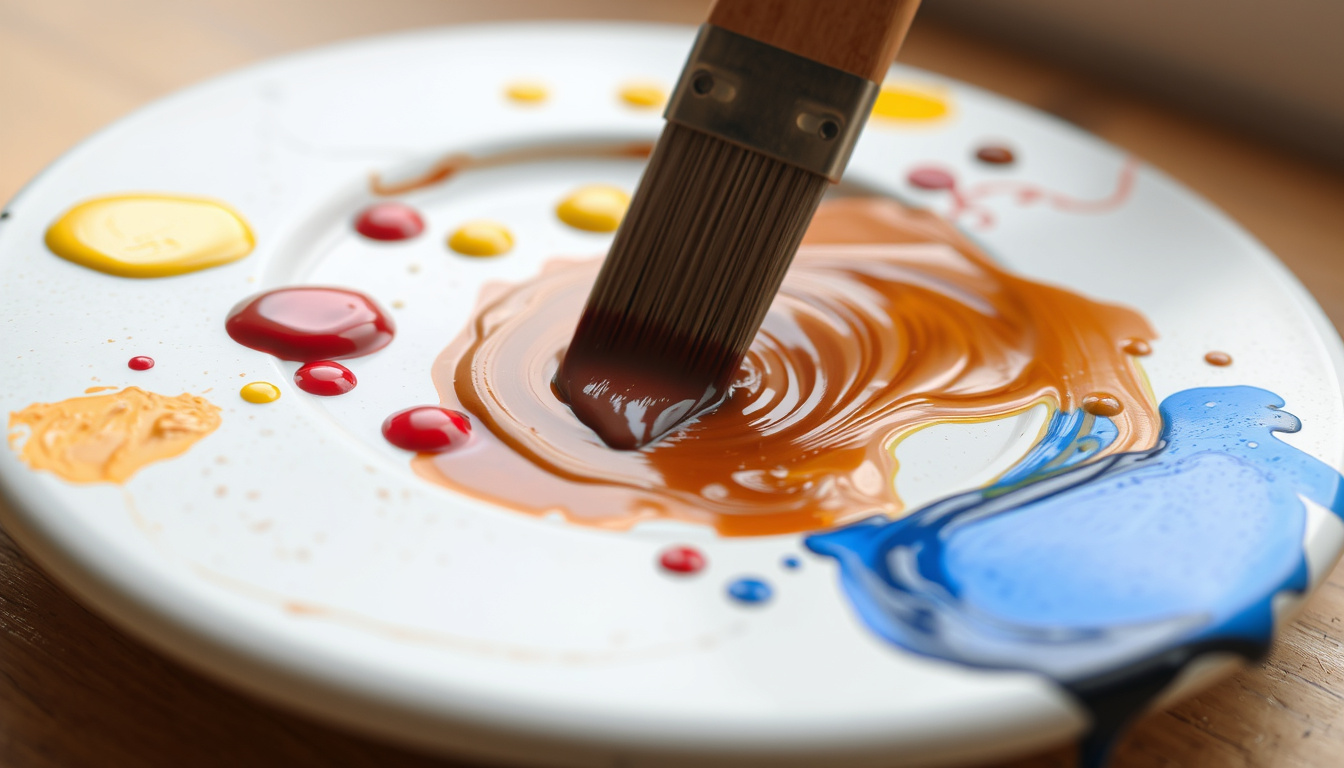

You’ve got a palette of red, yellow, and blue in front of you, and you want brown—not a muddy mess. It’s a common frustration, but the solution is simpler than most tutorials make it sound.
Primary colors needed: Red, yellow, and blue ·
Easiest method: Mix orange with blue ·
Quickest method: Mix yellow with purple ·
Common use: Brown paint mixing ·
Key ratio to know: More red for warm brown, more yellow for cool brown
Quick snapshot
- Mixing red, yellow, and blue in unequal amounts always produces brown. (Organic Natural Paint, paint manufacturer)
- Complementary pairs like orange+blue or purple+yellow create brown through neutralization. (Draw and Paint for Fun, art tutorial channel)
- Adding white or yellow to a brown base lightens it toward beige. (Organic Natural Paint, paint manufacturer)
- Exact ratio for “chocolate brown” varies by pigment brand. (Organic Natural Paint)
- Whether brown is a tertiary or neutral color in color theory is debated. (Michele Clamp, artist blog)
- Zero-setup method: orange+blue yields brown in seconds. (Draw and Paint for Fun)
- Three‑primary mix takes about 1 minute of stirring. (Organic Natural Paint)
- Test the ratios on scrap paper before applying to final piece.
- Adjust with tiny additions of white or yellow for highlights.
Five facts from the mixing process, one pattern: the ratio of primaries determines warmth, while complementary pairs give the fastest control. Here’s a quick-reference table.
| Core principle | Value |
|---|---|
| Core principle | Mixing all three primary colors produces brown. |
| Common ratio | 2 parts red : 1 part yellow : 1 part blue (for warm brown) |
| Quickest mix | Orange + blue (or yellow + purple) |
| Darkest mix | Orange + black (or blue + orange with high blue concentration) |
| Avoiding muddiness | Use clean brushes between mixes to prevent gray tones. |
What colors mix make brown?
Primary color combinations for brown
- Equal parts red, yellow, and blue produce a flat chocolate brown. (Organic Natural Paint, paint manufacturer)
- Unequal amounts create warmer or cooler shades: more red yields a rich chestnut, more yellow gives tan. (Organic Natural Paint)
- The same principle works with printing primaries (cyan, magenta, yellow). (Draw and Paint for Fun, art tutorial channel)
The role of complementary colors
- Blue + orange neutralizes each other to brown. (Michele Clamp, artist blog)
- Purple + yellow does the same. (Draw and Paint for Fun)
- Red + green (green from yellow+blue) also yields brown. (Michele Clamp)
You don’t need a list of recipes—just know your complements. The pattern is that every successful brown mix works by desaturating through opposite colors on the wheel.
Home painters and hobbyists often waste time hunting for a “brown paint” tube. Once you internalize that orange+blue = brown, you can mix any shade from your existing palette in under 30 seconds.
What is the easiest way to make brown?
Method 1: Mix orange and blue
- Mix red + yellow to get orange, then add blue a little at a time. (Draw and Paint for Fun, art tutorial channel)
- For a dark chocolate brown, use more blue than orange. (Organic Natural Paint, paint manufacturer)
Method 2: Mix yellow and purple
- Purple (red+blue) + yellow = brown. This is the fastest complementary pair. (Draw and Paint for Fun)
- For a lighter, warm brown, start with more yellow. (Organic Natural Paint)
Method 3: Mix all three primary colors
- Equal parts red, yellow, and blue give a flat chocolate base. (Organic Natural Paint)
- To make it richer, increase red and blue while reducing yellow. (Organic Natural Paint)
The catch: Method 1 (orange+blue) is the most reliable because you control the brown’s darkness by the amount of blue. Method 3 gives you more flexibility once you understand ratios.
How to make chocolate brown color?
Adjusting the ratio for warm brown
- Use 2 parts red, 1 part yellow, 1 part blue. (Organic Natural Paint, paint manufacturer)
- For a deeper chocolate, substitute orange for part of the red. (Draw and Paint for Fun, art tutorial channel)
- To lighten to milk chocolate, add a touch of white. (Organic Natural Paint)
Using red and yellow as a base
- Begin with 3 parts yellow to 2 parts red to create a vibrant orange base. (Michele Clamp, artist blog)
- Add ultramarine blue slowly until the desired chocolate tone appears. (Draw and Paint for Fun)
What this means: chocolate brown is essentially a warm brown skewed red‑yellow. You can mimic burnt umber or raw umber by altering the ratio, but those are commercial pigments—not needed for a good homemade chocolate.
How to make dark brown colour by mixing two colours?
Mixing orange with black
- Orange + black makes a dark, rich brown without blue. (Michele Clamp, artist blog)
- Without black, substitute blue for a similar effect. (Draw and Paint for Fun, art tutorial channel)
Mixing blue with orange in high concentration
- Use 1 part orange to 2 parts blue for a cool dark brown. (Organic Natural Paint, paint manufacturer)
- Add a speck of white if the brown appears too flat. (Organic Natural Paint)
The implication: orange+blue gives the most controllable dark brown without black paint. The deeper you want it, the more blue you add—but go too far and you’ll get a dark gray, not brown.
For beginners, orange+blue is the easiest dark‑brown two‑color mix. It’s forgiving, fast, and doesn’t require precise measurements.
How to make brown without yellow?
Using red, blue, and green
- Yellow is a primary component of standard brown mixing recipes. (Organic Natural Paint, paint manufacturer)
- Without yellow, you must rely on pre‑mixed brown paints or use white/black to adjust. (Draw and Paint for Fun, art tutorial channel)
- Pure red and blue with white can create a mauve‑like brown—not a true brown. (Michele Clamp, artist blog)
Using purple and orange mixes
- Purple (red+blue) + orange (red+yellow) still contains yellow via the orange. (Organic Natural Paint)
- Without any yellow, the result becomes a dark violet‑gray, not brown. (Draw and Paint for Fun)
The pattern: yellow is nearly irreplaceable in brown mixing—it provides the warmth that distinguishes brown from gray. The implication: if you have no yellow, you will only get brown by using a commercial paint that already contains yellow pigments.
Step‑by‑step: How to make brown in three minutes
- Gather your primary paints: red, yellow, blue. Use clean brushes.
- Squeeze a pea‑size of each onto your palette, keeping them separate.
- Mix red + yellow to create orange.
- Add blue slowly while stirring. Stop when the mixture turns brown.
- Test on scrap paper. If too dark, add more orange; if too warm, add a tiny bit more blue.
- Adjust shade: add white for lighter brown, more blue for darker brown.
Pro tip: acrylics dry darker, so make the wet mixture slightly lighter than your target. (Organic Natural Paint, paint manufacturer)
Confirmed facts & what’s still unclear
Confirmed facts
- Primary colors (red, yellow, blue) mix to make brown. (Organic Natural Paint, paint manufacturer)
- Complementary colors like orange and blue make brown. (Draw and Paint for Fun, art tutorial channel)
- Adjusting ratios changes the shade. (Michele Clamp, artist blog)
What’s unclear
- Exact ratios for specific shades like “chocolate” vary by pigment brand. (Organic Natural Paint)
- Whether “brown” is a tertiary or neutral color in color theory is debatable. (Michele Clamp)
“The three primary colors (red, yellow, blue), when mixed, make brown. It is the ratio, as well as the specific pigments used, that determine the specific shade.”
“Simply by mixing the three primary colours – yellow, red and blue – you can make a lovely chocolatey brown.”
For the home artist or the studio painter, the choice is clear: learn the complementary mixing method first for speed, then the primary method for control. Without mastering these two approaches, you’ll keep reaching for a black tube that you don’t actually need.
For a deeper dive into the theory behind these combinations, check out this complete color mixing guide that expands on the ratios and techniques.
Frequently asked questions
Can I make brown without using black paint?
Yes – that’s the whole point. Use orange+blue or red+yellow+blue. Black is optional for darkening but not required. (Organic Natural Paint)
How do I lighten brown paint once it’s mixed?
Add white a tiny bit at a time. For a warmer light brown, add more yellow instead. (Organic Natural Paint)
What is the difference between raw umber and burnt umber?
Raw umber is a natural earth pigment cooler and greener; burnt umber is heated to create a warmer, richer brown. Both are convenient but not essential.
Can I make brown from green and red?
Yes – green (yellow+blue) mixed with red yields a brown. It’s a complementary pair on the color wheel. (Michele Clamp)
Why did my brown paint turn out muddy?
You likely used too many colors or contaminated your brush. Stick to two colors (orange+blue) or three primaries with clean tools. (Organic Natural Paint)
What two colors make dark brown?
Orange and blue in a 1:2 ratio gives a dark brown. More blue makes it cooler and darker. (Organic Natural Paint)
How do I make brown paint for skin tones?
Start with a warm brown (more red+yellow) and add small amounts of white until you reach the desired flesh tone. Test on paper.
Is brown a primary or secondary color?
Brown is a tertiary or neutral color – it’s created by mixing all three primaries or two complements. It is not a primary or secondary color. (Michele Clamp)
Related stories




Oliver Reeves leads fact-checking, source verification and corrections at Press Hive.