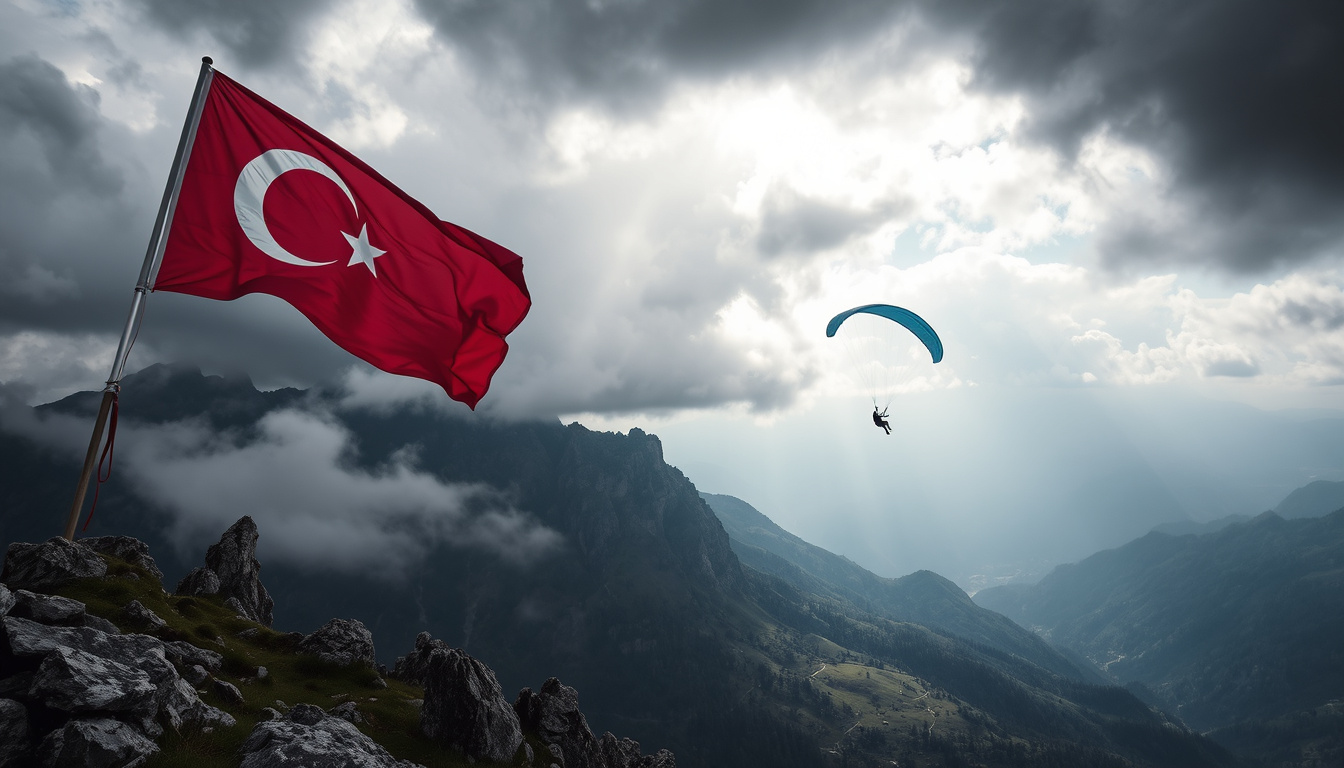

Nothing puts butterflies in your stomach quite like the thought of soaring over turquoise waters — unless it’s the sudden news that paragliding in Turkey has come with official warnings. Over the past year, several British and other foreign nationals have died or been seriously injured while paragliding in popular resorts like Oludeniz and Fethiye, and this article brings together the official travel advisories, the real accident figures, and practical guidance so you can weigh the risks before you book.
UK government travel warning for Turkey: Active (May 2025) ·
Paragliding fatalities reported in 2025: Several British nationals ·
Resorts with paragliding accidents: Oludeniz and Fethiye ·
Irish Department of Foreign Affairs advisory: Issued May 2025 ·
General travel safety level for Turkey: Exercise caution (varies by region)
Quick snapshot
- UK: Active advisory with paragliding warning GOV.UK FCDO travel guidance
- Ireland: Specific mention of Oludeniz and Fethiye Irish Department of Foreign Affairs advice
- General level: Exercise caution (GOV.UK FCDO travel guidance)
- Extreme sport with serious injury/death risk GOV.UK FCDO travel guidance
- Multiple fatalities in 2025 Reuters report
- Accidents concentrated in Oludeniz and Fethiye BBC News reporting
- Antalya, Bodrum, Istanbul generally safe (GOV.UK Turkey travel advice)
- Resort areas have low crime (GOV.UK Turkey travel advice)
- Check local advisories before travel GOV.UK Turkey travel advice
Six key data points sum up the official stance on travel safety and paragliding risks in Turkey.
| UK advisory update date | May 2025 |
| Irish advisory update date | May 2025 |
| Number of British paragliding deaths in 2025 | Multiple (exact number not specified) |
| Resorts with reported accidents | Oludeniz, Fethiye |
| Overall tourism trend | Some decline attributed to warnings |
| Foreign paragliding deaths in Turkey (2024) | At least 5 The Guardian reporting |
Why is there a travel warning for Turkey?
What triggered the latest warning?
- The UK Foreign, Commonwealth & Development Office (FCDO) updated its travel advice for Turkey in May 2025, specifically warning about paragliding risks GOV.UK FCDO travel guidance.
- The Irish Department of Foreign Affairs followed with a similar warning in May 2025, highlighting “a number of fatalities and serious injuries in paragliding accidents in the resorts of Oludeniz and Fethiye” Irish Department of Foreign Affairs advice.
- In October 2025, the FCDO formally updated its Turkey advisory to include the paragliding warning as a standalone point GOV.UK FCDO news release.
Which governments have issued warnings?
- United Kingdom (FCDO): advises against all travel to parts of Turkey due to wider security risks GOV.UK FCDO travel guidance.
- Ireland: issued a specific warning for paragliding safety after several fatal accidents Irish Department of Foreign Affairs advice.
- The Telegraph also reported that the Foreign Office warned of paragliding deaths following the death of a British man The Telegraph (UK newspaper) report.
British and Irish travelers now see paragliding explicitly flagged as a high-risk activity in official government advice — a rare distinction that carries weight with tour operators and insurers.
The implication: Government advisories now explicitly link paragliding to fatalities, a warning that travelers should not overlook.
Is it safe to travel to Turkey right now?
What does the UK travel advisory say?
- The FCDO advises against all travel to certain parts of Turkey due to security threats but notes that “most tourist resorts remain safe for normal precautions” GOV.UK FCDO travel guidance.
- Paragliding is singled out as an extreme sport with “risk of serious injury or death. British nationals have died or been seriously injured whilst paragliding in Turkey.”
- Every year people drown in sea and pools; supervision of children is stressed, even with lifeguards present GOV.UK FCDO travel guidance.
Are there region-specific risks?
- Coastal hubs like Antalya and Bodrum are generally considered safe GOV.UK Turkey travel advice.
- Istanbul has higher rates of petty crime, but remains a popular tourist destination.
- Some beaches have strong undercurrents, hidden rocks, and shallow depths that can cause injury or death GOV.UK FCDO swim safety warning.
- A 6.2-magnitude earthquake struck the Sea of Marmara in April 2025, felt strongly in Istanbul, though no major tourist injuries were reported GOV.UK FCDO natural hazards update.
Standard beach holidays in Turkey carry low risk, but the FCDO’s specific paragliding warning creates a clear dividing line: routine tourism is fine, adventure sports need extra scrutiny.
The pattern: Routine tourism remains low-risk, but any paragliding activity demands elevated caution due to official warnings.
What is the safest part of Turkey to visit?
Coastal resorts versus inland cities
- Antalya, Bodrum, and Kusadasi are destinations where crime is low and tourist infrastructure is well-established GOV.UK Turkey travel advice.
- Istanbul offers rich culture but higher petty crime rates; take standard city precautions.
- The FCDO advises against all travel to areas within 10 km of the Syrian border, and to the city of Diyarbakir GOV.UK FCDO regional warnings.
How do Antalya, Bodrum, and Istanbul compare?
Three popular hubs, one pattern: crime risk is low in coastal resorts but petty theft rises in Istanbul. Overall safety ratings are high for the tourist corridor.
| Destination | Overall safety | Paragliding risk |
| Antalya | High – low crime, strong police presence | Low – most flights occur elsewhere |
| Bodrum | High – popular resort, safe for families | Low – no major accident reports |
| Istanbul | Moderate – petty crime, but safe with common sense | None – no paragliding in city |
The safest resorts avoid the paragliding hotspots of Oludeniz and Fethiye entirely. If adventure is not your goal, stick to the coast west of Fethiye.
What this means: Choosing a resort outside the paragliding zone eliminates the specific risk that prompted government warnings.
Why are tourists avoiding Turkey?
Impact of travel warnings on bookings
- Media coverage of paragliding deaths — including a British man who died in a mid-air collision at Oludeniz on 22 September 2024 BBC News reporting — has deterred some visitors.
- According to Daily Sabah (Turkish English-language news), paragliding fatalities in Turkey rose 20% in 2025 compared to 2024, according to the Turkish aviation authority.
- Two paragliders died in summer 2025, including a Russian tourist Reuters report.
Role of paragliding incidents
- The Irish Mirror reported on Irish citizens killed or seriously injured in paragliding accidents in Oludeniz and Fethiye Irish Department of Foreign Affairs advice.
- Economic factors, political tensions, and the 2023 earthquakes also influence travel decisions, but paragliding incidents have received disproportionate media attention.
The implication: Paragliding incidents are now a primary factor in travel decisions, especially for those considering the Oludeniz area.
Is paragliding safe in Turkey?
Official warnings about paragliding
- The UK FCDO states: “Paragliding is an extreme sport and carries the risk of serious injury or death. British nationals have died or been seriously injured whilst paragliding in Turkey.” GOV.UK FCDO travel guidance
- The Irish Department of Foreign Affairs: “There have also been a number of fatalities and serious injuries in paragliding accidents in the resorts of Oludeniz and Fethiye.” Irish Department of Foreign Affairs advice
- The Telegraph reports that the Foreign Office directly warns of paragliding deaths after a British man was killed The Telegraph (UK newspaper) report.
Recent accidents in Oludeniz and Fethiye
- On 22 September 2024, a British paraglider died in Oludeniz after a mid-air collision BBC News reporting.
- At least 5 foreign nationals died in separate paragliding accidents in Turkey during 2024 The Guardian reporting.
- In summer 2025, two paragliders died, one of whom was a Russian tourist Reuters report.
- Turkish aviation authority (SHGM) requires operators to have SHGM certification; unlicensed flights are banned Turkey’s Directorate General of Civil Aviation (SHGM) regulations.
Official certification exists, but enforcement is inconsistent. Accidents frequently involve licensed operators, suggesting that even legal flights carry inherent risks due to weather, altitude, and crowded airspace over Babadag mountain.
The catch: Even certified operators have been involved in accidents, meaning inherent risks remain regardless of paperwork.
Timeline signal
- September 2024: British paraglider dies in mid-air collision at Oludeniz BBC News
- October 2024: Attack on Turkish Aerospace Industries facility near Ankara leaves 5 dead, 22 injured GOV.UK FCDO
- April 2025: 6.2‑magnitude earthquake in Sea of Marmara felt strongly in Istanbul GOV.UK FCDO
- May 2025: UK and Ireland update travel advisories with paragliding warnings
- Summer 2025: Two paragliders die, including a Russian tourist Reuters
- September 2025: Three police officers killed in lone gunman attack on police station in Izmir GOV.UK FCDO
- October 2025: FCDO formally updates Turkey advisory citing paragliding incidents GOV.UK FCDO news release
The pattern: Paragliding accidents and official responses are concentrated in a two-year window, marking a clear shift in government risk assessment.
Clarity: confirmed vs unclear
Confirmed facts
- British nationals died or were seriously injured paragliding in Turkey (official sources) GOV.UK
- UK and Ireland governments have issued specific paragliding warnings Irish DFA
- Accidents occurred in Oludeniz and Fethiye BBC
- At least 5 foreign nationals died in 2024 paragliding accidents in Turkey The Guardian
What’s unclear
- Whether tourism decline is directly caused by paragliding warnings or other factors
- Exact number of fatalities across all nationalities (due to underreporting and varying sources)
- Long-term impact on paragliding tourism in Turkey
- How enforcement of SHGM certification standards is working on the ground
- 20% increase in paragliding fatalities in 2025 compared to 2024 (reported by Daily Sabah, not independently verified) Daily Sabah
The implication: While the core facts are solid, key quantitative details remain unconfirmed, requiring travelers to rely on official warnings rather than precise statistics.
Quotes from official sources
“Paragliding is an extreme sport and carries the risk of serious injury or death. British nationals have died or been seriously injured whilst paragliding in Turkey.”
GOV.UK FCDO travel guidance
“There have also been a number of fatalities and serious injuries in paragliding accidents in the resorts of Oludeniz and Fethiye.”
Irish Department of Foreign Affairs advice
The tragedy for adventurous travelers is that Turkey’s spectacular Mediterranean coastline — with its 6,000‑foot launch points at Babadag — will always tempt thrill‑seekers. But the data and official advice now create a clear fork: either you commit to rigorous operator vetting and accept the accident record, or you redirect your vacation to a region where the most dangerous choice is which beach chair to claim. For UK travelers considering a tandem flight in Oludeniz, the implication is clear: verify SHGM certification, ensure your travel insurance covers extreme sports, or choose paragliding in a country with a stronger safety record.
Related reading: **Where’s Hot in October** · **Elba Lanzarote Royal Village Resort**
For a detailed breakdown of the paragliding incidents, see detailed breakdown of the paragliding incidents.
Frequently asked questions
What should I check before booking a paragliding experience in Turkey?
Confirm the operator holds a valid SHGM (Turkish Directorate General of Civil Aviation) permit, check recent safety records, and ensure your travel insurance explicitly covers paragliding. Ask the operator about their accident history and whether they follow international safety standards.
Are there specific safety regulations for paragliding operators in Turkey?
Yes, all commercial paragliding operators must hold SHGM certification. Unlicensed flights are banned. However, enforcement varies. Always ask to see the operator’s license and current insurance policy before flying SHGM regulations.
Which Turkish resorts have the highest paragliding accident rates?
Oludeniz and Fethiye are the only resorts specifically named in official advisories. These are also the most popular paragliding destinations in Turkey, leading to higher incident numbers in absolute terms.
Does travel insurance cover paragliding in Turkey?
Many standard travel policies exclude extreme sports. You may need a specialist adventure sports rider. Check your policy wording for “paragliding”, “hang-gliding”, or “extreme sports” — if not listed, it is unlikely covered. Contact your insurer prior to travel.
How can I verify a paragliding operator’s safety record?
Request the operator’s SHGM license, ask for recent inspection reports, and read recent online reviews on platforms like TripAdvisor and Google. Official accident data is not publicly released at operator level, so third-party reviews are your best guide.
Is it safer to paraglide in other countries compared to Turkey?
Accident rates vary by country. The UK FCDO’s specific warning is unusual — most popular paragliding destinations (e.g., Switzerland, New Zealand) do not carry such explicit government cautions. That said, safety depends heavily on operator standards and local enforcement.
What alternative adventure activities are safer in Turkey?
Hiking the Lycian Way, scuba diving in Kaş, and yacht charters along the Turquoise Coast offer thrills with lower fatality records. Always check official advice before booking any adventure activity.

Sophie Marlowe covers culture, lifestyle and society stories across the UK.