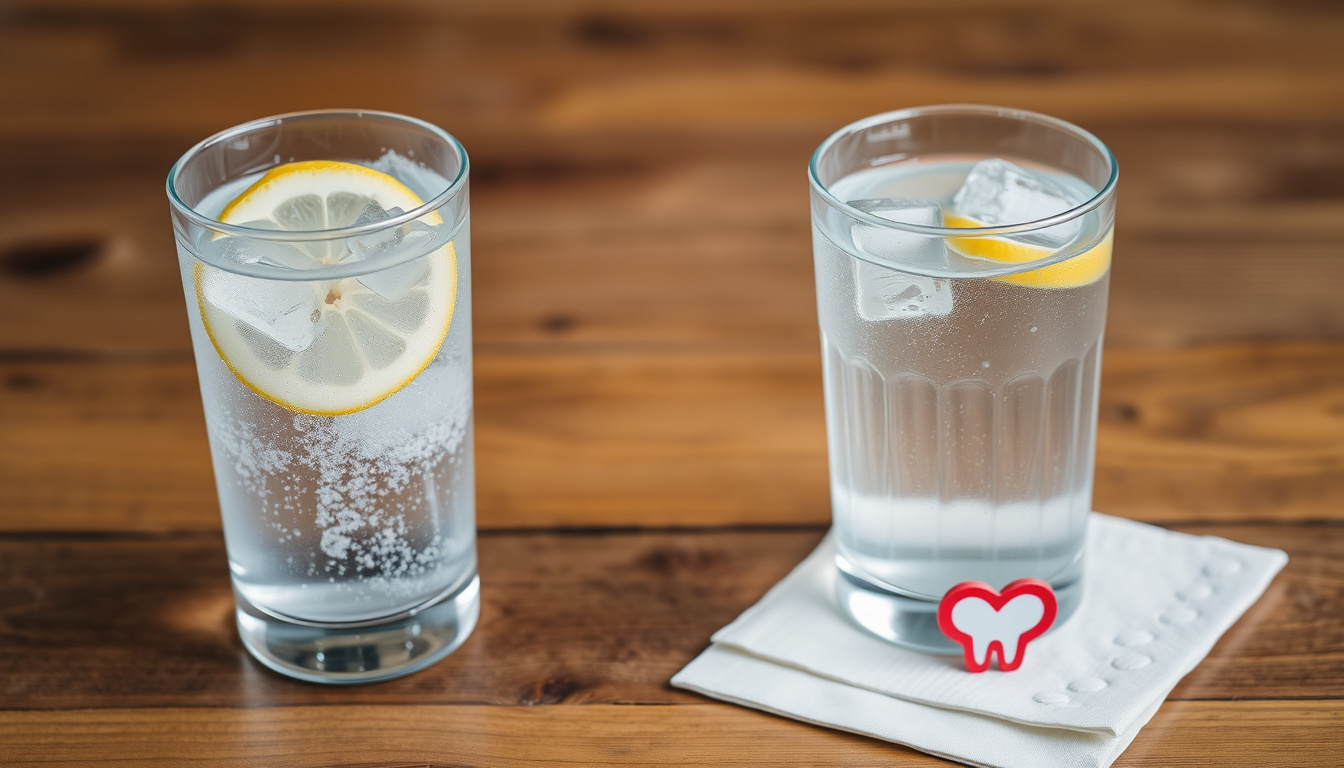

You’ve probably swapped your soda for sparkling water, hoping for a healthier fizz. But does that carbonation come with hidden costs? The answer isn’t a simple yes or no — and it depends on what’s in your glass. We’ve sorted through the research on hydration, kidney safety, and tooth enamel so you can decide if the bubbles are worth it.
Daily water intake recommendation: 2.7–3.7 liters for adults ·
pH of plain sparkling water: 4.0–5.0 ·
Calories per 8 oz (240 ml): 0
Quick snapshot
- Equally hydrating as still water (WebMD (health information))
- No dehydrating effect (University of Chicago Medicine (academic medical center))
- Can be part of daily fluid intake (WebMD (health information))
- May improve swallowing (University of Chicago Medicine (academic medical center))
- Can cause bloating or gas in sensitive individuals (University of Chicago Medicine (academic medical center))
- Some studies show relief from indigestion (University of Chicago Medicine (academic medical center))
- Plain sparkling water is less acidic than soda (WebMD (health information))
- Flavor additives can increase pH risk (Culligan (water treatment))
- Rinse with water to protect enamel (Wynne Family Dental (dental practice))
- No proven harm to healthy kidneys (University of Chicago Medicine (academic medical center))
- Better alternative than sugary sodas for kidney patients (WebMD (health information))
- Consult doctor if you have chronic kidney disease (University of Chicago Medicine (academic medical center))
Here is a quick summary of the key facts:
| Fact | Value | Source |
|---|---|---|
| Hydration equivalence | Sparkling water hydrates as effectively as still water | WebMD (health information) |
| Calories | 0 kcal per 8 oz serving | WebMD (health information) |
| pH level | Plain sparkling water: 4.0–5.0 (acidic, but less than orange juice or soda) | Svalbarði (water analysis) |
| Daily safe limit | No established upper limit for healthy adults; moderate intake (e.g., 3–4 cans) is generally safe | University of Chicago Medicine (academic medical center) |
| Dental risk | Plain sparkling water causes minimal enamel erosion; flavored varieties may increase risk | Culligan (water treatment) |
| Bone health | Only dark colas with phosphoric acid have been linked to bone density loss, not sparkling water | University of Chicago Medicine (academic medical center) |
| Weight management | Sparkling water may improve satiety, aiding weight loss | University of Chicago Medicine (academic medical center) |
| Added sugar risk | Flavored sparkling water may contain added sugars and acids | UCLA Fitwell (university wellness) |
Is it healthy to drink sparkling water daily?
Daily hydration benefits
Sparkling water provides the same hydration as still water. A review by WebMD confirms that carbonation does not reduce the body’s ability to absorb fluids. For healthy adults, drinking several glasses a day contributes to the recommended 2.7–3.7 liters.
Potential digestive side effects
- Carbon dioxide can cause gas and bloating in some people (University of Chicago Medicine)
- For individuals with IBS, carbonation may aggravate symptoms
Recommended daily intake
No official upper limit exists. Most experts suggest that 3–4 cans (about 1 liter) per day is safe for healthy adults. The key is to choose unsweetened, unflavored varieties.
The implication: For most healthy adults, daily sparkling water fits easily into a well-balanced hydration routine.
What are the pros and cons of sparkling water?
Health benefits
- Zero calories and sugar (WebMD)
- May improve swallowing (University of Chicago Medicine)
- Can aid weight management by increasing satiety
Possible disadvantages
- Carbonation can cause gas and bloating (University of Chicago Medicine)
- Flavored varieties may contain acids that damage enamel (Culligan)
Who should limit intake
- People with IBS or sensitive stomachs
- Individuals with chronic kidney disease (consult a doctor)
- Those concerned about enamel erosion (stick to plain, rinse after drinking)
Upsides
- Calorie-free, sugar-free hydration
- May help with weight control
- Better than soda for dental health
Downsides
- Can cause bloating and gas
- Flavored options may contain hidden acids and sugars
- Acidic pH (4–5) if consumed in very high volumes
Two drinks, one clear difference: plain sparkling water delivers hydration without the downsides of sugary sodas. The pattern is consistent — the fewer additives, the healthier the choice.
Is sparkling water bad for your kidneys?
Carbonation and kidney function
There is no evidence that carbonation itself harms healthy kidneys. University of Chicago Medicine states that only dark colas with phosphoric acid have been linked to calcium loss, not sparkling water.
Comparison with sugary sodas
For kidney health, sparkling water is a far better choice than sugary sodas, which have been associated with increased kidney stone risk and chronic kidney disease progression. Svalbarði notes that sparkling water contains no added sugars or phosphoric acid.
Kidney stone risk
Some mineral sparkling waters contain calcium and magnesium, which may actually reduce kidney stone risk. Oxalate levels are typically lower than in fruit juices. People with chronic kidney disease should consult their nephrologist before increasing sparkling water intake.
Healthy kidneys handle carbonation without issue. For anyone with compromised kidney function, the bigger risk comes from sugary alternatives, not bubbles.
The catch: Even though carbonation is safe, those with existing kidney conditions need individualized guidance.
Does sparkling water hydrate you?
Hydration equivalence to still water
Research consistently shows that sparkling water hydrates as effectively as still water. A WebMD review confirms that carbonation does not alter the body’s fluid absorption.
Role in exercise recovery
After a workout, water is still the best choice. But sparkling water can replace still water for post-exercise hydration without any disadvantage. Some athletes prefer it because the bubbles help them drink more.
Myths about dehydration from carbonation
There is no evidence that carbonated water dehydrates you. The belief likely stems from confusion with caffeinated sodas, which can have a mild diuretic effect. Plain sparkling water is just water with dissolved CO₂.
For anyone who struggles to drink enough water, sparkling water offers a palatable, equally effective alternative. It counts toward the daily 2.7–3.7 liters.
What this means: Sparkling water is a valid hydration tool, especially for those who dislike plain water.
Is sparkling water good for your teeth?
Acidity and enamel erosion
Plain sparkling water has a pH around 4–5, which is acidic but far less damaging than sodas or fruit juices. Wynne Family Dental notes that sparkling water is better for teeth than orange juice, sports drinks, and diet sodas.
Comparison with sodas and fruit juices
Regular soda has a pH around 2.5 and contains phosphoric acid, which is especially erosive. Fruit juices are also low pH and high in sugar. Sparkling water sits in a safer middle ground.
Tips to protect teeth
- Drink plain sparkling water rather than flavored varieties
- Use a straw to minimize contact with teeth
- Rinse with plain water afterward
- Avoid sipping sparkling water over long periods
Flavored sparkling waters often contain citric acid and other additives that lower pH further. For daily consumption, plain is safer for your enamel.
The pattern is clear: sparkling water is not your teeth’s enemy — but flavored variants can be a hidden threat. A quick rinse with tap water neutralizes most risk.
What we know and what remains unclear
- Confirmed facts — Sparkling water is calorie-free and sugar-free. It hydrates equally to still water. Plain sparkling water does not harm kidneys in healthy individuals.
- What’s unclear — Excessive consumption can cause bloating and gas. Long-term enamel erosion from habitual intake of flavored sparkling water. Impact on osteoporosis risk (evidence is weak and contradictory). Effects on IBS or sensitive digestive systems.
The implication: Most of the benefits are well-supported, but a few areas still need more research.
Expert perspectives
‘No evidence suggests that carbonated or sparkling water is bad for you.’
— Healthline medical reviewer
‘If you drink a lot of sparkling water you might find you feel bloated…’
— BBC Future article
‘Sparkling water has 0 calories, carbs or sugar, which can help with weight loss.’
— University Hospitals blog
For the average healthy adult, the choice is clear: plain sparkling water is a perfectly good way to stay hydrated, with minimal downsides. Those with sensitive teeth or digestive issues should stick to moderate intake and favor unflavored options.
For those curious about other infused waters, lemon waters health effects offer a similarly nuanced look at hydration and wellness.
Frequently asked questions
Can sparkling water help with weight loss?
Yes. It replaces sugary drinks, has zero calories, and may increase satiety, helping to reduce overall calorie intake. For more on calorie counting, see our guide on Calories in Chicken Breast.
Is sparkling water safe during pregnancy?
Generally yes, as long as it is unsweetened and unflavored. Consult your healthcare provider if you have concerns about bloating.
Does sparkling water cause bloating?
In some people, the carbon dioxide can cause gas and bloating. It is harmless but can be uncomfortable.
Is sparkling water better than soda?
Yes. It contains no sugar, no calories, and far fewer acids. It is a much healthier choice for hydration.
Can I use sparkling water for mixing drinks?
Yes. It makes a good mixer with less sugar than tonic water or soda.
Does sparkling water affect bone density?
Current evidence says no. Only dark colas with phosphoric acid have been linked to calcium loss. Sparkling mineral water with calcium may even support bone health.
Is flavored sparkling water as healthy as plain?
Not always. Flavored versions often contain citric acid, added sugars, or artificial sweeteners, which reduce their health profile.
Related stories





Sophie Marlowe covers culture, lifestyle and society stories across the UK.