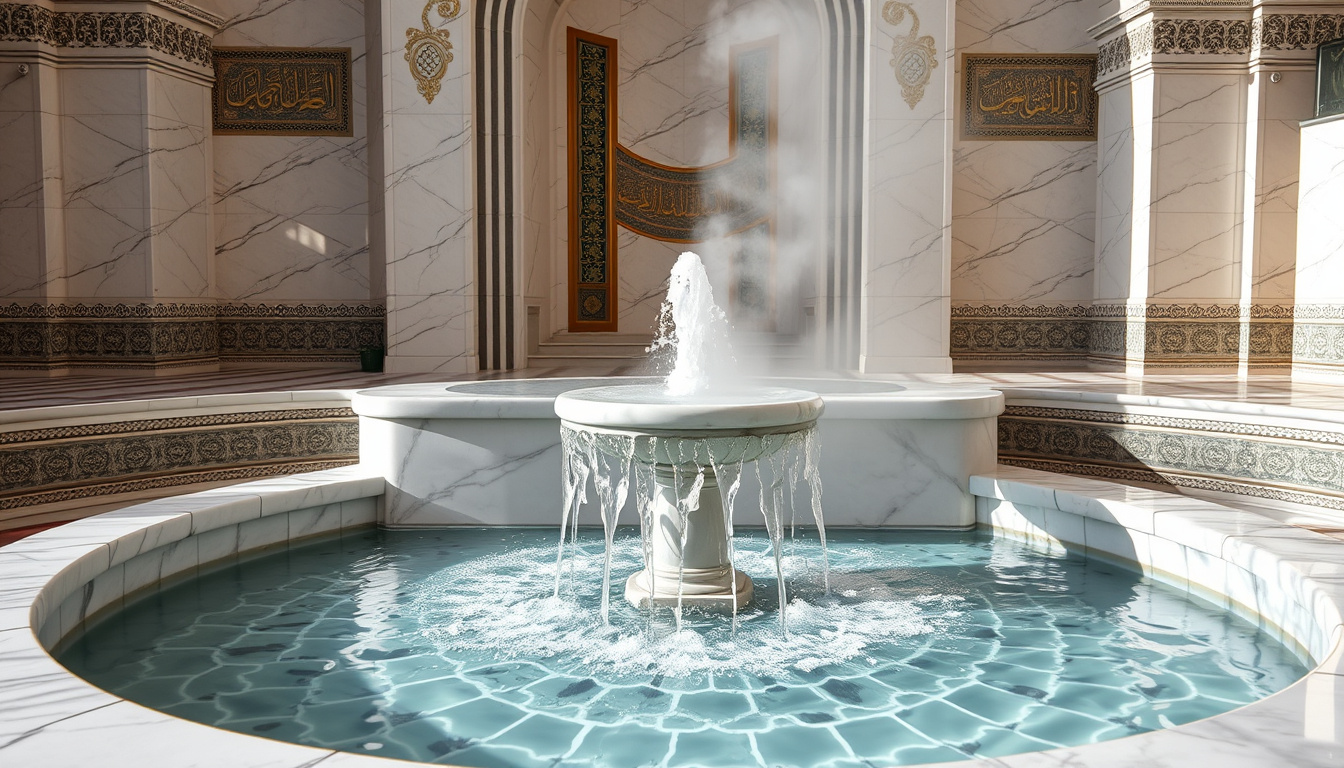

Ghusl is an obligatory full-body ritual purification in Islam required after specific types of major impurity. Unlike a regular shower, ghusl involves intentional steps grounded in Quranic guidance and prophetic tradition. Understanding when ghusl becomes mandatory and how to perform it correctly is essential for every Muslim seeking to fulfill their religious obligations.
The practice stems from the Quranic command in Surah Al-Ma’idah (5:6), which addresses purification and its role in spiritual readiness. Islamic scholars across all four major schools of thought agree on the core requirements while differing on certain procedural details. This guide provides a comprehensive, step-by-step explanation suitable for those new to the practice or seeking clarification on specific aspects.
What Is Ghusl and When Is It Required?
Ghusl constitutes a complete washing of the body from head to toe, distinct from wudu (ablution), which addresses only minor impurities. The ritual becomes necessary when a person experiences major ritual impurity that prevents them from performing prayer, fasting, or touching the Quran. Scholars classify ghusl as fard (obligatory) in several specific circumstances.
Several situations mandate ghusl for Muslim men and women. Janabah, resulting from sexual intercourse or semen discharge, represents the most common trigger. The definition of janabah varies slightly between schools: the Hanafi, Maliki, and Hanbali schools require that discharge be accompanied by pleasure, while the Shafi’i and Imami schools consider any discharge sufficient to require purification.
- Ghusl becomes obligatory upon sexual intercourse or any semen discharge, regardless of whether it occurred while awake or during sleep
- Women must perform ghusl after menstruation (hayd) and postpartum bleeding (nifas) cease completely
- Touching a human corpse requires ghusl according to Shafi’i and Imami schools, though the Hanafi school does not mandate it
- Converting to Islam may require ghusl, though scholars dispute whether this is obligatory under Hanafi jurisprudence
- Women experiencing irregular bleeding (istihada) according to Imami teachings require additional purification acts
- Performing ghusl after a wet dream with visible fluid applies to both men and women, based on hadith from Sahih Bukhari and Muslim
- Scholars across traditions agree that water must reach every part of the body, including hair roots and hard-to-reach areas
| Aspect | Details |
|---|---|
| Obligatory Ghusl Triggers | Janabah, end of hayd, end of nifas |
| Fard Elements | Niyyah (intention) and complete body wash |
| Sunnah Additions | Bismillah, washing right side first |
| Mouth and Nose Rinse | Required in Shafi’i method; not emphasized in Hanafi |
| Hair and Braids | Water must reach roots; braids acceptable if water penetrates |
| Post-Ghusl Wudu | Generally required before prayer unless specified otherwise |
How to Perform Ghusl Step by Step
The complete method of performing ghusl follows the prophetic example recorded in hadith collections. While the minimum requirement consists of intention and water reaching every body part, scholars strongly recommend following the sunnah method to ensure thorough purification. Both men and women perform the same steps, though women may take additional considerations regarding privacy and modesty.
The Obligatory Minimum
Before detailing the preferred method, understanding what makes ghusl valid proves essential. The fard (obligatory) elements according to most scholars include forming the intention in the heart and ensuring water contacts every external part of the body. This means water must reach the scalp, inside the ears, the armpits, and even the navel. Without these elements, ghusl would not fulfill its religious purpose.
A regular shower without intention and proper order does not constitute valid ghusl for worship purposes. The ritual aspects of intention and sequence distinguish ghusl from ordinary bathing.
The Complete Sunnah Method
The prophetic method, documented in hadith narrated by Aisha, involves a specific sequence that Muslims have followed for centuries. This complete form ensures thorough purification and follows the example of Prophet Muhammad as recorded by his companions.
- Niyyah (Intention): Form the intention in your heart to purify yourself from the specific impurity, such as janabah or menstruation. The Hanafi school considers intention sunnah rather than obligatory, while other schools maintain it is wajib for validity.
- Bismillah: Begin by saying “Bismillah” (In the name of Allah). This practice is recommended according to Islamic scholars.
- Wash Hands: Wash both hands three times, then clean the private parts and any visible dirt or residue.
- Perform Wudu: Complete the same ablution used before prayer, washing the face, arms, wiping the head, and washing the feet.
- Pour Water on Head: Pour water over the head three times, rubbing the hair to ensure water reaches the roots.
- Wash the Body: Wash the entire body, beginning with the right side, then the left. Rub the skin with hands to ensure water reaches all areas.
Sunnah Method of Ghusl
The sunnah method carries special significance because it follows the exact practice of Prophet Muhammad, as documented in authentic hadith. Islamic scholars consider this method superior to performing only the minimum requirements, as it demonstrates emulation of the Prophet’s teachings and ensures no step is overlooked.
The hadith collection Sahih Bukhari records Aisha describing the Prophet’s method: after completing wudu, he would pour water over his head three times. The account from Umm Salamah clarifies that women with braided hair need not undo their braids, provided water reaches the roots of the hair. This allowance appears in Sahih Muslim (hadith 497).
According to Aisha’s narration, the Prophet would run his fingers through his hair while pouring water over his head, ensuring thorough wetting. He then washed his body completely, starting with the right side before the left.
The recommended practice involves washing the private parts first with a cloth, as documented in the hadith of Aisha regarding post-menstrual purification. For women who have just completed menstruation, scholars recommend using a cloth perfumed with musk three times before proceeding with the regular ghusl steps, though this practice varies in emphasis across different traditions.
Key Points for Complete Purification
Achieving complete purification requires attention to areas often overlooked. The armpits, behind the ears, the neck, and the navel require deliberate attention to ensure water reaches these regions. Scholars advise not rushing the process and using sufficient water for the entire body wash.
Types of Ghusl and Variations
Islamic jurisprudence recognizes several categories of ghusl beyond the obligatory type discussed above. While ghusl al-fard (obligatory ghusl) receives the most attention due to its religious necessity, understanding the complete picture helps Muslims navigate different purification situations they may encounter throughout life.
The obligatory ghusl further subdivides based on its cause. Ghusl al-janabah addresses sexual impurity, while ghusl al-hayd serves women after menstruation. Ghusl al-nifas applies to women after childbirth bleeding ends. Each type serves the same fundamental purpose of removing major ritual impurity, though scholars have discussed whether ghusl al-hayd alone suffices for prayer according to varying opinions.
The Hanafi school does not require ghusl when touching a corpse, while the Shafi’i and Imami schools mandate it. When traveling or living in diverse communities, understanding these variations prevents confusion and ensures compliance with your specific school’s requirements.
| Aspect | Hanafi View | Shafi’i and Imami View |
|---|---|---|
| Niyyah (Intention) | Sunnah, not wajib | Wajib for validity |
| Janabah Trigger | Semen discharge with pleasure | Any discharge regardless of pleasure |
| Corpse Contact | No ghusl required | Ghusl becomes obligatory |
| Mouth/Nose Rinse | Not emphasized as fard | Part of complete form |
| Converting to Islam | No ghusl needed | Disputed obligation |
Ghusl for Women and Common Differences
Women perform ghusl for the same core reasons as men, with the addition of purification after menstruation and postpartum bleeding. These gender-specific triggers make ghusl a more frequent practice for women throughout their lives. The actual procedure remains essentially identical, though certain accommodations and considerations apply.
According to scholarly consensus, no fundamental difference exists in how men and women perform ghusl. The steps, order, and requirements apply equally. However, women must ensure privacy during the process, which may require additional planning when performing ghusl in shared living situations or public facilities. Scholars emphasize that modesty remains paramount throughout the ritual.
If menstruation ends before the dawn prayer time (Fajr) during Ramadan, women must perform ghusl before the adhan to maintain their fast. If ghusl is delayed until after Fajr time begins, the fast becomes invalid according to most scholarly opinions.
The hadith of Umm Sulaim, documented in Sahih Bukhari and Muslim, establishes that women also require ghusl after experiencing wet dreams with visible fluid, just as men do. This represents an important aspect of equality in purification obligations. Women should not assume that physical sensations without visible discharge require the same purification, though consulting a knowledgeable scholar provides clarity in ambiguous situations.
Common Mistakes to Avoid
Several common errors can render ghusl incomplete or invalid. Understanding these pitfalls helps ensure proper purification every time.
- Skipping the intention entirely, particularly in schools that require it for validity
- Failing to ensure water reaches the hair roots, especially under braids or dense hair
- Missing hard-to-reach areas such as the navel, behind the ears, or under the arms
- Assuming a regular shower without intention constitutes valid ghusl
- Neglecting ghusl after menstruation ends before prayer or fasting
- Rushing through the process without verifying complete body coverage
When Ghusl Becomes Invalid and What Distinguishes It from Wudu
Understanding what constitutes major versus minor impurity helps clarify when ghusl becomes necessary versus when the simpler wudu suffices. Major impurities include sexual discharge, menstruation, and postpartum bleeding, all of which require ghusl. Minor impurities such as urine, feces, sleep, or passing wind only require wudu.
A critical distinction exists between ghusl and a regular shower or bath. While physical cleanliness may be achieved through ordinary bathing, the religious validity of ghusl depends on intention and proper sequence. A person who showers without forming the appropriate intention and without following the required order has not fulfilled their ghusl obligation, regardless of how clean they appear.
According to Islamic legal reasoning, ghusl effectively includes the elements of wudu within it. However, after completing ghusl, one still needs to perform wudu before prayer unless following specific scholarly opinions that hold ghusl alone suffices. Most scholars maintain that a fresh wudu should be performed after ghusl to ensure readiness for prayer.
Scholarly Sources and Scriptural Basis
The Quranic foundation for ghusl appears in Surah Al-Ma’idah, verse 6, which addresses the topic of purification. The verse commands believers to wash their faces and arms, wipe their heads, and wash their feet when seeking to approach prayer. Islamic scholars interpret this verse as establishing the framework for purification practices, with hadith providing detailed elaboration.
“O you who have believed, when you rise to prayer, wash your faces and your forearms to the elbows and wipe over your heads and wash your feet to the ankles.”
— Quran 5:6
Beyond the Quranic basis, numerous hadiths from Sahih Bukhari and Sahih Muslim document the Prophet’s specific methods. Aisha’s accounts describe the complete process the Prophet followed. The hadith of Umm Salamah addresses the question of braided hair. The hadith of Umm Sulaim establishes the ruling for women experiencing wet dreams.
Scholars across all four major schools of Islamic jurisprudence have compiled comprehensive treatises on purification, with ghusl occupying a significant portion of these works. The Five Schools of Islamic Law provides detailed comparison of how different traditions approach ghusl requirements and procedures.
Summary and Key Takeaways
Ghusl represents a fundamental aspect of Islamic worship, serving as the means by which Muslims achieve ritual purification after major impurity. The practice combines physical action with spiritual intention, following methods established by Prophet Muhammad over fourteen centuries ago. While schools of jurisprudence differ on certain details, agreement exists on the core requirements of intention and complete body washing.
Performing ghusl correctly requires attention to both obligatory elements and recommended practices. The sunnah method provides a reliable framework that satisfies requirements across different scholarly traditions. For those seeking to deepen their understanding of Islamic purification practices, consulting resources on wudu procedure offers complementary knowledge that frequently accompanies ghusl preparation.
Frequently Asked Questions
What invalidates ghusl?
Ghusl itself is not “invalidated” in the same way wudu is broken. Once properly performed with intention and complete body washing, ghusl remains valid until another major impurity occurs. However, errors in performance—such as missing areas of the body—may require repeating ghusl.
What is the difference between ghusl and wudu?
Wudu addresses minor impurities through washing specific body parts (face, hands, head, feet), while ghusl is required for major impurities and involves washing the entire body. Ghusl incorporates wudu-like elements but covers the whole body.
Can ghusl be performed in a shower?
Yes, a shower can serve as the water source for ghusl, but mere showering without intention and proper sequence does not constitute valid ghusl. The intention must be formed, and the prescribed order should be followed for religious validity.
Does ghusl require intention?
Most schools consider intention (niyyah) obligatory for ghusl validity. The Hanafi school classifies intention as sunnah rather than wajib, but scholars recommend forming intention regardless of school affiliation to ensure complete compliance.
How do women perform ghusl after menstruation?
Women follow the same sunnah method as men, with an additional recommendation from hadith to clean the private parts with a musked cloth three times before proceeding with the standard steps. The procedure remains identical once this optional preparation is complete.
What if I cannot undo my braids for ghusl?
According to the hadith of Umm Salamah in Sahih Muslim, women with braided hair need not undo their braids provided water reaches the roots of the hair. Pouring water three times over the head while rubbing ensures proper purification.
Is ghusl required after wet dreams?
Yes, according to the hadith of Umm Sulaim in Sahih Bukhari and Muslim, both men and women require ghusl after experiencing a wet dream with visible fluid discharge. If no fluid is visible, ghusl may not be necessary, though consulting a scholar provides clarity.
How soon must ghusl be performed after janabah?
Ghusl should be performed before the next prayer time arrives. There is no specific time limit, but delaying without excuse until prayer time begins is discouraged. One may sleep, eat, or continue activities before performing ghusl at leisure.
Does ghusl break if I sleep?
No, sleep does not invalidate ghusl. Once properly performed, ghusl remains valid regardless of subsequent sleep or other activities. Only the occurrence of another major impurity—such as discharge or menstruation—would require repeating ghusl.
Where can I learn more about Islamic purification?
Islamic education platforms like SeekersGuidance offer detailed explanations of purification according to various schools of thought. Local mosques and qualified scholars also provide invaluable personalized guidance.
Related stories





Amelia Blackwell covers the economy, business and consumer affairs for Press Hive.