
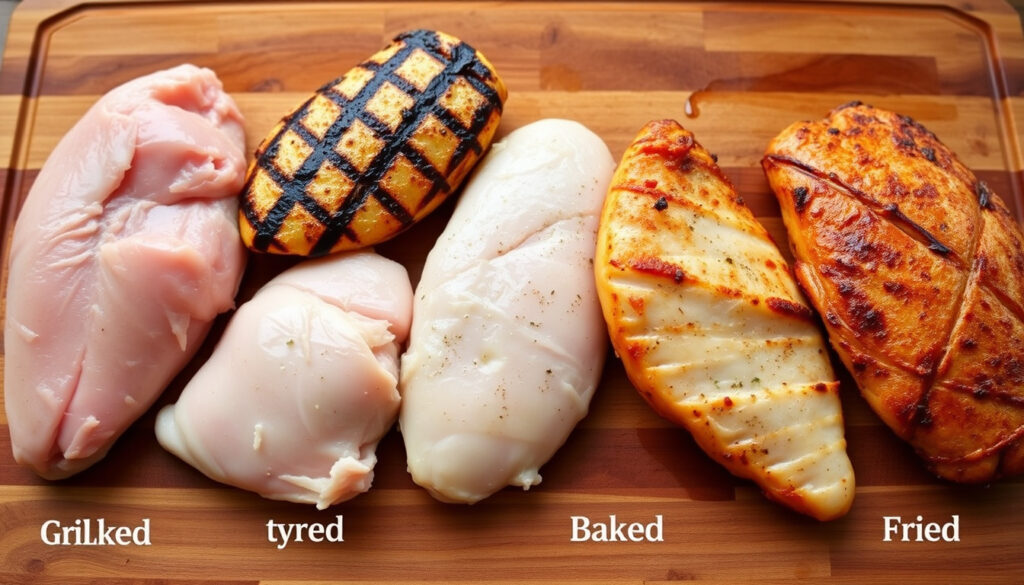
How Many Calories in a Boneless Skinless Chicken Breast?
Chicken breast ranks among the most frequently consumed protein sources worldwide, particularly for those monitoring caloric intake. Understanding its exact nutritional profile helps with meal planning, weight management, and meeting dietary goals. This guide breaks down calories by weight, preparation method, and type to provide clear, actionable information.
A standard 3.5-ounce (100g) serving of boneless, skinless chicken breast contains approximately 106 calories when raw and 165 calories when cooked. Removing the skin significantly reduces fat content while preserving high protein levels.
Calories by Common Serving Sizes
| Serving Size | Calories (Raw) | Calories (Cooked) | Protein | Fat |
|---|---|---|---|---|
| 3 oz (85g) | ~90 | ~140 | 26-31g | 3g |
| 4 oz (113g) | ~120 | ~187 | ~35g | 4-5g |
| 6 oz (170g) | ~180 | ~280 | ~52g | 6-8g |
| 8 oz (227g) | ~240 | ~374 | ~70g | 8-10g |
Key Nutritional Insights
- Chicken breast contains zero carbohydrates regardless of preparation method
- Protein content increases by 15-20% when cooked due to moisture loss
- Fat content remains relatively low at 1.9-2g per 100g raw, rising to 3.6-4.7g when cooked
- The leanest option comes from boneless, skinless breast prepared by grilling, baking, or steaming
- Adding skin triples the fat content, increasing calories significantly
- Bone-in pieces reduce edible yield by approximately 20-30% compared to boneless
Raw weights typically yield 20-25% less cooked weight due to water evaporation during cooking. For precise tracking, weigh chicken raw when possible or use cooked weight equivalents provided above.
Calories in Cooked vs Raw Chicken Breast
The difference between raw and cooked chicken breast extends beyond simple temperature changes. Cooking alters the food’s structure, moisture content, and ultimately its nutritional density. Those tracking calories closely should understand these transformations to maintain accurate records.
Why Calories Change When You Cook Chicken
When heat is applied to chicken breast, water within the muscle fibers evaporates. This moisture loss concentrates the remaining nutrients, meaning the same raw weight yields fewer calories in absolute terms but a higher density per gram. For example, a 100g raw breast drops to approximately 75-80g cooked, yet the caloric value shifts from 106 to around 165 calories.
The protein concentration increases as water leaves, which explains why cooked chicken often appears to have more protein per gram than raw chicken. This concentration effect applies to all cooked preparations, though the extent varies by cooking method.
Calories by Cooking Method
| Preparation Method | Calories per 100g | Protein (g) | Fat (g) |
|---|---|---|---|
| Raw, skinless | 106 | 22.5-23 | 1.93-2 |
| Grilled/Baked, skinless | 165 | ~31 | 3.6 |
| Boiled/Steamed, skinless | ~160-170 | ~30 | ~3-4 |
| Fried (with flour coating) | Higher (varies) | Varies | Significantly higher |
| Raw, with skin | ~150-160 | ~21 | ~9 |
Impact of Frying on Calorie Content
Frying introduces additional fats from cooking oil, substantially increasing caloric content beyond what moisture loss alone would account for. The breading or flour coating commonly used in frying adds further carbohydrates. For those seeking the lowest calorie option, grilling, baking, or steaming without added fats remains the best approach.
Chicken Breast Calories by Type and Preparation
Beyond the basic skinless versus skin-on distinction, several factors influence the caloric content of chicken breast. Understanding these variations helps consumers make informed choices aligned with their nutritional goals.
Boneless Skinless vs Bone-In Varieties
Bone-in chicken breast contains the same lean meat but with the addition of inedible bone and often some skin. When purchasing bone-in pieces, the actual edible portion decreases by roughly 20-30%. A “whole” chicken breast with bone and skin weighing 200g may only yield 120-140g of usable meat after cooking.
For calorie-conscious individuals, boneless skinless remains the preferred choice. Bone-in with skin options serve those prioritizing flavor and moisture retention over strict caloric control.
Organic vs Conventional Chicken
Research indicates that organic and conventionally raised chicken breast show minimal caloric differences when compared at equivalent cuts. Nutritional variations tend to appear more in fatty acid profiles and micronutrient content rather than overall calorie count. The macronutrient foundation remains consistent across production methods.
Fresh vs Frozen Chicken Breast
Freezing and thawing does not significantly alter the caloric content of chicken breast. Any minor moisture differences typically stem from the thawing process rather than nutritional changes. Both fresh and properly stored frozen chicken breast provide equivalent macronutrient profiles.
Restaurant portions often exceed standard serving sizes. A typical restaurant breast may weigh 8-10oz (227-284g cooked), providing 370-470 calories before any sauces or accompaniments are added.
Full Chicken Breast Nutrition Facts
Beyond calories and protein, chicken breast offers a range of essential nutrients that support overall health. Its profile makes it suitable for various dietary approaches, from high-protein diets to those focused on weight management.
Complete Macronutrient Breakdown
| Nutrient | Amount per 100g Raw | Amount per 100g Cooked |
|---|---|---|
| Calories | 106 | 165 |
| Protein | 22.5-23g | 26-31g |
| Total Fat | 1.93-2g | 3.6-4.7g |
| Saturated Fat | ~0.5g | ~1g |
| Carbohydrates | 0g | 0g |
| Cholesterol | ~64mg | ~85mg |
Micronutrient Content
Chicken breast provides several important vitamins and minerals beyond its macronutrients. According to nutritional databases, skinless chicken breast contains meaningful amounts of B vitamins including niacin (B3), pyridoxine (B6), and cobalamin (B12). Selenium levels rank notably high, supporting thyroid function and antioxidant defenses. Iron and zinc content, while lower than dark meat cuts, still contributes to daily nutritional needs.
Comparing Chicken Breast to Chicken Thigh
| Nutrient (per 100g, cooked) | Chicken Breast (skinless) | Chicken Thigh (skinless) |
|---|---|---|
| Calories | 165 | 209 |
| Protein | 26-31g | 23-25g |
| Total Fat | 3.6-4.7g | 8.5-10.3g |
| Saturated Fat | ~1g | ~2.5g |
Chicken breast delivers approximately 25-30% fewer calories than thigh meat when comparing equivalent weights. The protein advantage favors breast by 18-25%, making it the preferred cut for lean protein goals. However, thighs offer more iron and zinc along with higher fat-soluble vitamin content.
How Cooking Affects Chicken Breast Calories
Understanding the progression from raw to cooked helps explain why nutritional values shift. Each cooking method influences the final product differently based on heat application, moisture retention, and added ingredients.
- Raw state: Chicken breast contains approximately 74% water. Calories hover around 106 per 100g with full moisture intact.
- Heat application begins: As temperature rises, water begins evaporating from the surface and within muscle fibers. Protein structures begin to denature.
- Mid-cooking (internal temperature 145°F/63°C): Significant moisture loss occurs. Protein content begins concentrating as water exits.
- Fully cooked (165°F/74°C): Final moisture levels stabilize. Caloric density reaches approximately 165 calories per 100g. Protein concentration peaks around 31g.
- Resting period: Some moisture reabsorbs into the meat during resting, slightly altering final weights and nutritional density.
Those following Mounjaro Weight Loss Reviews – Real Results and User Experiences may find these cooking transformations particularly relevant, as protein content and caloric density directly impact satiety and daily intake tracking.
What Science Confirms vs What Remains Unclear
Nutritional databases provide solid foundations for understanding chicken breast calories, though some areas remain less defined than others. Transparency about these distinctions helps readers assess the reliability of various sources.
USDA-aligned data consistently shows raw boneless skinless chicken breast at approximately 106 calories per 100g. Cooked values around 165 calories per 100g appear across multiple nutrition databases. Protein content of 31g per 100g cooked represents the consensus figure for grilled or baked preparations. For a comprehensive breakdown of chicken breast calories, you can refer to Mounjaro and alcohol.
Exact caloric variations between different chicken breeds remain poorly documented in public databases. The impact of chicken feed composition on final nutritional profile is acknowledged but not comprehensively quantified. Precise differences between organic and conventional raising methods on micronutrient content need additional study.
Why Chicken Breast Fits Different Dietary Approaches
Chicken breast’s macronutrient profile aligns well with numerous popular diet strategies. Its high protein content supports muscle preservation during caloric restriction, while zero carbohydrates make it compatible with low-carb and ketogenic approaches.
Low-Calorie and Weight Loss Diets
At approximately 165 calories per 100g cooked, chicken breast offers excellent satiety relative to its caloric load. The high protein density supports feelings of fullness, potentially reducing overall daily intake. This makes chicken breast a staple in meal prep for those pursuing weight management goals.
High-Protein and Bodybuilding Approaches
Athletes and those focused on muscle building often prioritize chicken breast for its complete amino acid profile and lean protein. The Does Creatine Make You Gain Weight – Science on Water Retention article explores how protein sources interact with supplementation strategies, relevant for those building comprehensive nutrition plans.
Keto and Low-Carb Diets
With zero carbohydrates, chicken breast fits seamlessly into ketogenic and low-carb eating patterns. The fat content remains low enough to allow flexibility in adding healthy fats from other sources while maintaining macronutrient ratios typical of these approaches.
Expert Guidance on Interpreting Nutritional Data
“Chicken breast remains one of the most reliable lean protein sources available for dietary planning. The consistency across databases makes it easier for individuals to track intake accurately.”
— Academy of Nutrition and Dietetics guidance on protein foods
“When comparing protein sources, the fat-to-protein ratio of chicken breast makes it exceptionally suitable for those monitoring caloric intake while maintaining adequate protein consumption.”
— EatRight.org nutritional analysis
Key Takeaways on Chicken Breast Calories
Chicken breast provides approximately 106 calories per 100g raw and 165 calories per 100g cooked when boneless and skinless. Portion sizes matter significantly—a 4oz cooked serving contains roughly 187 calories, while an 8oz portion provides approximately 374 calories. Protein content ranges from 22.5-23g raw to 26-31g cooked per 100g, making it one of the most protein-dense lean meats available. Cooking methods affect caloric density through moisture loss, with grilled, baked, and steamed preparations offering the lowest fat additions. Skin-on varieties roughly triple the fat content, increasing total calories substantially. Those tracking intake for weight management or specific dietary goals should weigh portions raw when possible for maximum accuracy, or use the cooked weight equivalents provided in this guide.
Frequently Asked Questions
How many calories are in a 6oz chicken breast?
A 6oz (170g) boneless, skinless chicken breast cooked contains approximately 280-314 calories and about 52-53 grams of protein.
Is chicken breast considered low calorie?
Yes, chicken breast qualifies as a low-calorie protein source. At 165 calories per 100g cooked, it provides substantial protein with minimal fat and zero carbohydrates.
How many calories in fried chicken breast?
Fried chicken breast contains significantly more calories than grilled or baked versions due to oil absorption and often includes breading. Exact values vary by preparation, but expect substantially higher fat and calorie content.
Can chicken breast fit into a keto diet?
Chicken breast contains zero carbohydrates and moderate fat when skinless, making it fully compatible with ketogenic and other low-carb dietary approaches.
What is the calorie difference between raw and cooked chicken breast?
Raw chicken breast contains approximately 106 calories per 100g, while cooked reaches about 165 calories per 100g. This 55% increase reflects moisture loss concentrating calories in the remaining edible portion.
How does chicken breast compare to turkey breast nutritionally?
Chicken and turkey breast offer similar caloric profiles and protein content. Both provide lean protein with minimal fat and zero carbohydrates, making them interchangeable in most meal plans.
Does the way I cook chicken affect its nutritional value?
Cooking method primarily affects fat content and caloric density through moisture changes. Grilling, baking, and steaming preserve the lean nature of chicken breast without adding significant fat, while frying increases both fat and calorie content considerably.
Related stories





Thomas Hayes covers Westminster, councils and public policy across the United Kingdom.