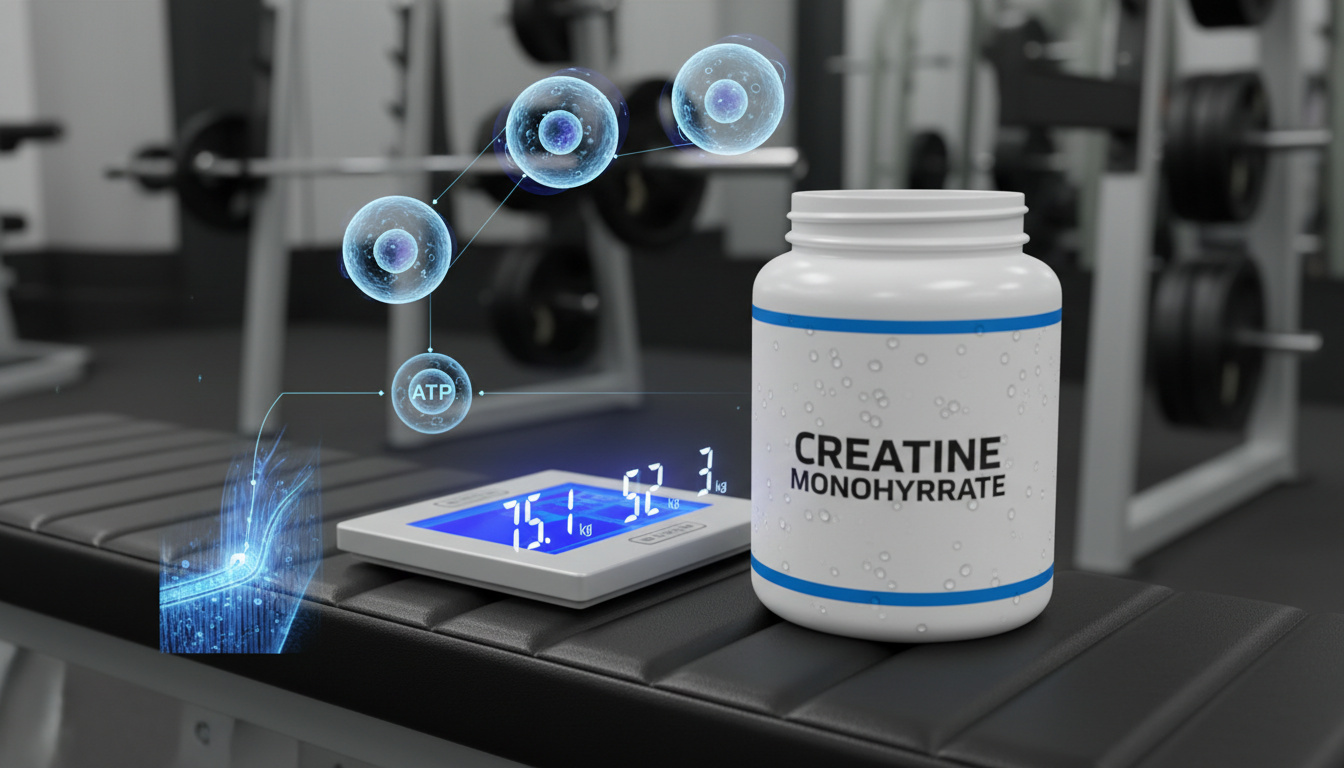

Creatine supplementation triggers immediate increases on the scale that often alarm new users. These gains reflect water shifting into muscle cells via osmotic pressure, not fat accumulation. Levels Protein confirms that the compound draws fluid intracellularly, producing temporary weight increases of 1–4.8 kg during initial saturation.
The molecule binds to phosphate stores within skeletal muscle, necessitating additional hydration to support metabolic processes. NIH-funded research indicates that approximately 90% of early mass gains represent water retention without adverse effects on lean tissue composition. This physiological response supports athletic performance but generates misconceptions about adipose tissue growth.
Does Creatine Make You Gain Weight?
2–5 pounds of water weight appear within the first week of supplementation.
Zero evidence of fat accrual; gains are strictly fluid and lean tissue.
Temporary effect stabilizes within 2–4 weeks as fluid equilibrates.
Supports measurable lean mass increases when combined with resistance training.
- Osmotic activity pulls water into intracellular muscle compartments
- Total body water increases 1–4.8 kg during initial loading phases
- Weight stabilizes after muscle creatine stores reach saturation
- No clinical evidence links supplementation to adipose tissue expansion
- Effects reverse completely upon cessation of use
- Long-term use enhances protein synthesis capacity
- Response magnitude varies by individual baseline hydration status
| Aspect | Detail | Evidence Source |
|---|---|---|
| Weight Type | Intracellular water retention | NIH/PMC Trial |
| Initial Amount | 1–4.8 kg (2–10 lbs) | Bubs Naturals |
| Primary Location | Skeletal muscle cells | Naked Nutrition |
| Adipose Impact | No fat gain documented | Healthline |
| Reversibility | Complete upon discontinuation | USN Global |
| Safety Profile | No long-term adverse effects noted | NIH Office of Dietary Supplements |
Is Creatine Weight Gain Fat or Water?
Water vs. Fat Breakdown
The rapid scale increase occurs because creatine molecules bind water inside muscle fibers, increasing cell volume. Bubs Naturals explains that intracellular retention creates visible muscular fullness, while minor extracellular shifts may cause temporary bloating. Adipose tissue mass remains unchanged regardless of supplementation duration.
Healthline emphasizes that caloric surplus drives fat accumulation, not creatine itself. The supplement contains no calories and does not trigger lipogenic pathways.
A 2000 trial measuring nineteen resistance-trained males found total body water increased by 2–4.8 kg during loading, with 90% of mass gains attributable to water retention and no concurrent fat mass increases detected.
Muscle Gain Potential with Training
Beyond fluid shifts, creatine enables genuine tissue growth through enhanced ATP regeneration during high-intensity exercise. USN Global notes that increased training capacity leads to denser muscle fiber development, which improves body composition despite higher scale readings.
Is Creatine Weight Gain Permanent?
Reversibility Upon Stopping
Cessation prompts rapid normalization of fluid balance as muscle creatine stores deplete. Naked Nutrition reports that water weight typically returns to baseline within 2–4 weeks of discontinuation, leaving no residual bloating.
Long-term Muscle Retention
Lean tissue acquired during supplementation persists only with continued resistance training. International Society of Sports Nutrition position stands confirm that performance gains drive sustainable body composition improvements independent of ongoing creatine use.
Managing Creatine Side Effects Like Bloating
Eliminating the 20–25g daily loading phase prevents acute water shifts. Starting directly with 3–5g maintenance doses allows gradual saturation without significant bloating.
Tips to Minimize Water Retention
Sodium restriction below 2,300mg daily prevents extracellular fluid accumulation. Strategic hydration exceeding 3–4 liters daily signals the body to release stored water, paradoxically reducing puffiness.
Hydration and Dosing Strategies
Dividing daily doses into smaller portions reduces osmotic shock. Consistent timing helps establish predictable fluid equilibrium.
Response varies significantly based on baseline muscle creatine levels, dietary habits, and genetic transporter efficiency. Some individuals experience minimal weight change despite proper dosing.
How Much Weight Gain from Creatine and When?
- Days 1–7 (Loading Phase): Rapid 1–2% body mass increase occurs with 20–25g daily dosing, representing up to 1 liter of water retention.
- Weeks 2–4 (Stabilization): Water weight begins equilibrating throughout tissues; visible bloating subsides for most users.
- Month 1+ (Maintenance): Weight stabilizes 3–5 lbs above baseline; intracellular hydration optimizes cellular function.
- Post-Cessation (2–4 weeks): Return to pre-supplementation weight occurs if training stops and creatine intake ceases.
Established Facts vs. Remaining Questions
| Established Information | Information Requiring Further Study |
|---|---|
| Water gain is temporary and fully reversible | Exact thresholds of individual variation |
| No fat accrual occurs from supplementation | Long-term effects on creatine non-responders |
| Loading phases cause peak retention | Interaction with specific renal conditions |
| Maintenance dosing minimizes bloating | Gender-specific response patterns beyond current data |
The Physiology of Creatine-Induced Weight Changes
Creatine monohydrate functions as an osmotically active compound. Upon ingestion, it concentrates within skeletal muscle tissue, with each gram binding approximately three grams of water. This cellular hydration triggers anabolic signaling pathways distinct from pathological fluid retention.
The International Society of Sports Nutrition recognizes this mechanism as beneficial for protein synthesis. The NIH Office of Dietary Supplements affirms that such weight changes reflect normal physiological adaptation rather than adverse health effects. For more information on lunges, please visit What is a lunge exercise.
Research Perspectives on Creatine Safety
Creatine loading increased total body water by approximately 2–4.8 kg in resistance-trained males, with 90% of mass gains attributable to water retention without adverse effects on lean tissue composition.
— NIH/PMC Clinical Trial, 2000
The weight gain associated with creatine supplementation is primarily due to water retention in the muscle cells, not fat gain.
— Levels Protein Research Review
Final Verdict on Creatine and Weight Gain
Creatine increases scale weight temporarily through intracellular hydration, not fat accumulation. Users typically gain 2–5 pounds initially, stabilizing as the body adapts. For those monitoring Creatine Weight Gain, understanding this distinction prevents unnecessary concern. The effect reverses upon discontinuation, while consistent use supports measurable strength improvements when combined with resistance training.
Frequently Asked Questions
Is creatine safe if concerned about weight?
Yes. Clinical evidence confirms creatine causes only temporary water retention, not fat gain, with no adverse metabolic effects in healthy adults.
How to avoid weight gain on creatine?
Skip loading phases, maintain doses of 3–5g daily, restrict sodium below 2,300mg, and consume 3–4 liters of water daily to minimize bloating.
Does creatine cause face puffiness?
Minor facial bloating may occur during loading phases due to extracellular water, but typically resolves within 2–3 weeks.
Will I lose the weight if I stop taking creatine?
Yes. Water weight returns to baseline within 2–4 weeks of cessation, though trained muscle mass remains with continued exercise.
Does creatine affect fat loss efforts?
No. Creatine contains no calories and does not inhibit lipolysis. It may indirectly support fat loss by improving workout intensity.
Does Does Creatine Make You Gain Weight? differently for women?
Mechanisms remain identical, though total water gain may be proportionally less due to typically lower muscle mass.
Related stories





Rebecca Haines is Managing Editor at Press Hive, overseeing the daily news list, headline review and commissioning.