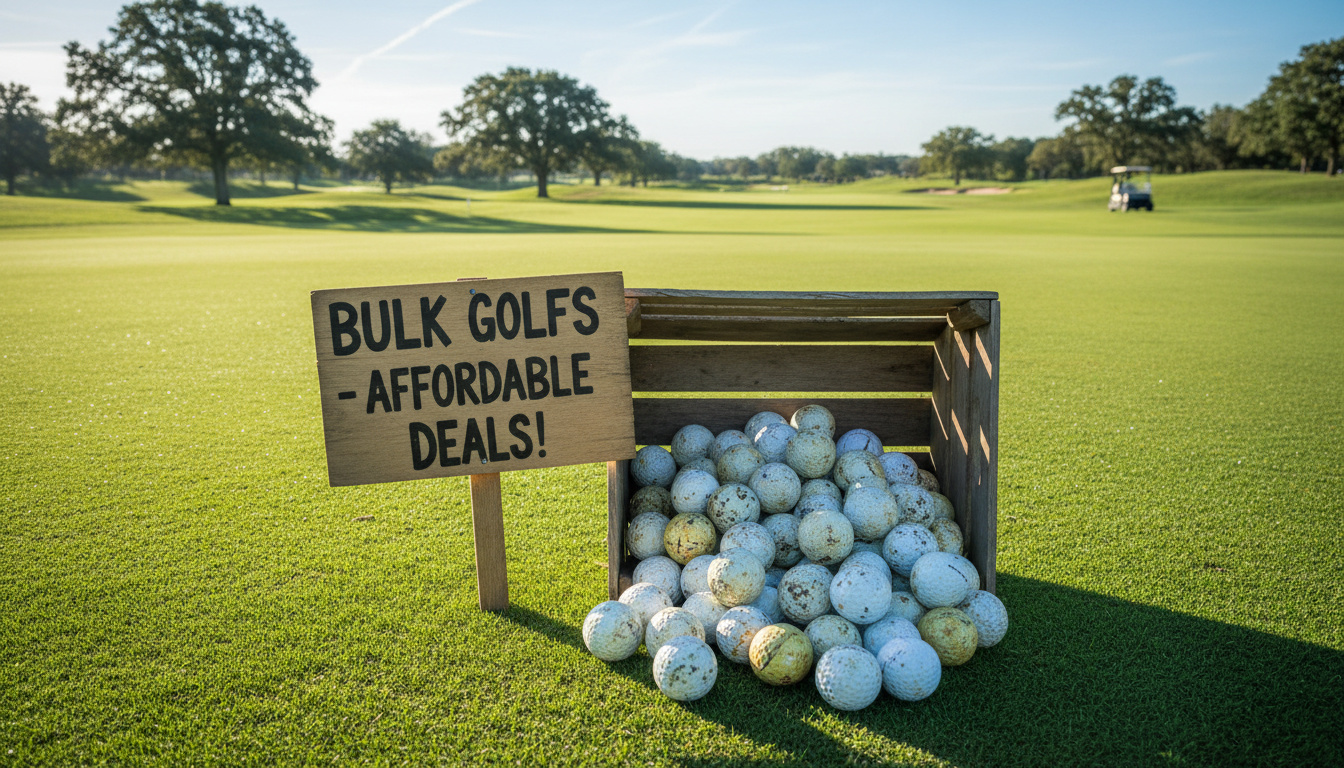

The secondary golf ball market has matured into a legitimate alternative for players seeking tour-level performance without retail markup. Modern recovery and refurbishment processes now supply inventory ranging from lightly used premium models to bulk practice-grade shipments, creating tiered pricing structures that accommodate every skill level and budget constraint.
Understanding condition grades and compression ratings remains essential when navigating online listings. Sellers classify recovered balls into distinct categories—Mint, Near Mint, and Good—each representing different levels of cosmetic wear and potential performance variance. These classifications determine whether a $25-per-dozen Pro V1 represents genuine value or simply expensive range fodder.
Where Can I Buy Cheap Golf Balls?
Budget-conscious players now access multiple procurement channels that bypass traditional retail markups. Online specialty resellers like Golf Ball Planet, Golf Ball Monkey, and Found Golf Balls operate dedicated grading facilities where recovered inventory undergoes cleaning and quality assessment before resale. These vendors typically price mint-condition used balls at 40-60% below replacement cost, while bulk recycled options drop to roughly $0.50 per ball in wholesale quantities.
Wilson Duo Soft
$20 per dozen
Titleist Pro V1
$50 per dozen
Mint Grade Resale
$25-$30 per dozen
Recycled Lake Balls
$6-$24 per dozen
Local course pro shops occasionally sell lost-and-found inventory, though selection remains unpredictable. Big-box retailers like Rock Bottom Golf maintain consistent stock of both new promotional packs and refurbished sets, offering return policies that individual auction sellers typically cannot match.
- Compression ratings below 70 suit swing speeds under 85 mph
- Dimple counts between 300-400 optimize trajectory stability
- Urethane covers provide greenside spin; Surlyn prioritizes durability
- Used balls deliver 50-70% cost savings versus new retail
- Mint grade classification requires zero visible wear or scuffs
- Bulk purchases of 50-100 units minimize per-ball expenditure
- USGA conformity standards apply equally to new and undamaged used balls
| Specification | Detail |
|---|---|
| Standard Diameter | 1.68 inches |
| Maximum Weight | 1.62 ounces |
| Average Dimple Count | 300-400 |
| Core Composition | Synthetic rubber compounds |
| Mantle Layers | Ionomer or urethane blends |
| Cover Materials | Urethane (spin) or Surlyn (distance) |
| New Premium Pricing | $40-$55 per dozen |
| Mint Used Pricing | $25-$30 per dozen |
| Recycled Pricing | $6-$24 per dozen |
| Wholesale Bulk Rate | $0.50-$2.00 per ball |
What Are the Best Golf Balls for Beginners?
Novice players should prioritize low-compression constructions that deform easily against slower swing mechanics. Models like the Wilson Duo Soft and Srixon Soft Feel compress at impact even when clubhead speeds register below 85 mph, generating higher launch angles and reduced sidespin that minimize the penalty of off-center strikes. Man City v Liverpool – Preview, Prediction and Team News demonstrates how professional equipment selections differ from amateur needs, where forgiving construction matters more than tour-level spin control.
High-handicap players typically lose one to two balls per round, making premium urethane models financially impractical during the developmental phase. Entry-level Surlyn-covered balls provide sufficient distance for skill building while withstanding cart path impacts and tree collisions that would damage softer tour covers.
Golf balls with compression ratings under 70 suit players with driver swing speeds below 90 mph. This threshold covers most recreational golfers and ensures maximum energy transfer for distance.
Brand-Specific Recommendations
Titleist Pro V1 remains the benchmark for spin control, though beginners rarely benefit from its nuanced urethane cover. Mint-condition used versions sell for approximately $30 per dozen through reputable resellers, offering a compromise between quality and cost. Callaway’s Chrome Soft and refurbished Maxfli Softfli alternatives provide comparable soft feels at lower compressions, making them accessible for inconsistent ball-strikers still developing face contact precision.
Are Used Golf Balls Worth Buying?
Independent performance testing indicates mint-condition used balls retain nearly identical distance and flight characteristics to factory-fresh equivalents. Video analysis demonstrates that minor cosmetic blemishes rarely affect launch speed, spin rates, or smash factor metrics for casual players.
The economic argument overwhelmingly favors used inventory for non-competitive play. With average amateurs showing negligible gains from new core technology, the cost-to-benefit ratio skews heavily toward recycled options, particularly for practice rounds and high-handicap gameplay.
The United States loses approximately 30 million golf balls annually to courses and water hazards. Reuse programs significantly reduce manufacturing emissions associated with virgin rubber and urethane production.
Performance Limitations
Professional-caliber players may detect reduced greenside spin on refurbished urethane covers where stripping processes damaged original surfaces. However, myths about drastic performance loss prove largely unfounded for swings below tour speeds. Recycled balls without refurbishment show greater variance in flight consistency, making them suitable for range work rather than scoring rounds.
What Factors to Consider When Buying Golf Balls?
Condition grading determines value more than brand recognition in secondary markets. Transparent graders classify inventory as Mint (AAAAA, near-new), Near Mint (AAAA, minor blemishes), or Good (AAA, visible wear). Inspection for cracks and heavy scuffs prevents purchasing compromised balls that fly unpredictably.
Purchase only from sellers providing detailed grading standards. Counterfeit premium balls circulate in unverified auction listings, particularly for high-demand models like the Pro V1.
Cover Materials and Construction
Urethane covers offer superior spin control and soft feel preferred by low-handicap players, while Surlyn covers provide enhanced durability and distance for beginners. Multi-layer balls with mantle layers between core and cover optimize energy transfer, though recreational players rarely generate sufficient speed to activate these advanced characteristics fully.
Wholesale Pricing Structures
Bulk purchases amplify savings substantially. Wholesale lots containing 50 to 100 balls drop per-unit costs to $0.50-$2.00 for recycled grades, compared to $2.00-$3.00 per ball for mint refurbished sets. Rock Bottom Golf and GolfBalls.net specialize in these volume transactions, offering lowest per-ball rates for frequent players who lose multiple balls monthly.
How Has the Golf Ball Market Evolved?
- : Feather-stuffed leather balls dominate professional play, requiring expensive handcrafted construction
- : Introduction of gutta-percha (dried tree sap) balls replaces featheries with durable, affordable alternatives
- : Rubber-wound balls debut, introducing tension-based core construction that increases distance potential
- : Surlyn synthetic covers replace balata, dramatically improving cut resistance and durability
- : Multi-layer urethane designs emerge, culminating in the 2000 Titleist Pro V1 launch that redefined tour performance
- : Commercial lake recovery operations scale up, harvesting millions of lost balls annually
- : Specialized resale platforms like Golf Ball Monkey launch, standardizing grading and authentication processes
- : Automated optical sorting systems now classify used balls by condition with minimal human error
What Performance Claims Are Verified vs Speculative?
Established Facts
- Mint used balls retain 95%+ of original distance potential
- Low compression benefits swings below 90 mph
- Urethane generates measurably higher spin than Surlyn
- Bulk purchasing reduces costs 60-80% versus retail
- USGA rules permit undamaged used balls in handicapped play
Uncertain or Context-Dependent
- Exact lifespan of refurbished clear coatings
- Performance degradation in water-logged balls beyond visible damage
- Whether tour balls improve scoring for 20+ handicaps
- Long-term durability of stripped and repainted covers
- Consistency variance between individual recycled balls
Why Do Golf Ball Prices Vary So Dramatically?
Manufacturing complexity drives baseline retail pricing. Multi-layer urethane balls require precise core molding, mantle layer application, and cover casting that single-piece Surlyn models avoid. Research and development costs for proprietary dimple patterns further concentrate in premium lines marketed to tour professionals and scratch golfers.
Distribution channel economics create additional price stratification. Big-box sporting goods stores carry substantial overhead costs including retail space and staff, while specialized online resellers shipping directly from refurbishment facilities minimize these expenses. Lost golf balls recovered from course ponds enter the market at acquisition costs below manufacturing, enabling the deep discounts seen in bulk recycled lots.
What Do Industry Sources Say About Quality?
Used golf balls offer significant cost savings over new ones, typically $6–$30 per dozen depending on condition, making them ideal for bulk buys, beginners, high handicappers, and practice rounds.
— Golf Balls Net, Industry Analysis
Minor scuffs rarely affect launch speed, spin, or smash factor for casual or recreational play.
— Stix Golf, Equipment Testing Division
Choose new for competitive play; used for budget-conscious golfers, as average amateurs see negligible gains from new tech.
— Cattail Crossing, Equipment Guides
Where Should You Start Your Search?
Evaluate your typical loss rate and current handicap before purchasing. High-handicap players benefit most from bulk recycled orders through established outlets like GolfBalls.net or Rock Bottom Golf, while competitive amateurs should prioritize Mint-grade used inventory from transparent graders like Golf Ball Planet. Players balancing sports viewing with recreational golf—perhaps while checking the Wrexham vs Sheffield Wednesday – Championship Preview and TV Guide—will find that mid-grade used balls offer sufficient quality for casual weekend rounds without premium pricing.
Frequently Asked Questions
What are practice golf balls?
Practice balls typically include Good or AAA-grade used balls with visible wear, blemishes, or minor cuts. These suit driving range sessions and short-game drills where flight consistency matters less than repetition volume.
What wholesale prices exist for bulk orders?
Wholesale bulk pricing ranges from $0.50 to $2.00 per ball for recycled grades, or $20 to $36 per dozen for mint refurbished balls. Orders of 50 to 100 balls typically unlock lowest per-unit rates.
Which balls suit high handicappers best?
High handicappers should select low-compression models like Wilson Duo Soft or Srixon Soft Feel. These generate straighter flight paths and minimize spin on mishits, while affordable used prices reduce financial stress when balls are lost.
Do refurbished balls lose distance?
Mint-grade refurbished balls show negligible distance loss compared to new balls. Testing confirms retained launch speed and smash factor, provided the cover remains structurally intact without cracks or deep scuffs.
Are lake-recovered balls safe to use?
Lake balls remain playable if properly graded and showing no structural damage. However, extended submersion can sometimes affect internal core integrity, making transparent grading and return policies essential when purchasing.
How can I spot counterfeit golf balls?
Purchase only from established sellers with authentication guarantees. Counterfeit balls often display misaligned logos, incorrect font spacing, or off-center cores. Avoid unverified auction listings for premium models priced significantly below market rates.
Related stories



Oliver Reeves leads fact-checking, source verification and corrections at Press Hive.