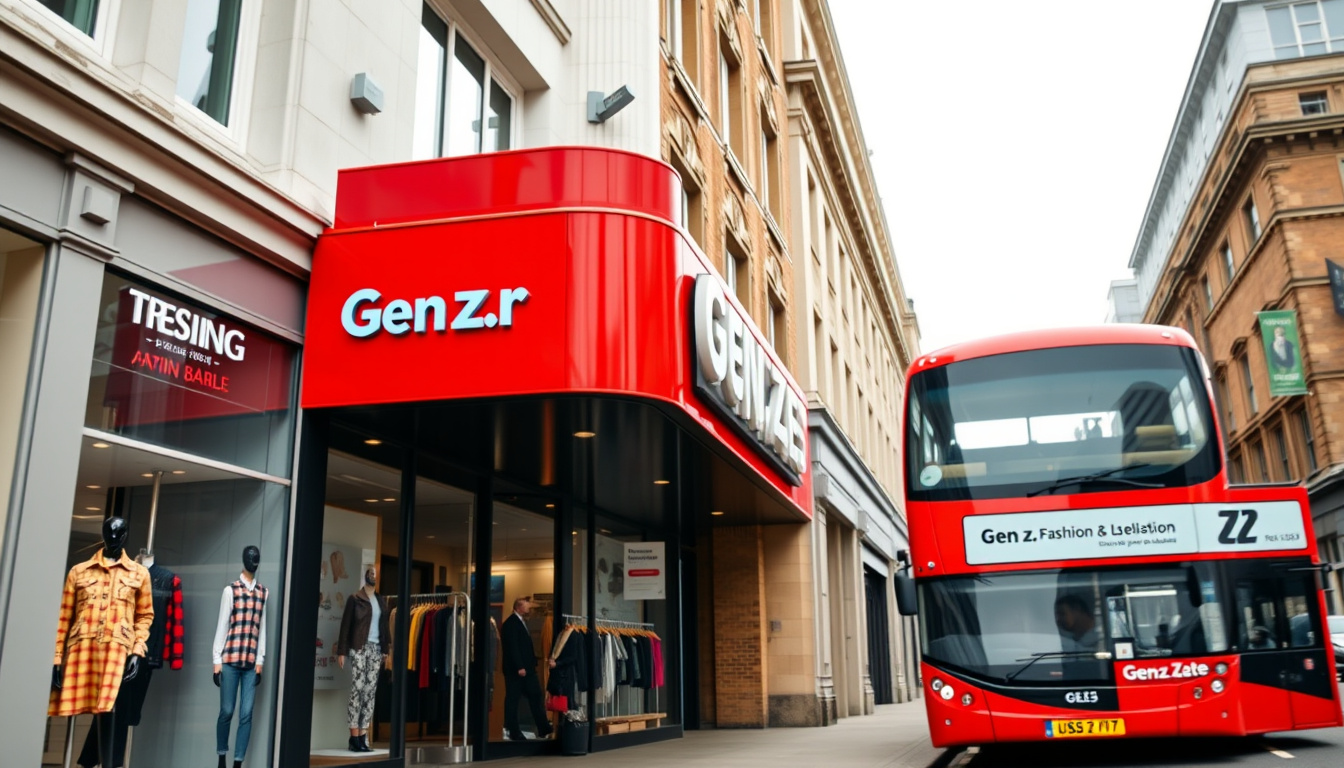
There’s something quietly radical about the way young Britons buy clothes — the high street still pulls crowds, but the phone in their pocket has already made the decision. Gen Z doesn’t just shop online; they discover brands on TikTok, order multiple sizes to avoid the fitting room, and increasingly look for second-hand options before clicking buy.
UK clothing market value 2025: £67.8 billion (Business Gateway citing Statista) · Online sales share: 48% (Mintel) · Gen Z ordering multiple variations: 44% (Retail Economics)
Quick snapshot
- Gen Z prefers online shopping: John Lewis reported 60.9% of sales came via its website and app (John Lewis Partnership).
- Sustainability influences choices: eight in ten Gen Z shoppers bought pre-loved fashion in 2025 (John Lewis Partnership). (John Lewis Partnership)
- TikTok drives discovery: 30% of Gen Z consumers bought apparel online after seeing it on social media (Retail Economics). (John Lewis Partnership)
- The impact of AI on clothing retail remains uncertain.
- Whether fast fashion will hold its dominance is unclear.
- The long-term trajectory of second-hand shopping is not yet established.
- UK apparel market forecast to grow 11% between 2025 and 2030 (Mintel).
- Revenue CAGR projected at 5.2% (Business Gateway).
- Online returns averaging 30% will pressure retailer logistics and margins (Business Gateway).
- Gen Z returns about twice as many items as shoppers aged 65 and over (Retail Economics).
The following table compiles key data points from the research sources cited throughout this guide.
| Fact | Value | Source |
|---|---|---|
| UK clothing market size 2025 | £67.8 billion | Business Gateway citing Statista |
| Online sales share of clothing spending | 48% | Mintel |
| Gen Z shoppers who bought after social discovery | 30% | Retail Economics |
| Gen Z ordering multiple clothing variations online | 44% | Retail Economics |
| John Lewis online sales share 2025 | 60.9% | John Lewis Partnership |
| Gen Z pre-loved fashion buyers | 8 in 10 | John Lewis Partnership |
| Average online returns rate | ~30% | Business Gateway |
| Gen Z return rate vs 65+ | Roughly 2× | Retail Economics |
What are the top 10 clothing retailers in the UK?
Major high-street retailers
- John Lewis – department store with strong online presence (60.9% of sales online in 2025; source: John Lewis Partnership).
- Marks & Spencer – traditional high-floor retailer with a growing digital channel.
- Primark – budget high-street chain popular with teens (no direct revenue data in this report).
High-street names like John Lewis are investing heavily online, but the real battleground is returns logistics: Gen Z sends back twice as many items as older shoppers (Retail Economics).
Leading online-only retailers
- boohoo – fast-fashion pureplay, popular among young women.
- ASOS – marketplace mixing own-label and third-party brands.
- Princess Polly – Gen Z favourite known for trend-led womenswear.
The online-only segment has driven much of the 48% online penetration reported by Mintel.
Retailers by revenue and reach
Precise rankings are not publicly verified, but industry sources point to NEXT as the largest UK clothing retailer by revenue. John Lewis Partnership, M&S, and Primark also command significant market share, though exact figures for each are not included in this report.
The pattern: The UK clothing market is fragmented, with no single retailer holding a dominant share. The growth of online-only players is reshaping the landscape faster than official rankings can capture.
Where do Gen Z get their clothes?
Preferred online platforms
- Gen Z shops overwhelmingly on mobile: 44% order multiple sizes of the same item to decide at home (Retail Economics).
- Depop and Vinted lead the resale space, while Shein dominates ultra-fast fashion.
Role of social media in discovery
- 30% of Gen Z consumers bought clothing online after first seeing it on social media (Retail Economics).
- TikTok is the primary discovery engine, with hashtags like #OOTD and #thrift haul driving millions of views.
“Gen Z are the most prolific returning age group, returning approximately twice as many items as consumers aged 65 and over.”
Retail Economics
Sustainable and second‑hand options
- Eight in ten Gen Z shoppers bought pre‑loved fashion in 2025, according to John Lewis Partnership.
- 29% of 18- to 28‑year‑olds said they frequently wear an item more than 30 years old.
Retailers must prioritise mobile-friendly shopping and straightforward returns to retain Gen Z customers.
What brands are teens wearing in 2026?
Emerging trends and brands
- John Lewis reported that 2025 fashion demand favours “expressive colour, comfort, nostalgia, and repair culture” over minimalism (John Lewis Partnership).
- Customisation and limited drops are expected to become central as brands court Gen Z’s desire for uniqueness.
Influence of TikTok and influencers
- TikTok trends currently include Y2K revival, baggy jeans, crop tops, and ‘coastal grandmother’ aesthetics.
- Influencers and micro-celebrities drive more purchasing decisions than traditional advertising.
Comparison with current favorites
- Nike and Adidas remain streetwear staples, but newer entrants like Aritzia and Ganni could grow if they maintain TikTok traction.
- The shift toward repair and resale means brands offering mending services or take‑back programmes (like John Lewis’s repair hubs) will stand out.
What this means: Teens in 2026 will likely wear a mix of heritage sportswear, second‑hand vintage, and niche direct‑to‑consumer brands that emerge on social platforms.
What is Gen Z obsessed with right now?
Current fashion micro-trends
- Y2K aesthetics, baggy denim, tiny sunglasses, and kitten heels are trending on TikTok and Instagram.
- John Lewis’s “expressive colour and nostalgia” trend aligns with the return of 1990s and 2000s styles (John Lewis Partnership).
Sustainability as an obsession
- 46% of surveyed shoppers say they would patch a ripped item themselves; 12.5% would have it professionally mended (John Lewis Partnership).
- Only 38% would discard and replace a damaged item, indicating a mindset shift away from disposability.
Vintage and thrifting culture
- Depop and Vinted have normalised buying second‑hand for fashion, not just for budget reasons.
- John Lewis noted that 29% of 18- to 28‑year‑olds frequently wear an item more than 30 years old.
Gen Z’s obsession with sustainability is not just talk — they are actively repairing, thrifting, and holding retailers accountable for ethical sourcing (John Lewis Partnership).
This behaviour signals a long-term shift away from disposability that brands cannot ignore.
What do Gen Z call clothes?
Slang terms for outfits
- ‘Fit’ is the most common abbreviation for an outfit (“nice fit”).
- ‘Drip’ refers to stylish, impressive clothing.
- ‘Clean’ or ‘on point’ are also widely used.
‘Fit and other abbreviations
- Terms like ‘OOTD’ (outfit of the day) originated on Instagram and are now standard on TikTok.
- ‘Thrift haul’ videos tag second‑hand purchases.
Generational vocabulary differences
- Millennials might say ‘outfit’ or ‘look’; Gen Z shortens to ‘fit’.
- ‘Swag’ (Millennial) is largely replaced by ‘drip’.
- These differences are amplified by TikTok’s rapid vocabulary evolution.
These linguistic differences reflect how TikTok accelerates cultural change.
How can you find the best clothing stores near you?
Using Google Maps and local directories
- Search “clothing stores near me” on Google Maps: it lists nearby retailers with ratings, hours, and directions.
- Check store categories (e.g., “vintage”, “high street”, “boutique”) to refine results.
Checking store reviews and ratings
- Sites like Trustpilot and Google Reviews give real customer feedback on quality, service, and returns.
- Look for recent reviews about sizing accuracy and customer service.
Online vs offline considerations
- Online offers wider choice and convenience; in‑store allows try‑before‑you‑buy.
- John Lewis reported that 9% of customers browsed in a physical store before buying online (John Lewis Partnership).
The key takeaway: blending online and in-store experiences is critical for modern shoppers.
Confirmed facts
- Gen Z prefers online shopping and uses social media for discovery.
- Sustainability is a key factor: 8 in 10 Gen Z shoppers bought pre‑loved fashion.
- TikTok heavily influences clothing trends among 18‑ to 28‑year‑olds.
What’s unclear
- How AI will reshape personalised clothing recommendations and returns.
- Whether fast fashion will retain its dominant position as sustainability concerns grow.
- If second‑hand shopping will become the norm or remain a subculture.
“Eight in ten Gen Z shoppers bought pre‑loved fashion in 2025, and almost one in three frequently wears an item more than 30 years old.”
John Lewis Partnership (2025 report).
“Online clothing returns average about 30%, placing significant pressure on retailer logistics and margins.”
Business Gateway (citing Mintel and industry data).
The implication for UK clothing retailers: The generation that prioritises sustainability, social discovery, and hassle‑free returns is also the most expensive to serve. Those who fail to adapt risk losing the most influential segment of the market. For UK clothing retailers, the choice is clear: invest in digital, sustainable, and resale offerings, or risk losing the most influential generation in fashion.
fashionunited.uk, uk.fashionnetwork.com, ons.gov.uk, statista.com
Frequently asked questions
Do clothing stores in the UK offer free returns?
Many major retailers such as NEXT, ASOS, and John Lewis offer free returns, but policies vary. Always check the returns policy before purchasing, especially for online orders.
What are the most sustainable clothing brands in the UK?
Brands like Patagonia, People Tree, and Stella McCartney are known for sustainability. Among high‑street names, John Lewis has strong pre‑loved programmes. For affordable options, second‑hand platforms like Depop and Vinted are highly sustainable.
How do online clothing stores handle sizing?
Most provide size guides, but Gen Z often copes by ordering multiple sizes and returning the ones that don’t fit — 44% do this, according to Retail Economics. Some retailers now offer virtual try‑on tools.
Are there clothing stores that cater to plus sizes?
Yes. ASOS Curve, Boohoo Plus, and Marks & Spencer all offer extended sizes. The market has expanded in recent years, though representation still varies across brands.
What is the return policy for NEXT clothing?
NEXT offers free online returns within 30 days. Items must be unworn and with tags. Check their website for the most current policy.
How can I track the sustainability of a clothing brand?
Look for certifications like B Corp, organic cotton labels, or bluesign. Apps like Good On You rate brands on environmental and ethical performance. John Lewis publishes its own sustainability data.
Related stories





Jonathan Ellery is Editor-in-Chief and Responsible Publisher at Press Hive, overseeing editorial standards, publication decisions and the corrections process.