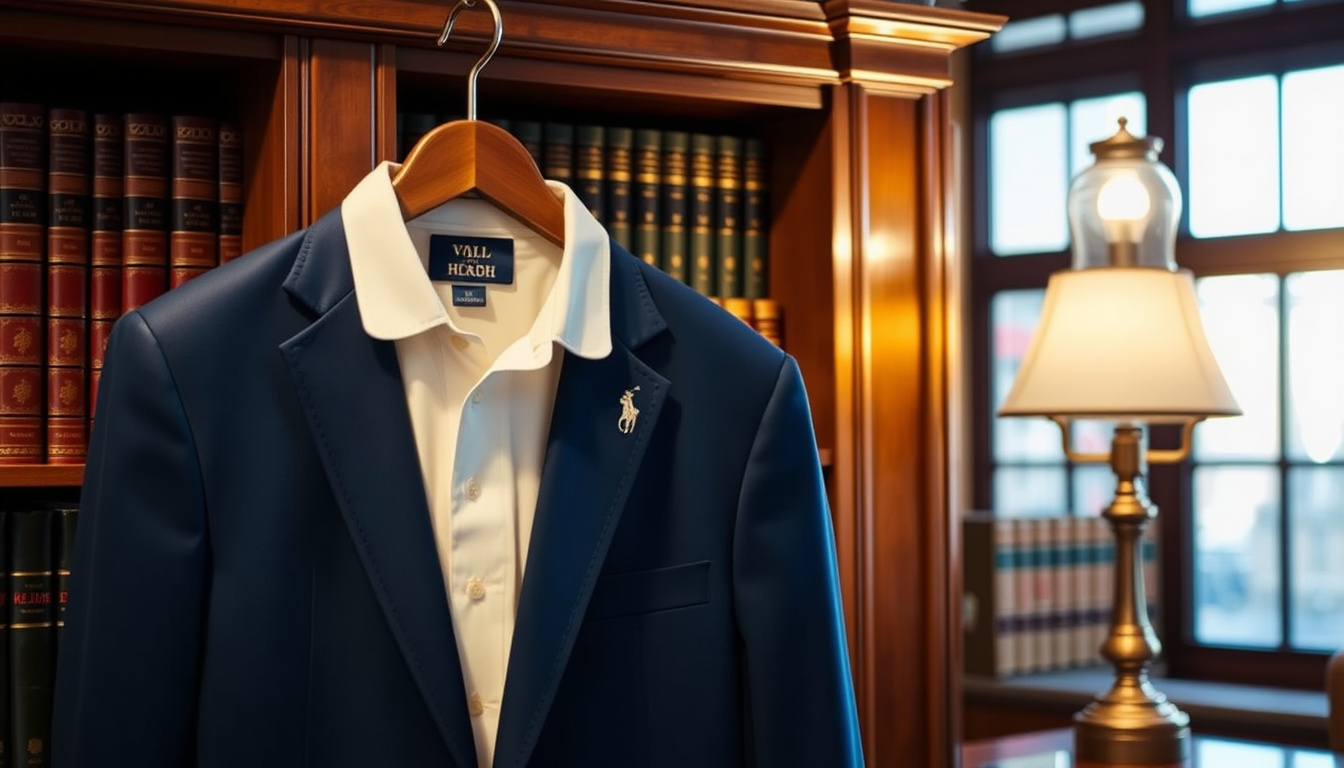
Ralph Lauren is a name that appears on everything from polo shirts to five-figure gowns, yet the man behind it remains something of a quiet enigma. He founded his company in 1967 with a simple tie collection and went on to build a global lifestyle empire—all while surviving a serious health scare in the late 1980s.
Founded: 1967 ·
Founder: Ralph Lauren ·
Headquarters: New York City, USA ·
Revenue (2023): $6.2 billion ·
Number of stores: approximately 500
Quick snapshot
- Ralph Lauren was born in 1939 in the Bronx (Biography.com)
- He founded Ralph Lauren Corporation in 1967 (Luxe Digital)
- He had a benign brain tumor surgically removed in 1987 (EBSCO Research Starters)
- Ralph Lauren Corporation is publicly traded on NYSE (Forbes)
- Exact current health status of the founder (private) (Luxe Digital)
- Whether the brand will sustain its Gen Z revival long term (Luxe Digital)
- Precise classification of the brand as pure luxury vs. hybrid (Luxe Digital)
- Specific year of diagnosis (1986 vs 1987) (Oprah.com interview archive)
- Long-term effectiveness of the luxury repositioning strategy (Luxe Digital)
- 1939 – Ralph Lauren born (Biography.com)
- 1967 – Company founded (Luxe Digital)
- 1987 – Brain tumor surgery (EBSCO Research Starters)
- 2015 – Steps down as CEO (The Business of Fashion)
- 2024 – Brand still a major luxury lifestyle label (Forbes)
- Continued focus on direct-to-consumer and digital growth
- Ongoing repositioning as a luxury house under CEO Patrice Louvet
- Possible expansion of Purple Label and Ralph Lauren Collection
Six key facts give a solid grounding in the company’s scale and governance.
| Attribute | Value |
|---|---|
| Founded | 1967 |
| Founder | Ralph Lauren |
| Headquarters | New York City, USA |
| CEO | Patrice Louvet (since 2017) |
| FY2023 Revenue | $6.2 billion |
| Employees | ~17,000 |
What is the difference between Ralph and Ralph Lauren?
Who is Ralph (the man)?
- Ralph Lauren was born Ralph Lifshitz on October 14, 1939, in the Bronx, New York (Biography.com).
- He started his career in fashion with a collection of wide neckties in 1967 (Luxe Digital).
- He has remained the public face of the brand and its executive chairman since 2015.
What is Ralph Lauren (the brand)?
- Ralph Lauren Corporation is a publicly traded company listed on the NYSE.
- It designs, markets, and distributes products across categories including apparel, accessories, home furnishings, and fragrances (Forbes).
- The brand operates multiple sub-labels: Polo Ralph Lauren (accessible), Ralph Lauren Collection (luxury), Purple Label (high-end men’s), Denim & Supply (casual), and others.
Key differences between the person and the corporation
- The man: A single individual who founded the company and remains its iconic chairman.
- The corporation: A global enterprise with ~17,000 employees, $6.2 billion in revenue (FY2023), and a CEO (Patrice Louvet) who runs day-to-day operations.
- Informal naming: In everyday speech, “Ralph” may refer to the designer, while “Ralph Lauren” usually means the brand.
The pattern: The man and the corporation are distinct entities, each with its own role in the brand’s ecosystem.
What was Ralph Lauren diagnosed with?
Type of cancer
Ralph Lauren was diagnosed with a benign brain tumor known as a meningioma. According to EBSCO Research Starters, the tumor was noncancerous.
Year of diagnosis
The most widely reported year is 1987, when the tumor was surgically removed in April (EBSCO Research Starters). However, an Oprah.com interview archive places the diagnosis a year earlier, in 1986. The discrepancy is minor—both sources agree the outcome was a successful surgery.
Treatment and recovery
Lauren underwent surgery to remove the meningioma and made a full recovery. He has been cancer-free since and continues to lead the company as executive chairman. In a 2018 interview, he reflected: “I don’t live in the past. I live in the future” (Complex). His health experience later fueled significant philanthropy: in 1989 he helped found the Nina Hyde Center for Breast Cancer Research at Georgetown University, and in 2001 he established the Polo Ralph Lauren Foundation (EBSCO Research Starters).
“I don’t live in the past. I live in the future.”
— Ralph Lauren, in a 2018 interview with Complex
Lauren turned a personal health crisis into a lasting institutional commitment: the Ralph Lauren Center for Cancer Care and Prevention in East Harlem opened with his funding, treating thousands of patients annually.
The implication: A personal health crisis catalyzed a philanthropic legacy that continues to benefit thousands of patients annually.
What happened to Ralph Lauren?
Recent business changes
- In 2015, Ralph Lauren stepped down as CEO but remains executive chairman.
- Patrice Louvet took over as CEO in 2017 and led a strategic reset focused on luxury positioning (The Business of Fashion).
- The company has shifted toward direct-to-consumer channels and digital growth, reducing wholesale dependence.
Personal milestones
- Lauren turned 85 in October 2024.
- He has been cancer-free for over 35 years.
- His net worth is estimated by Forbes at $7.5 billion (2024).
Ongoing legacy
Ralph Lauren remains a dominant force in lifestyle fashion. The brand continues to open stores globally and invest in high-end collections like Ralph Lauren Collection and Purple Label. In 2024, it is still considered a major player in the luxury space, though its broad price range sparks debate about whether it qualifies as true luxury.
“Ralph Lauren was founded as a luxury company and needed to return to that mindset.”
— Patrice Louvet, CEO, speaking to Fortune
What this means: The brand is in a strategic transition, balancing heritage with contemporary luxury positioning under new leadership.
Is Ralph Lauren a luxury?
Definition of luxury in fashion
Luxury fashion typically implies exclusive, high-priced goods sold through controlled distribution with strong heritage. By that standard, Ralph Lauren sits in a gray zone.
Ralph Lauren’s price positioning
- The brand’s own website describes Ralph Lauren Collection as “the highest expression of its luxury offer” (Ralph Lauren Corporate).
- Prices range from $80 Polo shirts to $5,000+ Purple Label suits, with home goods reaching even higher.
- Analysts at Luxe Digital describe the brand as a hybrid that spans genuine luxury and mass-market sportswear.
Comparison with other luxury brands
The table below shows how Ralph Lauren stacks up against peers.
| Brand | Price Range | Distribution | Luxury Classification |
|---|---|---|---|
| Ralph Lauren | $80 – $5,000+ | Own stores, wholesale, outlets | Accessible / hybrid luxury |
| Burberry | $250 – $3,000+ | Own stores, limited wholesale | True luxury |
| Tommy Hilfiger | $50 – $400 | Own stores, wholesale, outlets | Premium / contemporary |
| Michael Kors | $100 – $800 | Own stores, wholesale, outlets | Affordable luxury |
Independent commentary from Umbrex notes it has stronger luxury credentials than mainstream apparel companies but a less exclusive profile than houses like Chanel or Hermès.
Ralph Lauren’s hybrid model lets it capture more customers, but it also dilutes the exclusivity that pure luxury buyers expect. For investors, that breadth is a strength; for image purists, it’s a weakness.
The catch: The brand’s broad accessibility is both its commercial advantage and its luxury positioning challenge.
Does anyone wear Ralph Lauren anymore?
Popularity among different age groups
- Ralph Lauren has historically been strongest among consumers aged 40+, especially in the US and Europe.
- Younger shoppers drifted away in the 2010s toward streetwear and fast fashion.
- Recent years have seen a resurgence among Gen Z through vintage sourcing and the preppy revival trend.
Celebrity and influencer endorsements
- Celebrities such as Kendall Jenner and Travis Scott have been photographed wearing Ralph Lauren, reigniting cultural currency.
- The brand’s Instagram presence remains strong, with millions of followers and regular influencer collaborations.
Sales trends
The company reported $6.2 billion in revenue for fiscal year 2023, with growth in the direct-to-consumer channel. While younger cohorts are returning, the brand has not fully regained the cultural dominance it enjoyed in the 1990s.
The pattern: The brand’s cultural relevance is cyclical, and current trends are favorable but not guaranteed.
Timeline: Key events in Ralph Lauren’s life and brand
- 1939 – Ralph Lauren born in the Bronx, New York (Biography.com)
- 1967 – Founds Ralph Lauren Corporation with a line of men’s ties (Luxe Digital)
- 1987 – Diagnosed with a benign brain tumor; undergoes successful surgery (EBSCO Research Starters)
- 1989 – Helps establish the Nina Hyde Center for Breast Cancer Research at Georgetown University
- 1994 – Launches Fashion Targets Breast Cancer initiative
- 2001 – Forms the Polo Ralph Lauren Foundation (EBSCO Research Starters)
- 2015 – Steps down as CEO; remains executive chairman (The Business of Fashion)
- 2017 – Patrice Louvet becomes CEO (The Business of Fashion)
- 2024 – Brand continues as a major luxury lifestyle label (Forbes)
What this means: The timeline shows a clear arc from a tie startup to a global luxury house, shaped by both the founder’s vision and strategic corporate transitions.
Clarity check
Confirmed facts
- Ralph Lauren founded the company in 1967 (Luxe Digital).
- He was diagnosed with a brain tumor in 1987 and recovered (EBSCO Research Starters).
- Ralph Lauren Corporation is a publicly traded company (Forbes).
- Patrice Louvet became CEO in 2017 (The Business of Fashion).
- The brand operates multiple price tiers from accessible to high-end (Luxe Digital).
What’s unclear
- The exact current state of his personal health is private.
- Whether the brand will regain Gen Z momentum long-term is speculative.
- The precise classification of the brand as pure luxury remains debated (Luxe Digital).
- Specific year of diagnosis (1986 vs 1987) (Oprah.com interview archive).
- Long-term effectiveness of the luxury repositioning strategy.
The catch: While many facts are confirmed, the brand’s classification and future direction remain open questions.
Summary
Ralph Lauren the man built an empire on a simple idea—but the empire now faces a complex choice. For the company, the decision is whether to lean fully into luxury or embrace its hybrid nature. For the millions of loyal customers, the takeaway is that the Polo pony still holds cultural weight, even as the fashion world moves on. For younger shoppers drawn to vintage nostalgia, the brand offers a connection to a preppy past that feels new again.
Frequently asked questions
Why is Ralph Lauren called Polo?
The Polo name comes from the sport Ralph Lauren admired for its association with preppy, East Coast style. The Polo pony logo first appeared on his men’s shirts in the 1970s and became an instant brand marker.
What does the Ralph Lauren logo stand for?
The polo player on horseback represents the sport of polo, which Lauren associated with an aspirational, upper-class lifestyle. The logo is one of the most recognized in fashion.
Is Ralph Lauren more expensive than Tommy Hilfiger?
Generally, yes. Ralph Lauren’s Purple Label and Collection lines far exceed Tommy Hilfiger’s pricing. But at the Polo level, they compete closely. Overall, Ralph Lauren sits at a higher average price point.
Does Ralph Lauren offer plus sizes?
Yes, Ralph Lauren offers extended sizing in many of its lines, including Polo and Lauren Ralph Lauren. The brand has steadily improved size inclusivity in recent years.
What is the Ralph Lauren warranty?
Ralph Lauren offers a limited warranty against manufacturing defects for a period after purchase. Specific terms vary by product category. Customers should check the product’s care label and retain proof of purchase.
How can I tell if a Ralph Lauren shirt is authentic?
Check the stitching, button quality, and logo embroidery. Authentic shirts have clean, tight stitching on the logo, a metal logo button on the collar (on most Polo shirts), and consistent labeling inside the neck. Purchase from official stores or authorized retailers to be sure.
The implication: These common questions highlight the brand’s widespread appeal and the curiosity it continues to generate among consumers of all ages.
Related reading
- Paris Lees: Transgender Author, Vogue Columnist & BBC Presenter – Vogue, a leading fashion publication that covers luxury brands like Ralph Lauren.
- Lorraine Kelly: Net Worth, Health, Husband, and Latest News – Thematic overlap with wealth and health topics relevant to Ralph Lauren’s biography.
Related stories





Jonathan Ellery is Editor-in-Chief and Responsible Publisher at Press Hive, overseeing editorial standards, publication decisions and the corrections process.