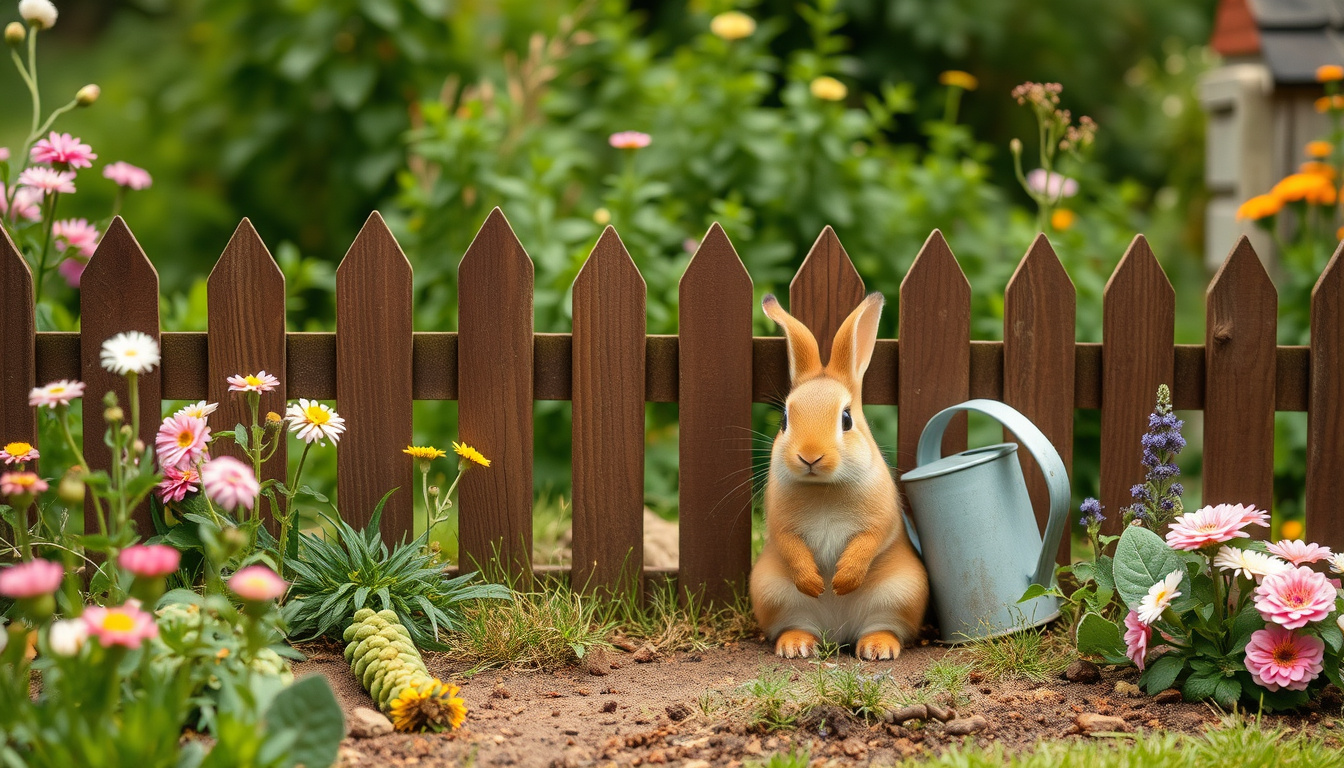
Some children’s characters feel less like inventions and more like old friends, and Peter Rabbit has been exactly that for well over a century. He made his print debut in The Tale of Peter Rabbit in 1902, a book that began as an illustrated letter to a child, written by Beatrix Potter: Victorian naturalist, farmer, and one of the sharpest business minds in children’s publishing.
First publication year: 1902 ·
Copies sold worldwide: 45 million ·
Beatrix Potter’s lifetime: 1866–1943 ·
Little books by Potter: 23 ·
Copyright holder today: National Trust
Quick snapshot
- Commercially published in 1902, after a 1901 private printing (Encyclopaedia Britannica (reference publisher)).
- The story began as an illustrated letter to Noël Moore in 1893 (Peter Rabbit official site (character’s official home)).
- Potter died in 1943 and left her estate to the National Trust (National Trust (conservation charity and estate holder)).
- Beatrix Potter wrote and illustrated the tale herself (Penguin Books Australia (publisher of Potter’s tales)).
- The exact nature of Potter’s youthful respiratory illness is not firmly diagnosed (Encyclopaedia Britannica (biography)).
- The precise family-tree link to Catherine, Princess of Wales is widely repeated but not officially documented (Town & Country (royal coverage)).
- Book counts differ: the official site says 23; some reference works count 24 (Peter Rabbit official site (book count)).
- 1893 — picture letter about Peter sent to Noël Moore (Penguin Books Australia).
- 1901 — Potter privately prints 250 copies (The Beatrix Potter Society (literary society)).
- 1902 — Frederick Warne & Co. publishes the tale commercially (Encyclopaedia Britannica).
- Screen adaptations keep reaching new audiences, from CBeebies animation to live-action film (BBC CBeebies (children’s channel)).
- The National Trust keeps Potter’s Lake District farms and heritage open to visitors (National Trust (conservation charity)).
- The royal-connection question keeps renewing public interest (Town & Country (royal coverage)).
Six facts, one pattern: the character, the creator, and the copyrights have been inseparable from the start.
| Detail | Value |
|---|---|
| First publication | 1902 by Frederick Warne & Co. |
| Original title | The Tale of Peter Rabbit |
| Beatrix Potter’s occupation | Author, illustrator, natural scientist, farmer |
| Royal connection | Often reported; not officially documented |
| Copyright holder | National Trust |
| Number of little books | 23 by the official count; 24 in some references |
Why is Peter Rabbit so famous?
Few books for children can claim a century of continuous sales, and Peter Rabbit is not most books. The tale began privately in 1893 as an illustrated letter Beatrix Potter sent to Noël Moore, the five-year-old son of her former governess (Penguin Books Australia (publisher of Potter’s tales)). After publishers turned it down, Potter paid for a private printing of 250 copies in 1901 (The Beatrix Potter Society (literary society)). In 1902 Frederick Warne & Co. gave it a commercial print run of 8,000 copies (National Trust (conservation charity and estate holder)), and the tale was officially in the world.
That first run sold out quickly. The official Peter Rabbit site reports around 46,000 copies in the first twelve months and counts 23 little books produced between 1902 and 1930 (Peter Rabbit official site (character’s official home)). Potter was thinking like a merchandiser before the word existed: in 1903 she designed and patented a Peter Rabbit soft toy, making the rabbit one of the first licensed children’s characters.
Peter Rabbit succeeded because Beatrix Potter treated a story as a product line: the book, the soft toy, and the conservation land all pointed the same way.
What is the moral of the story Peter Rabbit?
- Disobedience has consequences: Peter loses his jacket and shoes, gets chased, and ends up sick in bed.
- The punishment is gentle: his mother cares for him, and the point is safety, not shame.
- The lesson sticks because it is felt, not preached.
That combination — real danger, safe resolution, loving parent — is the reason the moral has never dated. A child does not need to be told what Peter did wrong; they watched him lose everything he was proud of, including his brass buttons.
Who gets the royalties from Beatrix Potter?
- Potter left the copyrights, along with her land and farms, to the National Trust (National Trust).
- The Trust uses the income to care for the Lake District farms and countryside that inspired the books.
The practical answer: a Peter Rabbit book bought today still supports the landscape it came from. That is a rare loop — art funding conservation — and it is quietly one of the most unusual copyright arrangements in children’s publishing.
The pattern: Peter Rabbit’s fame has always been a compound story. One small letter became a book, the book became a product line, and the product line became a conservation endowment.
The implication: Potter’s career proves that a strong story combined with sharp business acumen can create a legacy spanning generations.
What’s the story behind Peter Rabbit?
The plot is deliberately simple, and that is the point. Peter, one of four rabbit siblings, ignores his mother’s warning, slips under the gate into Mr. McGregor’s garden, and gorges on vegetables (Encyclopaedia Britannica (reference publisher)). Spotted by the farmer, he flees across the garden, losing his blue jacket and his shoes, and squeezes back under the gate just in time.
He arrives home sick and exhausted; his mother puts him to bed with camomile tea while Flopsy, Mopsy, and Cotton-tail enjoy bread and milk and blackberries. The book ends with a warning that Peter’s father had “an accident” in that garden — a dark touch that the pictures soften.
The story’s engine is a mother’s warning, not a villain’s scheme. Mr. McGregor barely speaks; the real drama is between a child’s curiosity and a parent’s fear.
What illness did Beatrix Potter suffer from?
- In her youth Potter suffered a severe respiratory illness that biographers have sometimes linked to tuberculosis.
- No firm diagnosis was ever recorded, so the exact condition remains part of the “unclear” column.
She turned the long convalescences into training. She painted animals, studied fungi, and developed the observational precision that later made her illustrations feel alive. The illness shaped her work ethic as much as her health.
Did Beatrix Potter have a happy marriage?
- She married William Heelis, a Lakeland solicitor, in 1913 (The Beatrix Potter Society (literary society)).
- She was 47; the couple had no children.
- Biographers generally describe the partnership as contented and supportive.
The marriage gave Potter a second life. As Mrs. Heelis she became a serious farmer and sheep breeder, and she spent her later years buying land to protect the countryside around her. Peter Rabbit was, in that sense, the beginning of her working life, not the whole of it.
What this means: the same discipline that made the books meticulous made the farmer successful. Potter mastered whatever she studied — illustration, fungi, sheep, land — and that mastery is the real through-line of her biography.
The pattern: Potter’s life mirrors Peter’s story: a small risk taken, a narrow escape, and a quiet, prosperous life that followed.
Who are the five rabbits in Peter Rabbit?
The books give readers five rabbits who matter, and the confusion is understandable: four appear in the opening line of The Tale of Peter Rabbit, while the fifth arrives a book later.
- Peter — the protagonist in the blue jacket, and the only one of the four who disobeys.
- Flopsy, Mopsy, and Cotton-tail — Peter’s sisters, who follow the rules and get bread and milk.
- Benjamin Bunny — Peter’s cousin, and the hero of the 1904 sequel The Tale of Benjamin Bunny (Encyclopaedia Britannica (reference publisher)).
That second book matters more than readers expect: Benjamin gets his own adventure in the sequel. In the original letter and the first book, the cast is just the four siblings.
The subtle detail: Peter is the only rabbit with a jacket. From the first page, the clothes mark him as the one who will break the rules.
Is Peter Rabbit appropriate?
The short answer: yes, for most children — with the right conversation around it. The 1902 book is a light moral tale: Peter is chased, loses his clothes, gets a tummy ache, and is put to bed with camomile tea. No one is hurt, and the darkest line is about Peter’s father, which parents can soften or skip.
- The original book works well from about age 3 as a read-aloud.
- The CBeebies animated series is aimed at children aged 3–7 and stays gentle.
- The 2018 live-action film adds slapstick and mild peril — better for age 6 and up, many parents find.
The book is better moral training; the film is better entertainment. Start with the text, and the chase scenes on screen will feel like fun rather than danger.
The detail parents ask about most is Mr. McGregor. In the book he chases Peter with a rake, and Potter never shows a caught rabbit — the threat is real enough to teach, mild enough to reassure. That balance is why the tale has survived shifting parenting styles.
Why this matters: “Appropriate” depends less on the book than on the screening. The original gives a child a safe encounter with fear; the adaptations decide how much of that fear becomes slapstick.
How is Beatrix Potter related to Kate Middleton?
This is the question that keeps the Potter story trending. Search the two names and you will find the same claim: Beatrix Potter was a distant cousin of Catherine, Princess of Wales, through the Middleton family tree. The precise relationship, however, is not laid out in any official family record; it circulates in genealogical coverage and should be read as “widely reported, not officially documented.”
Genealogical websites love the royal link, but no official archive confirms it. Treat it as a fascinating possibility, not a documented fact.
What is documented is the connection’s most surprising side: Potter left no direct descendants, so any royal link would run through collateral family branches, not through her own children.
Why didn’t Beatrix Potter have children?
- She married late — in 1913, at the age of 47.
- The couple had no children.
- Her energy went into farming, land purchase, and the National Trust.
That childlessness had one huge consequence: it made the great bequest possible. Without heirs, Potter could leave her land and copyrights intact to the National Trust.
How wealthy was Beatrix Potter when she died?
- She left thousands of acres of Lake District farmland plus the rights to all her books to the National Trust.
- The copyrights have generated royalties every year since 1902.
- No single official valuation of the bequest has been published, which is why “millions” is the honest range.
The point of the wealth question is not the number. It is the direction of the money: Potter took the earnings from a children’s story and bought farmland so the Lake District would stay open countryside instead of private estates.
How old would Beatrix Potter be if she was still alive?
- Born on 28 July 1866 in Kensington, London, Potter died on 22 December 1943 in Sawrey, so she would be over 150 years old today (Encyclopaedia Britannica (reference publisher)).
- She died in 1943, so the arithmetic answers the question by itself: 1866 to 2025 is 159 years.
That distance explains the royal question’s odd staying power. Potter is close enough to feel modern — her letters, watercolours, and photographs all survive — yet far enough back that her family connections feel like history. People keep Googling the gap between those two feelings.
The trade-off: the royal link is the fact people most want to be true, and the least documented. The documented story is better: a Victorian woman who built a conservation estate out of a rabbit story.
The value: While the royal link captivates the public, the real inheritance story — a childless author who turned a rabbit into a conservation endowment — is the tale that keeps giving.
What’s confirmed, what’s still unclear
After sorting the archives from the anecdotes, the line between fact and rumor is actually quite clean.
Confirmed facts
- The Tale of Peter Rabbit was commercially published in 1902 after a 1901 private printing.
- The story began as an illustrated letter to Noël Moore in 1893 (Penguin Books Australia (publisher of Potter’s tales)).
- Beatrix Potter was born in 1866 and died in 1943 (Encyclopaedia Britannica).
- Potter left her estate and copyrights to the National Trust (National Trust).
What’s unclear
- The exact nature of Potter’s respiratory illness is not definitively diagnosed (Encyclopaedia Britannica (reference publisher)).
- The precise family-tree link to Catherine, Princess of Wales is not officially documented (Town & Country (royal coverage)).
- The book count: 23 by the official site’s count, 24 in some reference works (Peter Rabbit official site (character’s official home)).
- The 45 million copies figure is the publisher’s own estimate, not an audited number (Penguin Books Australia (publisher of Potter’s tales)).
The value: Documenting what is certain versus what is speculated empowers readers to distinguish biographical fact from persistent folklore.
The tale, in its own words
The 1902 text is still in print, and the Peter Rabbit official site (Peter Rabbit official site (character’s official home)) hosts the story that made the characters famous. Two lines from the tale explain its durability better than any analysis:
Once upon a time there were four little Rabbits, and their names were — Flopsy, Mopsy, Cotton-tail, and Peter.
— Beatrix Potter, narrator, The Tale of Peter Rabbit (1902)
Potter’s decision to leave her copyrights to the National Trust created an unusual pipeline: every Peter Rabbit purchase helps maintain the landscapes that inspired him.
— National Trust (conservation charity and estate holder)
What this means: the story’s engine is a mother’s warning, not a villain’s scheme. Mr. McGregor is almost incidental; the real drama is between a child’s curiosity and a parent’s fear — a plot that never ages.
Peter Rabbit stands at the center of a one-author cultural economy: 23 small books, a century of merchandising, and a conservation estate that still shapes the English Lake District. For parents and educators deciding how to introduce the character, the path is clear: begin with the original text, where the moral is gentle and the danger is theoretical, and let screen adaptations follow as a reward — or the chase scenes will define the rabbit before the books do.
Frequently asked questions
What age group is Peter Rabbit suitable for?
The original book works as a read-aloud from about age 3. The CBeebies animated series is aimed at children aged 3–7, while the 2018 live-action film contains more slapstick and mild peril, making it better suited to age 6 and up.
Where can I watch Peter Rabbit episodes?
The BBC’s CBeebies series is broadcast on CBeebies and available through BBC iPlayer. The 2018 live-action film is available on major streaming and on-demand platforms.
How many Peter Rabbit books did Beatrix Potter write?
The official Peter Rabbit site counts 23 little books published between 1902 and 1930; some reference works include an additional book, putting the total at 24.
Did Beatrix Potter have any children?
No. She married William Heelis in 1913 at the age of 47, and the couple had no children. Her estate, including her copyrights, passed to the National Trust after her death in 1943.
Why did Beatrix Potter leave her estate to the National Trust?
Potter was a conservationist who wanted the Lake District’s working farms and open countryside preserved. She had worked with people connected to the National Trust’s founding, and she trusted the organization to keep her land intact.
Is Peter Rabbit based on a true story?
Not exactly. The character grew out of Beatrix Potter’s real pet rabbits and an illustrated letter she wrote in 1893, but the story of Peter’s adventure in Mr. McGregor’s garden is fiction.
Who illustrated Peter Rabbit?
Beatrix Potter illustrated every one of her books, including The Tale of Peter Rabbit. The watercolor pictures in the original 1902 edition are her own hand-painted work.
Related stories





Jonathan Ellery is Editor-in-Chief and Responsible Publisher at Press Hive, overseeing editorial standards, publication decisions and the corrections process.