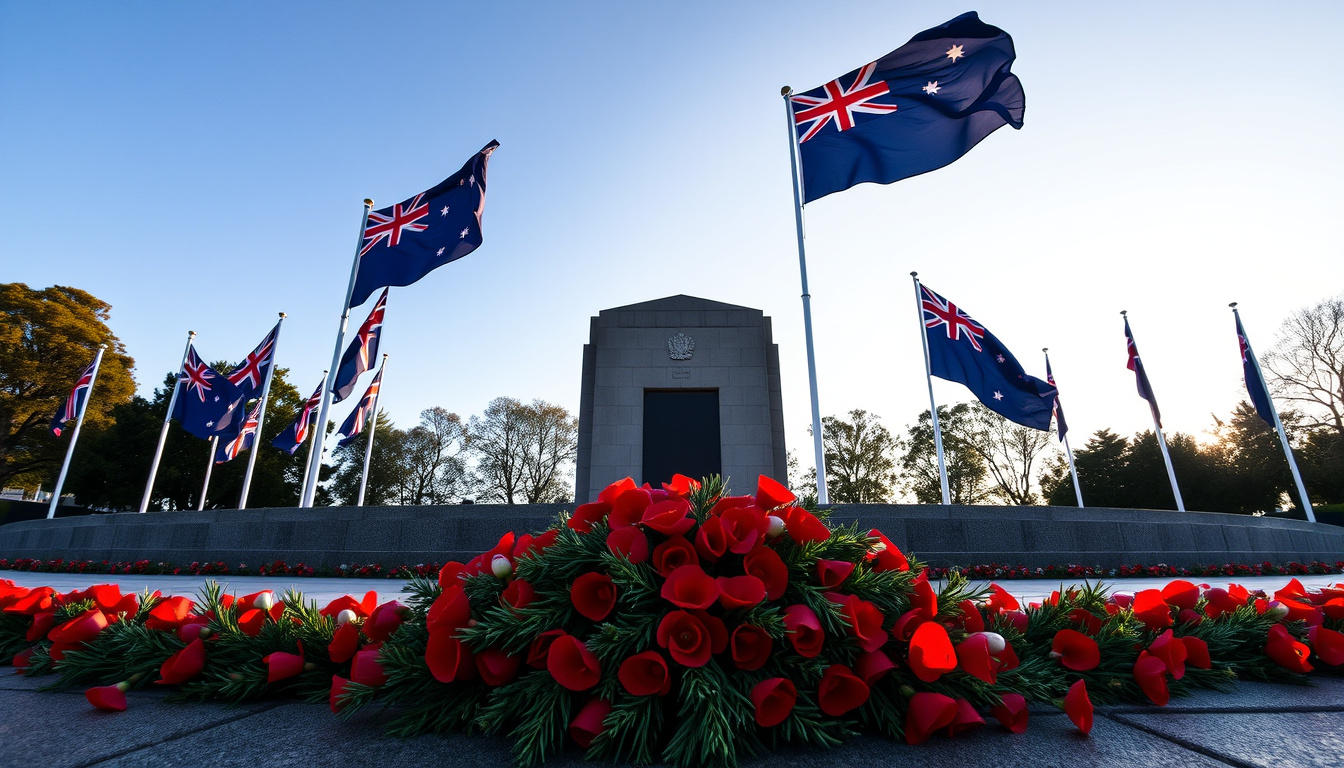

When Sophie, Duchess of Edinburgh, stepped forward to lay a wreath at London’s Cenotaph on Anzac Day morning, she wasn’t just marking a memorial—she was standing in for the King himself. It marked a rare and solemn shift in royal duties, one that drew attention from the moment she arrived at Whitehall. April 25, 2025 also happened to be the 110th anniversary of the Gallipoli landings that gave Anzac Day its meaning. The day would unfold across several London venues, each carrying its own weight of remembrance.
Date: 25 April 2025 · Primary Location: Cenotaph, London · On Behalf Of: The King · Key Gesture: Wreath laying
Quick snapshot
- Duchess laid wreath on 25 April 2025 (Video: Duchess Sophie Marks Anzac Day at Cenotaph)
- Cenotaph ceremony ran 10:55am–11:30am (NZ Ministry of Foreign Affairs official schedule)
- 110th anniversary of Gallipoli landings (Australian High Commission Ottawa Anzac events)
- Exact reason the Duchess wiped away a tear during the ceremony
- Whether she originally planned to attend before the King’s scheduling change
- Royal representation at Anzac Day has shifted across family members over decades (Evening Standard royal Anzac coverage)
- Princess Anne traveled to Turkey for the 110th anniversary during the same period (Evening Standard royal Anzac coverage)
- Royal family will likely maintain Anzac representation at future anniversaries
- Next major milestone: 115th anniversary in 2030
The key facts about Sophie’s Anzac Day 2025 participation at the Cenotaph are summarized below.
| Detail | Information |
|---|---|
| Attendee | Sophie, Duchess of Edinburgh |
| Date | 25 April 2025 |
| Main Action | Wreath laying at Cenotaph |
| Proxy For | The King |
| Notable Moment | Wiped away tear during ceremony |
What is the meaning of the Anzac wreath?
The Anzac wreath carries profound symbolism in Australia and New Zealand, representing remembrance for the soldiers who fought and died during the Gallipoli campaign of World War I. Each wreath laid at memorials like the Cenotaph echoes a tradition that began when the first commemorations were held on April 25, 1916 (Evening Standard Anzac Day 2025 coverage). The rosemary and Flanders poppy commonly used in these wreaths symbolize remembrance and eternal sleep, rooted in classical funeral traditions. At the Cenotaph in Whitehall, wreaths are placed by representatives of nations, military associations, and government bodies to honor the war dead collectively.
Symbolism in Australia
In Australia, the Anzac wreath has become intertwined with national identity. The poppy—inspired by the fields of Flanders where Canadian soldier John McCrae wrote the famous poem “In Flanders Fields”—appears on almost every wreath laid on April 25. The Gallipoli campaign cost the lives of over 100,000 troops during World War I, with 2,000 casualties sustained on the first day alone, April 25, 1915 (Westminster Abbey Anzac Day 2025 service details). The wreaths serve as a tangible connection between contemporary Australians and the original Anzacs who landed at Gallipoli.
Role in commemorations
Annual wreath laying at the Gallipoli Memorial in St Paul’s Cathedral has occurred on April 25 since its establishment, with the memorial itself unveiled on November 28, 1995, by HRH Prince Philip (Gallipoli Association London Anzac events listing). The act of laying a wreath is not merely symbolic—it formalizes the relationship between the present generation and those who served. For royal representatives, laying a wreath on behalf of the monarch carries additional weight, signaling continuity of national commitment to remembrance.
The Cenotaph service runs approximately 35 minutes, with participants along the south side of Whitehall able to view the proceedings without tickets (NZ Ministry of Foreign Affairs official schedule). This public accessibility reflects the ceremony’s democratic purpose—remembrance belongs to everyone, not just those with invitations.
What is the meaning of the wreath laying ceremony?
The wreath laying ceremony at the Cenotaph follows a precise protocol developed over decades of military remembrance. Unlike casual flower offerings, ceremonial wreaths are placed at a specific moment during a service, often accompanied by gunfire salutes and the sounding of the Last Post. Westminster Abbey’s Anzac Day service ran from 12:00pm to 1:00pm on April 25, 2025 (Westminster Abbey Anzac Day 2025 service details), illustrating how the ceremony extends beyond the Cenotaph to include multiple London venues throughout the morning and midday.
Historical origins
The tradition of formal wreath laying at war memorials grew directly from World War I’s aftermath, when grieving nations sought structured ways to honor their dead. The Cenotaph itself—literally “empty tomb”—was designed as a monument without religious iconography, open to all faiths and nations. The annual Anzac Day ceremony at this site became institutionalized through royal patronage, with the monarch or a designated proxy performing the central act of remembrance.
Modern Anzac Day practice
Today, Anzac Day ceremonies worldwide share common elements: dawn services timed to match the original 5:00am landing at Gallipoli, marches featuring veterans and their descendants, and wreath laying at local memorials (NZ Ministry of Foreign Affairs official schedule). In London, the Gallipoli Memorial Service in St Paul’s Crypt takes place at 9:30am, with the Cenotaph ceremony following at 10:55am. The haka performed at the New Zealand Memorial at Hyde Park Corner during Anzac events adds a distinctive cultural dimension unique to New Zealand’s contribution (Evening Standard Anzac Day 2025 coverage).
Who is laying wreaths at the cenotaph?
On Anzac Day 2025, Sophie, Duchess of Edinburgh, was the senior royal representative laying a wreath at the Cenotaph in Whitehall, London (Getty Images: Duchess of Edinburgh at Anzac Day wreath laying). She acted on behalf of King Charles III, a responsibility that typically falls to the reigning monarch or a close family member designated as proxy. The Princess Royal, Princess Anne, was simultaneously representing the Crown at commemorations in Turkey for the 110th anniversary of the Gallipoli landings (Evening Standard royal Anzac coverage), demonstrating how the royal family divides its Anzac commitments across multiple sites.
Duchess of Edinburgh’s role
Sophie became the Duchess of Edinburgh upon her husband Prince Edward’s creation as Duke of Edinburgh in March 2023. Her Anzac Day appearance marked one of her most prominent ceremonial engagements, stepping into a role typically filled by the monarch or Princess Anne. The Duchess attended both the Cenotaph ceremony and the Westminster Abbey service that followed, covering three major Anzac commemorations in a single day (Westminster Abbey Anzac Day 2025 service details).
On behalf of The King
Royal representation at the Cenotaph carries constitutional significance. When the Duchess laid a wreath “on behalf of the King,” she was not merely a substitute—she was exercising a delegated portion of royal ceremonial authority. King Charles attended Gallipoli services for the 90th and 100th anniversaries (Evening Standard Anzac Day 2025 coverage), but his decision to be represented in London in 2025, while Princess Anne represented the Crown in Turkey, reflects the practical limits of royal time and the family’s collective approach to major commemorations.
Did Princess Anne lay a wreath?
Princess Anne did not lay a wreath at the London Cenotaph on Anzac Day 2025. Instead, she was in Turkey attending the Gallipoli commemorations for the 110th anniversary, where she delivered the King’s message and emphasized the importance of preserving memories and handing “the torch of remembrance to the next generations” (Evening Standard royal Anzac coverage). This placed the Princess Royal at the original Gallipoli landing sites—a different but equally significant Anzac location compared to London’s Cenotaph.
Comparison to Sophie
The Duchess and Princess Anne’s Anzac activities on April 24–25, 2025, represent two distinct modes of royal commemoration. Sophie represented the King at formal ceremonies in London, while Anne traveled internationally to deliver the King’s personal message at the Gallipoli peninsula. Both women are experienced in ceremonial duties, but Anne’s assignment to Turkey—the symbolic heartland of Anzac history—carried particular weight for Australian and New Zealand audiences.
Royal participation context
The royal family’s Anzac Day commitments illustrate how ceremonial duties are shared across family members based on scheduling, significance, and geography. The ANZAC Day Reception 2025 was held on April 24 at Churchill War Rooms (Eventbrite: New Zealand Society Anzac Day Reception 2025), demonstrating the logistical complexity of royal Anzac involvement, which spans multiple days, venues, and countries.
When royals divide Anzac duties across locations, it signals that the monarchy treats Gallipoli commemoration as a sustained commitment, not a one-off appearance. For Australians and New Zealanders, this royal engagement validates the day’s continued importance in the trans-Tasman calendar.
The pattern: Royal presence at multiple Anzac sites in a single year reinforces Gallipoli’s standing in the monarchy’s ceremonial calendar.
What happened at the Duchess of Edinburgh’s Anzac events?
The Duchess of Edinburgh’s Anzac Day 2025 began early, with London hosting a full schedule of commemorative events. The dawn service at Hyde Park Corner started at 5:00am and required attendees to arrive by 4:40am due to security and police presence requirements (NZ Ministry of Foreign Affairs official schedule). While the Duchess’s specific presence at the dawn service is not confirmed, her participation in later events is documented. A dawn service at this hour, no tickets required, draws crowds who want to witness the original landing time recreated in London.
Dawn service at Hyde Park Corner
The New Zealand Memorial at Hyde Park Corner hosts one of London’s most distinctive Anzac events, featuring the haka performed by Māori participants alongside traditional Last Post ceremonies. Dawn services worldwide deliberately coincide with 5:00am to mark when Australian and New Zealand Army Corps troops first landed at Gallipoli on April 25, 1915. The timing creates a somber atmosphere in the pre-dawn darkness, with artificial light supplementing natural conditions.
Cenotaph and Abbey tributes
The Duchess was seen at the wreath laying ceremony and parade at the Cenotaph in Whitehall on the morning of April 25, 2025 (Mauritius Images: Duchess of Edinburgh Anzac Day parade). Following the Cenotaph service, she attended Westminster Abbey for the midday commemoration. During the ceremony, observers noted the Duchess wiping away a tear—a moment that resonated with onlookers given the weight of the occasion and her role representing the King.
The Duchess’s visible emotion during the wreath laying added a human dimension to a ceremony already freighted with collective grief. While royal protocol typically emphasizes composed public appearances, the 110th anniversary—and representing an absent King—may have intensified the moment’s personal significance.
Timeline
A century-separated sequence connects 1915 to 2025 through successive Anzac Day commemorations. Ten key moments trace how the day evolved from a landing to a global day of remembrance.
| Date | Event |
|---|---|
| April 25, 1915 | Australian and New Zealand Army Corps troops land at Gallipoli |
| April 25, 1916 | First official Anzac Day commemorated |
| November 28, 1995 | Gallipoli Memorial unveiled at St Paul’s Cathedral by Prince Philip |
| April 25, 2025 – 5:00am | Dawn service at Hyde Park Corner |
| April 25, 2025 – 9:30am | Gallipoli Memorial Service in St Paul’s Crypt |
| April 25, 2025 – 10:55am | Cenotaph service begins (Duchess wreath laying) |
| April 25, 2025 – 12:00pm | Westminster Abbey Anzac service |
Confirmed facts and remaining questions
What we know with certainty about the Duchess of Edinburgh’s Anzac Day 2025 involvement differs from what remains open to interpretation. Several facts are rock-solid; at least one significant detail eludes confirmation.
Confirmed
- Duchess laid wreaths at specified London sites on April 25, 2025
- She acted on behalf of King Charles III
- The Cenotaph ceremony ran 10:55am–11:30am
- The event marked the 110th anniversary of Gallipoli
- She attended Westminster Abbey service afterward
Unclear
- Exact reason for the Duchess’s emotional response
- Whether royal scheduling change necessitated her attendance
- Whether she attended the dawn service at Hyde Park Corner
Key voices from the commemorations
The meaning of Anzac Day emerges most clearly through those who spoke during the 2025 ceremonies. Westminster Abbey’s commemoration address put the day’s significance into words that shaped how attendees understood the occasion.
Early on the morning of 25th April 1915, soldiers of the newly formed Australia and New Zealand Army Corps landed at Gallipoli and were plunged into battle. By the end of that first day they had sustained two thousand casualties.
— Westminster Abbey Service Address (Westminster Abbey)
We are also here to honour not just the bravery, but the common cause. We will reflect on the complex history that makes allies and enemies, and leads us through war and peace.
— Westminster Abbey Service Address (Westminster Abbey)
Anne will emphasise the importance of preserving their memories and handing the torch of remembrance to the next generations.
— Evening Standard Reporter covering Princess Anne’s Gallipoli role (Evening Standard)
For those who attended or watched the Duchess’s appearance at the Cenotaph, the 110th anniversary added weight to an already solemn occasion. The Princess Royal’s simultaneous presence in Turkey ensured that the royal family maintained its traditionally strong Anzac Day commitment despite the King’s absence from London’s ceremonies.
The Duchess of Edinburgh’s Anzac Day 2025 duties crystallized something the royal family has long understood: commemoration requires delegation. With King Charles unable to attend in person, the choice of Sophie to represent him at the Cenotaph was both practical and symbolic—she brought the Crown to the ceremony while Princess Anne brought it to Gallipoli itself. For British, Australian, and New Zealand audiences watching from their respective countries, this dual representation confirmed that Anzac Day remains a priority, not a ritual. The 110th anniversary demanded nothing less than the family’s full engagement, and on April 25, 2025, that engagement came from the Duchess of Edinburgh’s steady hand at the Cenotaph.
Related reading: AUD to GBP: Australian Dollar to Pounds Exchange Rate · Sydney Thunder vs Sydney Sixers Match Scorecard – Sixers Win by 5 Wickets
At the Cenotaph, full-time working royal, laid an Anzac wreath on behalf of King Charles, underscoring her poignant symbolism amid London’s solemn events.
Frequently asked questions
What is Anzac Day?
Anzac Day commemorates the landing of Australian and New Zealand Army Corps troops at Gallipoli on April 25, 1915, during World War I. It is observed annually as a day of remembrance for those who served and died in military conflicts.
Where did the Duchess lay the Anzac wreath?
Sophie, Duchess of Edinburgh, laid a wreath at the Cenotaph in Whitehall, London, on April 25, 2025. She also attended the Westminster Abbey Anzac Day service that followed the Cenotaph ceremony.
Why did the Duchess wipe a tear?
The specific reason for the Duchess’s emotional moment during the ceremony is not publicly confirmed. Observers noted the tear during what was a significant occasion—the 110th anniversary of Gallipoli and her representation of the King at a major memorial.
What is the Cenotaph?
The Cenotaph is a war memorial on Whitehall in London, designed by Sir Edwin Lutyens and unveiled in 1919. The name means “empty tomb,” and it serves as Britain’s national war memorial, host to annual remembrance ceremonies including Anzac Day.
How do royals participate in Anzac events?
Members of the royal family regularly lay wreaths at Anzac Day ceremonies in London and abroad. The monarch or a designated proxy represents the Crown, with family members often dividing duties across multiple commemoration sites.
When is Anzac Day 2025?
Anzac Day falls on April 25 each year. In 2025, it marked the 110th anniversary of the Gallipoli landings that established the commemoration.
Who else attended the 2025 service?
Princess Anne attended Gallipoli commemorations in Turkey, delivering the King’s message. The Duchess of Edinburgh represented the King in London. High commissioners from Australia and New Zealand, along with Gallipoli Association members, participated in various London ceremonies.
Related stories





Henry Morgan is Senior Reporter at Press Hive, covering breaking news and long-form explainers.