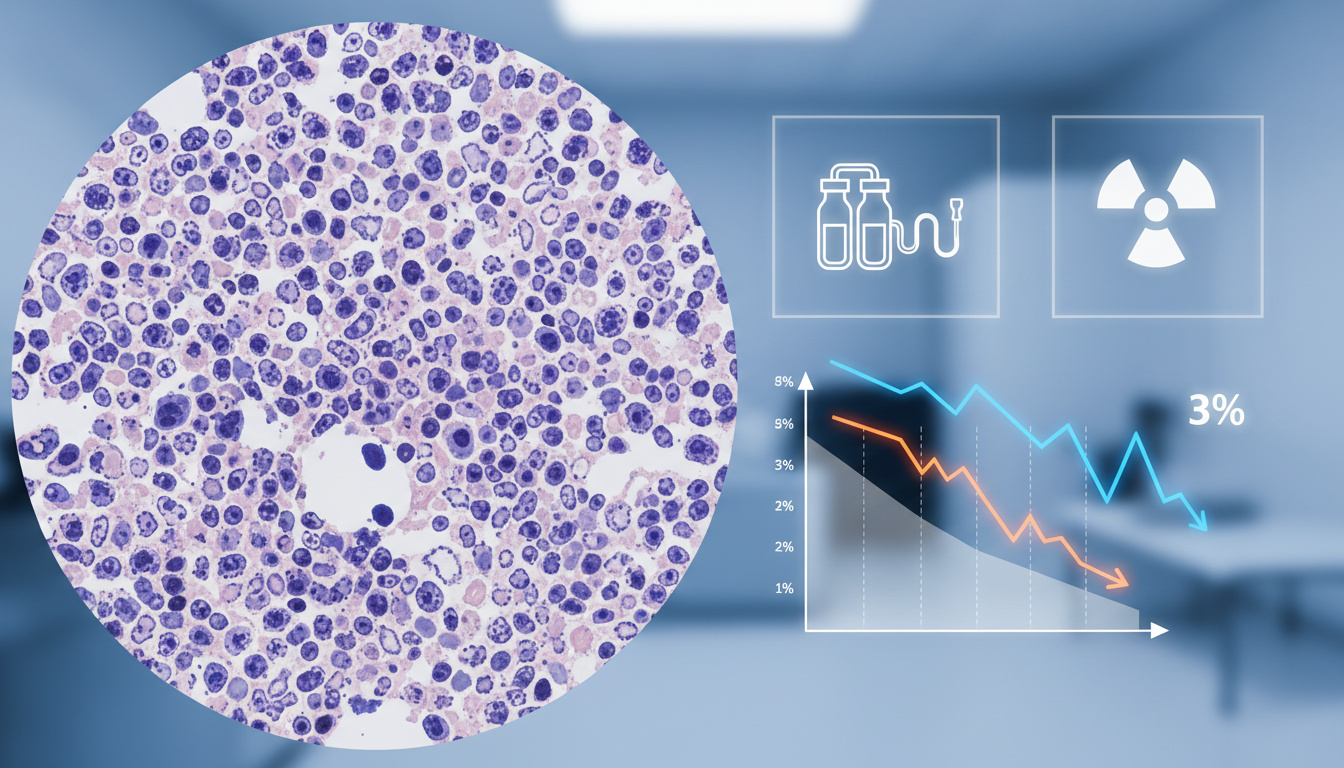
Stage 4 cancer, clinically termed metastatic or stage IV cancer, represents the most advanced phase of malignant disease. At this stage, cancer cells have disseminated from the primary tumor to distant anatomical sites, commonly invading the bones, lungs, liver, or brain. Medical classification defines this distant migration, known as metastasis, as the distinguishing feature of advanced disease.
While stage 4 carries the highest mortality risk among cancer classifications, medical consensus acknowledges that it is not universally terminal. Survival trajectories vary extensively based on cancer type, biological characteristics of the tumor, patient age, overall health status, and response to therapeutic interventions.
Comprehensive diagnostic protocols confirm stage 4 status through imaging and biopsy, ensuring accurate classification to guide therapeutic decision-making and distinguish localized from metastatic conditions.
What Does Stage 4 Cancer Mean?
Cancer has spread to distant organs (M1 designation)
Requires imaging and biopsy verification
Beyond regional lymph nodes to distant sites
Most advanced TNM stage
- Stage 4 indicates distant metastasis to organs such as the liver, lungs, bones, or brain.
- Confirmation requires radiographic imaging and tissue biopsies rather than clinical suspicion alone.
- The designation distinguishes localized disease from malignancy capable of systemic dissemination.
- Prognosis varies significantly by tumor biology and metastatic site selection.
- Breast cancer with bone-only metastasis demonstrates different trajectory than multi-visceral involvement.
- Age represents an independent variable affecting survival statistics in lung malignancies.
- Modern imaging modalities detect metastatic deposits earlier than historical diagnostic capabilities.
| Parameter | Stage 4 Specification |
|---|---|
| TNM Classification | Any T, Any N, M1 |
| Common Metastatic Sites | Bone, lung, liver, brain, distant lymph nodes |
| Diagnostic Modalities | CT, MRI, PET imaging; tissue biopsy |
| Breast Cancer (Female) | 33% 5-year relative survival |
| Breast Cancer (Male) | 31% 5-year relative survival |
| Non-Small Cell Lung Cancer | 7% 5-year relative survival |
| Small Cell Lung Cancer (Extensive) | 3% 5-year relative survival |
| Colorectal Cancer | 15.6% 5-year relative survival |
| Prostate Cancer | 34.1% 5-year relative survival |
| Stomach Cancer | 6.6% 5-year relative survival |
Confirmation of stage 4 requires identification of distant metastatic deposits beyond regional lymph nodes. Oncological standards mandate imaging verification for definitive staging, as clinical examination alone cannot establish the presence of distant organ involvement.
Stage 4 Cancer Prognosis and Survival Rates
Prognostic determination relies on five-year relative survival rates calculated by the National Cancer Institute’s Surveillance, Epidemiology, and End Results (SEER) program. Clinical experts emphasize that individual outcomes depend on genetics, comorbidities, and treatment responses that population data cannot fully capture.
How Long Can You Live With Stage 4 Cancer?
Life expectancy ranges from months to decades depending on cancer type. Stage 4 lung cancer patients face averages of 4-9 months for non-small cell and 8-13 months for small cell variants without treatment, though some survive 10-15 years with targeted therapies. Metastatic breast cancer demonstrates 1-10+ year survival windows, with hormone receptor-positive cases managed as chronic conditions.
Survival Rates by Cancer Type
Age significantly modulates survival probabilities. For lung cancer specifically, patients under 50 demonstrate an 18.2% survival rate compared to 10.8% for those aged 50-65 and 7.3% for patients over 65. Research indicates that acute illness events drastically compress survival timelines, with a median survival of 28 days following hospitalization for acute medical events in stage 4 populations.
Survival statistics represent population averages rather than individual predictions. Tumor biology, metastasis location, and patient performance status frequently override demographic trends. Bone-only metastases in breast cancer typically correlate with more favorable outcomes than brain or liver involvement.
Is Stage 4 Cancer Curable? Treatment Options
Curative intent in stage 4 cancer remains rare but not impossible. Current medical consensus recognizes that while complete eradication is uncommon, durable remission and chronic disease management represent achievable outcomes for select patients. Treatment paradigms prioritize life extension, symptom palliation, and maintenance of functional status when cure proves unattainable.
Systemic Therapeutic Approaches
Modern treatment protocols employ systemic modalities targeting disseminated disease. Chemotherapy, hormone therapy, and targeted molecular agents like CDK4/6 inhibitors for hormone receptor-positive breast cancer form the pharmacological backbone. Immunotherapy protocols harness the immune system to recognize and destroy malignant cells, demonstrating particular efficacy in melanoma and non-small cell lung cancer.
Surgical and Radiation Interventions
Localized treatments address specific complications rather than systemic cure. Radiation therapy alleviates bone pain or reduces neurological symptoms from brain metastases. Surgical cytoreduction may resolve bowel obstructions or stabilize pathological fractures. Clinical trials provide access to experimental therapeutics including novel immunotherapies and CAR-T cell treatments.
Therapeutic selection depends on molecular profiling, genetic markers, and patient health status. Some patients experience years of survival through personalized treatment sequencing that adapts to tumor evolution.
Symptoms and Causes of Stage 4 Cancer Spread
Metastatic progression produces both constitutional and site-specific symptoms that escalate with disease burden. Early recognition of these manifestations facilitates timely intervention and symptom management.
Recognizing Metastatic Symptoms
Common presentations include persistent pain, fatigue, and unintended weight loss. Location-specific symptoms reflect involved organs: bone metastases generate localized pain and fracture risk; pulmonary deposits cause dyspnea and cough; hepatic involvement produces jaundice and ascites; cerebral metastases manifest as headaches, seizures, or cognitive changes. Early detection of these signs improves palliative options.
Mechanisms of Distant Spread
Cancer dissemination occurs through lymphatic channels, blood vessels, or direct seeding of body cavities. Genetic mutations enable cells to detach from primary tumors, survive transit through circulatory systems, and colonize distant microenvironments. The process involves complex interactions between malignant cells and host immune defenses.
Stage 4 patients experiencing acute illness episodes face significantly compressed survival timelines. Hospitalization for infections, organ failure, or other acute events requires immediate medical attention and may necessitate shifts in care goals.
How Cancer Progresses to Stage 4
- Stages 0-1: Malignancy remains localized to the tissue of origin without lymphatic involvement.
- Stages 2-3: Cancer extends to regional lymph nodes or adjacent structures but remains surgically resectable in many cases.
- Stage 4 Diagnosis: Imaging or biopsy confirms distant metastasis to contralateral organs or remote lymph node chains.
- Treatment Initiation: Systemic therapy begins with palliative or disease-control intent rather than curative goals.
- Chronic Management: Long-term surveillance monitors for treatment response, progression, or new metastatic sites.
Established Facts and Persistent Uncertainties
| Established Information | Information That Remains Unclear |
|---|---|
| Stage 4 requires distant metastasis (M1) confirmed by imaging or biopsy. | Exact timeline for progression from stage 1 to stage 4 in individual cases. |
| Five-year survival rates vary by cancer type from 3% to 34%. | Why certain patients achieve long-term remission while others with identical diagnoses experience rapid progression. |
| Systemic therapies can extend survival but rarely cure stage 4 disease. | Precise mechanisms determining which metastatic sites will respond to specific treatments. |
| Age and overall health significantly impact survival statistics. | Universal predictors of immunotherapy response across all cancer types. |
The Significance of Cancer Staging in Clinical Practice
The TNM staging system provides the architectural framework for oncology practice, enabling standardized communication about disease extent. Staging accuracy determines whether patients receive aggressive interventional care or transition to palliative-focused management.
Beyond clinical logistics, staging carries psychological and social implications for patients and families. The Helen Mirren Movies and TV Shows – Complete Filmography Guide offers cultural diversion unrelated to medical contexts. Accurate staging prevents both unnecessary overtreatment and false hope while ensuring appropriate resource allocation.
Clinical Perspectives on Advanced Malignancy
“Stage IV is distant spread… Prognosis depends on factors like tumor biology, metastasis sites, and overall health.”
— National Cancer Institute and Breast Cancer Research Organizations
“Individual factors (e.g., genetics, comorbidities) outweigh statistics.”
Key Considerations for Stage 4 Cancer
Stage 4 cancer signifies metastatic dissemination requiring systemic treatment approaches. While population statistics indicate varied survival rates across cancer types, individual trajectories depend on tumor biology, treatment response, and patient health status. Man City v Liverpool – Preview, Prediction and Team News represents unrelated sports coverage. Modern therapeutics enable chronic disease management for many patients, transforming some diagnoses from terminal conditions into long-term survivable illnesses.
Frequently Asked Questions
Is stage 4 cancer terminal?
Stage 4 cancer is not always terminal. While representing advanced disease, many patients achieve years of survival through targeted therapies, immunotherapy, and chronic disease management protocols. Terminal designation depends on treatment response and overall health rather than stage alone.
What causes cancer to spread to stage 4?
Cancer spreads through genetic mutations enabling cells to detach from primary tumors, survive in bloodstream or lymphatic circulation, and colonize distant organs. Factors include tumor biology, immune system evasion, and microenvironment suitability in sites like bone, liver, or brain.
What is the difference between stage 3 and stage 4 cancer?
Stage 3 cancer remains regionally confined to nearby lymph nodes or tissues, often remaining surgically resectable. Stage 4 indicates distant metastasis to organs far from the primary site, requiring systemic rather than localized treatment approaches.
How is stage 4 cancer diagnosed?
Diagnosis requires imaging studies (CT, MRI, or PET scans) identifying distant lesions, followed by biopsy confirmation of malignancy. Blood tests and physical examinations support but cannot definitively establish stage 4 classification without radiographic and histopathological evidence.
Can stage 4 cancer go into remission?
Complete remission is uncommon but possible, particularly with immunotherapy or targeted treatments. More frequently, patients achieve partial remission or stable disease managed as a chronic condition, with treatment focusing on long-term control rather than cure.
Does age affect stage 4 cancer survival?
Age significantly influences survival statistics. For lung cancer, patients under 50 demonstrate 18.2% survival rates compared to 7.3% for those over 65. However, biological age and overall health often prove more predictive than chronological age.
Related stories





Thomas Hayes covers Westminster, councils and public policy across the United Kingdom.