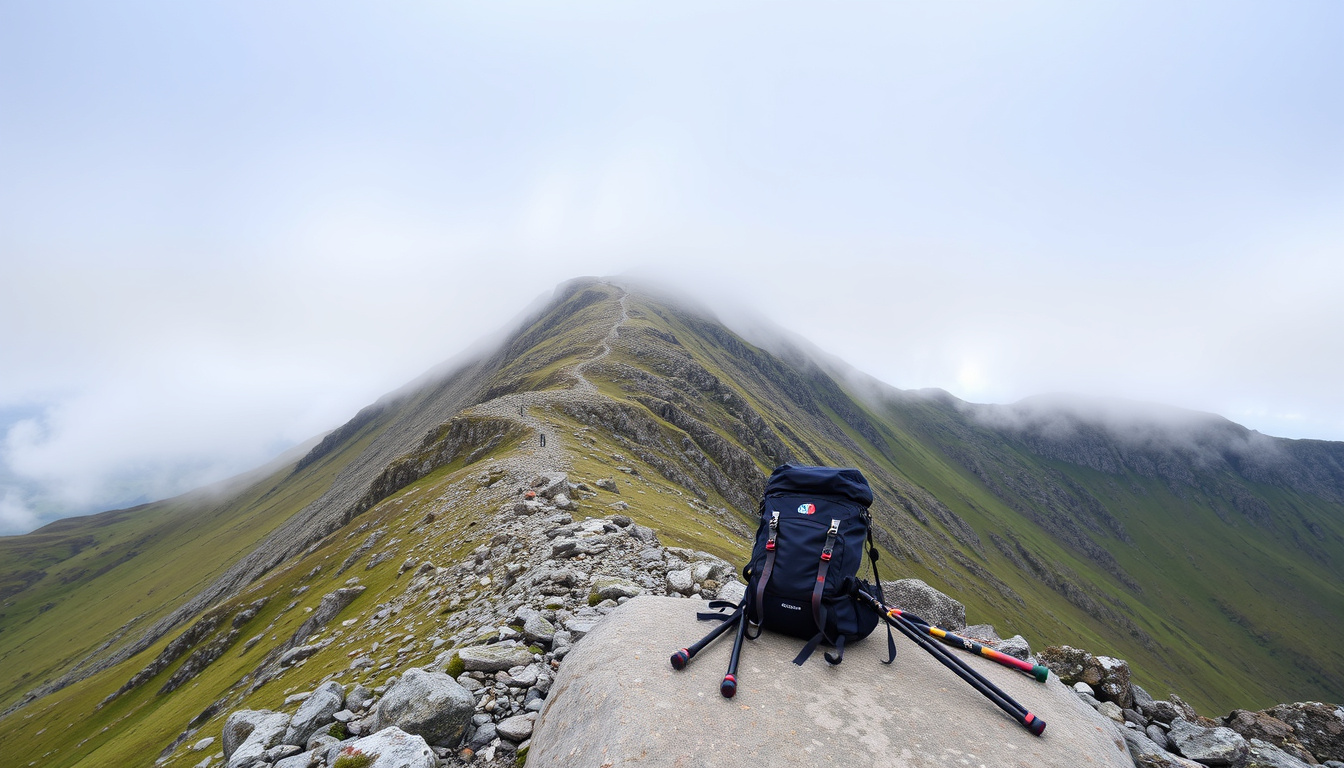
You’ve decided to climb Ben Nevis, the UK’s highest peak, and you’re probably wondering how hard it is, how long it takes, and whether a beginner can do it safely. This guide provides verified facts, route realities, and honest advice from official sources.
Height: 1,345 m (4,413 ft) · Location: Lochaber, Scottish Highlands · First recorded ascent: 1771 (James Robertson) · Annual visitors: ~150,000 · Standard route length: 16.4 km (10.2 mi) round trip · Average ascent time: 7–9 hours
Quick snapshot
- Ben Nevis is the highest mountain in the UK at 1,345 m (Mountaineering Scotland)
- The Mountain Track is the easiest and most popular route (Ben Nevis Visitor Centre)
- Average round trip time is 7–9 hours (British Mountaineering Council)
- Fatalities average 3–5 per year, mostly falls in winter (Lochaber Mountain Rescue Team)
- Exact annual ascents: estimates range 130,000–200,000 (VisitScotland)
- Origin of the nickname “venomous mountain” remains speculative; no definitive source exists (VisitScotland)
- Exact fatality numbers vary year to year, from 2 to 7 (Lochaber Mountain Rescue Team)
- The precise number of people attempting the Three Peaks Challenge on Ben Nevis each year is unknown (VisitScotland)
- Best season for beginners: June to September (no snow on path) (Met Office mountain forecast)
- Winter conditions can arrive as early as October and last through May (Walkhighlands)
- Start with the Mountain Track in summer as a day hike (Walkhighlands route guide)
- Consider a guided group for winter or if you lack navigation skills (Mountaineering Scotland)
Six key stats, one pattern: Ben Nevis is a serious hike that demands respect but is achievable for fit beginners with proper preparation.
| Attribute | Value |
|---|---|
| Height | 1,345 m (4,413 ft) |
| Location | Lochaber, Scottish Highlands |
| First recorded ascent | 1771 (James Robertson) |
| Annual visitors | ~150,000 |
| Standard route length | 16.4 km (10.2 mi) round trip |
| Average ascent time | 7–9 hours |
How long does it take to climb Ben Nevis?
Factors affecting climb time
- Fitness level and pacing matter most – a fit hillwalker can summit in 3–4 hours while a slower group may take 5–6 hours up (British Mountaineering Council (BMC))
- Weather is the wildcard: rain, wind, and cloud can double your time and increase risk
- Snow on the path requires crampons and ice axe skills, adding hours even for experienced parties (Walkhighlands)
Split times via the Mountain Track
- The Ben Nevis Visitor Centre estimates a round trip of 7–8 hours for a typical walker (Ben Nevis Visitor Centre FAQs)
- Summit ascent alone: 3–5 hours depending on pace; descent 3–4 hours
- Three Peaks Challenge participants must complete the mountain in ≤5 hours total (same source)
Is Ben Nevis a difficult climb?
Difficulty compared to other UK mountains
- Ben Nevis is the tallest in the UK (1,345 m) but the Mountain Track is a strenuous hike, not a technical climb – no roped sections are required in summer
- By comparison, Scafell Pike (978 m) is shorter but steeper in places; Snowdon (1,085 m) has easier paths like the Llanberis Path but also more technical routes
- Mountaineering Scotland calls the Mountain Track a “demanding walk” that takes 6–9 hours and requires basic clothing and skills (Mountaineering Scotland (national hillwalking authority))
Technical challenge by route
- The Mountain Track (Tourist Path) is grade 1 scrambling at worst – hands are rarely needed
- The Carn Mor Dearg Arête route is grade 2 scrambling and adds serious exposure; BMC recommends 7–10 hours for experienced scramblers (BMC)
- In winter, even the main path becomes a full mountaineering route requiring ice axe, crampons, and navigation skills (Walkhighlands)
“In good conditions the tourist route typically takes 3–4 hours to the summit, but the summit plateau has cliff edges that can be invisible in cloud.” – British Mountaineering Council (BMC)
Can a beginner climb Ben Nevis?
Minimum experience needed
- Yes – with proper preparation, a beginner can climb Ben Nevis in summer via the Mountain Track (Mountaineering Scotland)
- No previous outdoor experience is strictly required, but you should be able to hike 16 km with 1,400 m ascent while carrying a 5–10 kg pack
- Navigation skills matter: the summit plateau is a flat, featureless area in cloud – bring a map, compass, and know how to use them (Outdoorscot)
Essential gear checklist
- Waterproof jacket and trousers (Scottish weather is unpredictable even in July)
- Warm layers (fleece or insulated jacket, hat, gloves) – summit temperature averages 5–10°C cooler than sea level
- Sturdy waterproof hiking boots with ankle support
- Map (OS Landranger 41 or Harvey’s Ben Nevis map), compass, head torch
- Food and water for 8+ hours; sun cream and sunglasses for the summit
- First-aid kit and survival bag
When to attempt as a beginner
- June to September offers the best chance of snow-free paths and (relatively) stable weather
- Start no later than 8 am to allow enough daylight for a safe return
- Check the Met Office mountain forecast the day before; if winds are above 40 mph or visibility is under 10 m, postpone (Met Office mountain forecast)
Upsides
- No technical skills needed in summer
- Well-marked path (when clear of snow)
- Many guided options available for support
Downsides
- Still a physically demanding 7–9 hour day
- Navigation hazard on summit plateau
- Weather can turn dangerous quickly
Step-by-step preparation plan for a beginner Ben Nevis climb
- Build aerobic fitness with 10+ km hill walks carrying a daypack
- Practice navigating with a map and compass on local hikes
- Check the Met Office mountain forecast 48 hours before your planned date
- Book a weather window of at least two consecutive dry days
- Pack your gear the night before and double-check against a checklist
- Leave a route plan with someone at home – include your start time, expected return, and emergency number (999, ask for Police then Mountain Rescue)
Do I need a guide to climb Ben Nevis?
When a guide is recommended
- Not mandatory in summer on the main path – thousands of independent walkers ascend successfully each year
- Strongly recommended for winter conditions (snow, ice, high winds) – even experienced hillwalkers often hire guides
- If you lack navigation skills or are hiking alone for the first time, a guide adds safety and confidence (Mountaineering Scotland)
Cost of guided climbs
- Group guided climbs from Fort William range from £40 to £80 per person (Climb Ben Nevis guides)
- Private guiding for 1–2 people costs around £200–£350 per day
- Winter guiding is more expensive due to specialist gear provision and smaller groups
How to choose a reputable guide
- Look for guides registered with the Association of Mountaineering Instructors (AMI) or the Mountain Training Association
- Check recent reviews on platforms like TripAdvisor or Google – look for mentions of weather awareness and group management
- Ask about the guide’s insurance, first-aid training, and local knowledge of Ben Nevis conditions
Upsides
- Navigation and route-finding handled by an expert
- Gear advice and sometimes equipment can be borrowed
- Reduces risk in poor visibility or winter
Downsides
- Cost can be significant (£40–£80 group, up to £350 private)
- Less freedom to set your own pace
- Not strictly necessary on a clear summer day
Is it safe to climb Ben Nevis alone?
Risks of solo hiking
- Solo climbing is common, especially among experienced hillwalkers, but the risks are amplified in poor weather or if you become injured
- The biggest solo hazard is a simple trip or fall: with no one to call for help, a broken ankle can become life-threatening
- Lochaber Mountain Rescue Team averages 80–100 callouts per year, many involving solo walkers who underestimated conditions (Lochaber Mountain Rescue Team (official incident statistics))
Safety checklist for solo ascents
- Always leave a detailed route plan with someone at home, including your start time, expected return, and emergency contact
- Carry a fully charged mobile phone in a waterproof case (signal is patchy but present on parts of the route)
- Consider a personal locator beacon (PLB) or satellite messenger for remote areas
- Never go alone in winter conditions without mountaineering training – solo winter climbing is a major fatality risk factor
Upsides
- Complete freedom to set your own pace
- No group logistics – go when the weather fits
- Many solo summits happen safely every year
Downsides
- No assistance if you fall or become lost
- Navigation errors are harder to recover from alone
- Higher stress and reduced safety margin in poor conditions
What if I need the toilet on Ben Nevis?
Facilities at the base
- Flush toilets are available at the Glen Nevis Visitor Centre (open summer season) and the Ben Nevis Inn car park at Achintee
- No toilets exist on the mountain itself – once you leave the car park, you’re on nature’s terms
- Portable toilets are sometimes provided at the summit during the Three Peaks Challenge season, but cannot be relied upon
Leave No Trace on the mountain
- The John Muir Trust advises all walkers to follow the Leave No Trace principle: pack out everything you pack in (John Muir Trust (conservation body for Ben Nevis))
- Use a WAG bag (waste bag) if you need to go #2 above the treeline – rangers report an increasing problem with human waste on the summit plateau
- For urination: move at least 30 m (100 ft) from any water source, trail, or camping area
“Ben Nevis receives around 150,000 visitors a year. With so many people, it’s essential to take your litter home and use proper toilet facilities at the base. The mountain is not a public toilet.” – John Muir Trust (official guidance)
How many climbers have died on Ben Nevis?
Annual fatality statistics
- On average, 3–5 deaths occur on Ben Nevis each year, according to Lochaber Mountain Rescue Team records (Lochaber Mountain Rescue Team)
- The number can vary: 2018 saw 7 fatalities, while other years have recorded as few as 2
- Most deaths occur between October and April, when winter conditions are present
Common causes of death
- The leading cause is falls on snow or ice – walkers slip on hard-packed snow and tumble into the rocks or gullies
- Second is exposure: getting lost in mist or caught by a sudden blizzard, leading to hypothermia
- Very few deaths are due to climbing accidents on technical routes; the majority happen on the Mountain Track itself
- Almost all fatalities are considered preventable by mountain rescue teams – they typically involve inadequate gear, poor decision-making, or ignoring weather warnings (Lochaber Mountain Rescue Team)
“The people who die on Ben Nevis are almost never climbing the hard routes. They’re walkers on the main path who didn’t know winter conditions could kill.” – Lochaber Mountain Rescue Team (annual incident report)
Related reading: St Kitts and Nevis Travel Guide
climb-ben-nevis.co.uk, raw-adventures.co.uk, services.thebmc.co.uk, calltoadventure.uk, outdooraccess-scotland.scot, globalsummitguide.com, lovefromscotland.co.uk, outdooraccess-scotland.scot, canadabrief.net
For those planning a hike, the Ben Nevis climbing guide offers essential details on time, difficulty, and safety.
Frequently asked questions
Do I need special footwear to climb Ben Nevis?
Yes – sturdy, waterproof hiking boots with good ankle support are essential. The path is rocky, uneven, and often slippery. Trail running shoes are not recommended for beginners (Mountaineering Scotland).
What is the best time of year to climb Ben Nevis?
June to September offers the most reliable snow-free conditions. May and October can be good if a high-pressure system is in place, but always check the forecast (see Met Office mountain forecast).
Are there any age restrictions for climbing Ben Nevis?
No official age limit, but children need to be strong hikers and properly equipped. Many families with kids aged 10+ summit successfully in summer. Use good judgment: the mountain is much harder for small legs.
How do I check the weather before climbing Ben Nevis?
Use the Met Office mountain weather forecast for Ben Nevis, updated at least twice daily. Also check the MWIS (Mountain Weather Information Service) for detailed wind speed, freezing level, and cloud cover (MWIS).
What does “Ben” mean in Ben Nevis?
“Ben” comes from the Scottish Gaelic “beinn”, meaning mountain. “Nevis” is believed to derive from “neamh-bhathais” meaning “venomous” or “terrible” – though the exact origin is unclear (Wikipedia).
Can I camp on Ben Nevis?
Wild camping is allowed in Scotland under the Land Reform (Scotland) Act 2003, but be aware of Leave No Trace principles. The summit plateau is exposed and unsuitable for camping – aim for sheltered areas lower down (e.g., near Lochan Meall an t-Suidhe).
What is the emergency number for mountain rescue on Ben Nevis?
Call 999 and ask for Police, then Mountain Rescue. The grid reference for the summit is NN 166 712. Save the contact for Lochaber Mountain Rescue Team in your phone (Lochaber MRT).
For the thousands of walkers who attempt Ben Nevis each summer, the mountain delivers: a tough, rewarding day out that tests your legs and your will. But the difference between a great memory and a rescue call is often a single decision – starting late, skipping the forecast, or trusting the path in cloud. The UK’s highest summit rewards respect, not luck. For a beginner, the choice is clear: prepare thoroughly, watch the weather, treat the mountain as a serious challenge, and you’ll likely stand on top of Britain feeling the wind (and the satisfaction) of a goal met.
Related stories





Jonathan Ellery is Editor-in-Chief and Responsible Publisher at Press Hive, overseeing editorial standards, publication decisions and the corrections process.