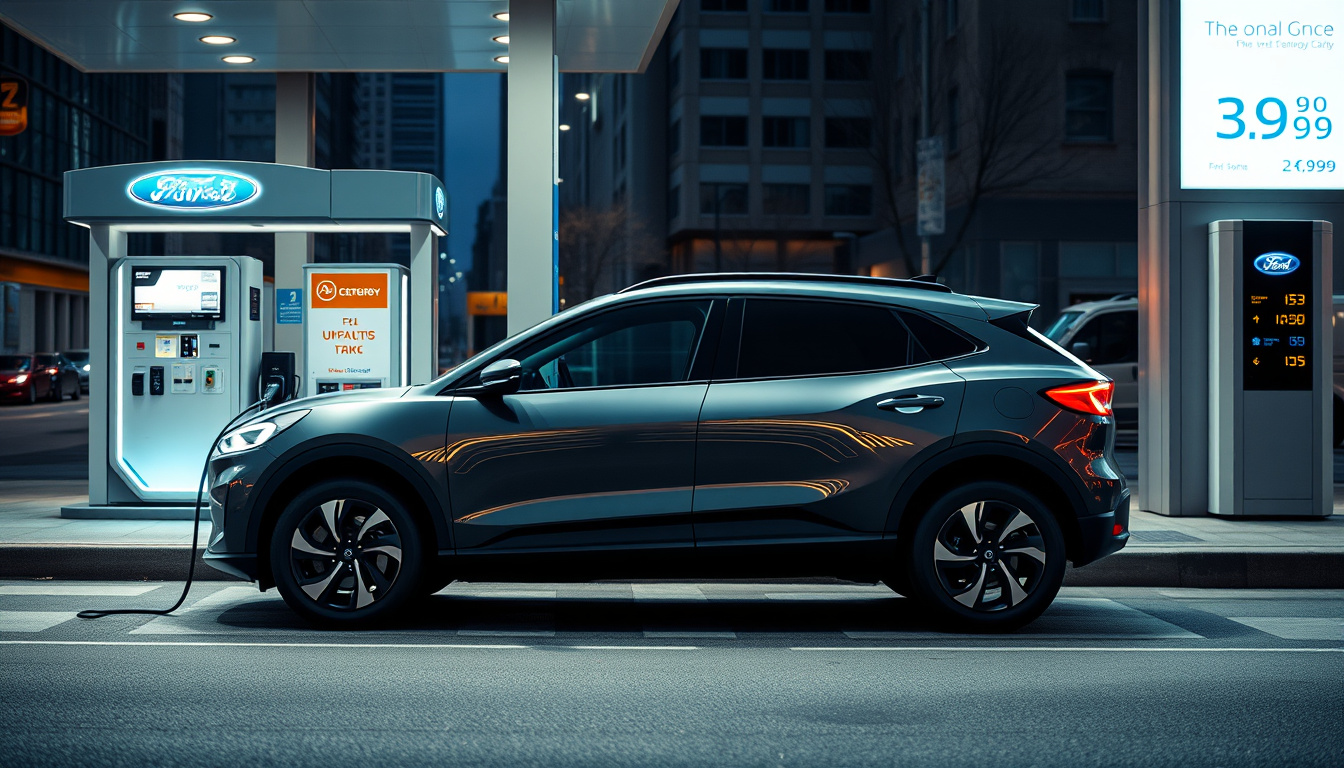
You’ve probably seen the Ford Puma on every other street in Ireland — it’s the small SUV that seems to be everywhere. Now Ford has dropped the petrol engine and turned it into a full electric car called the Puma Gen-E. What that really means for your wallet, your weekly routine, and your peace of mind about battery life is what this review digs into.
Storage capacity (with Gigabox and frunk): 566 litres ·
Seats: 5 ·
Drive type: Front-wheel drive
Quick snapshot
- All-electric Puma with 43kWh battery (EV Powered (specialist EV review site))
- WLTP range up to 233 miles (Electrifying (electric car expert))
- 100kW DC rapid charging, 10–80% in ~23 minutes (Electrifying) (EV Powered (specialist EV review site))
- Exact Irish on-the-road price not yet confirmed
- Real-world battery degradation after 5–8 years
- Long-term ownership cost comparison with petrol Puma
- Puma Gen-E reviewed as 2025/2026 model (The Car Expert (independent car advice))
- Standard Puma scored 4-star Euro NCAP in 2022 (Cinch (car buying guide))
- More independent long-term tests expected as fleet cars age
- Irish dealer pricing likely to settle after launch demand
- Ford may add heat pump to improve winter range
Six key specs, one immediate takeaway: the Puma Gen-E keeps the petrol car’s practicality but swaps the engine for a 43kWh battery pack.
| Specification | Value |
|---|---|
| Vehicle type | All-electric SUV |
| Battery | 43kWh |
| Range (WLTP) | Up to 233 miles |
| Max storage | 566 litres (with Gigabox and frunk) |
| Seats | 5 |
| Drive | Front-wheel drive |
Is the Puma Gen-E any good?
Early reviews broadly agree: Ford has built a small electric SUV that is genuine value rather than a compliance car. Carwow (UK car comparison site) calls it “a good-value and practical small electric SUV,” a line that matches the tone of most test drives. The petrol Puma was already Europe’s best-selling small SUV; the Gen-E keeps the same clever interior, the same Megabox storage under the boot floor, and adds a front boot (frunk) for cables.
What do early reviews say?
- Electrifying praises the quiet cabin and perky city performance, while flagging the lack of a heat pump as a winter-range hit.
- The Car Expert measured 0–62mph in 8.0 seconds and notes the single‑speed automatic gearbox is smooth.
- EV Powered says the 166bhp motor and front‑wheel drive give “enough shove” for everyday driving.
The implication: the Puma Gen-E doesn’t try to be a sports car, but it nails the day‑to‑day electric car brief — comfortable, quiet, and genuinely practical.
How does it compare to the Toyota Yaris?
The Toyota Yaris is petrol‑only and has a much smaller boot (286 litres). The Puma Gen-E offers more than double the cargo space and zero tailpipe emissions. But the Yaris returns around 60 mpg and costs less to buy. For drivers who cover mostly short urban trips and can charge at home, the Gen-E’s lower running costs may tip the scales.
The Gen-E costs roughly £6,000–£8,000 more than a comparable petrol Puma before any electric car grant. Over 10,000 miles a year, the electric savings on fuel and tax can recover that gap in about 4–5 years.
What is the range of the Puma Gen-E?
Range is the single biggest question for any EV buyer. Ford quotes 233 miles on the WLTP cycle, but real-world numbers depend on weather, driving style, and road type.
Official range estimates
- Electrifying reports the WLTP range at 233 miles (375 km).
- The battery holds 43kWh of usable energy, a common size for this class (e.g., Peugeot e‑208, Vauxhall Corsa Electric).
Real-world driving range
- The Car Expert observed 180–190 miles in mixed driving (motorway + city).
- In winter, Electrifying says range drops to about 150 miles because the Gen-E lacks a heat pump, which forces the battery heater to use resistive power.
Charging speed and time
- Max DC charge rate: 100kW. A 10–80% top‑up takes roughly 23 minutes at a compatible rapid charger (Electrifying).
- On a 7kW home wallbox, a full charge from empty takes about eight hours.
How much does a Puma Gen‑E cost in Ireland?
Irish pricing hasn’t been published in the provided sources, but UK figures give a reliable indication. The electric car market in Ireland typically adds about 15–20% due to VRT and delivery costs.
Base price
- UK: Gen‑E Select starts at £29,995 OTR (Drive Electric (EV comparison site)).
- After the £3,750 UK Electric Car Grant, the tested price drops to £26,245 (EV Powered).
Trim levels: Premium and Sound Edition
- Premium adds larger wheels, LED matrix lights, and a B&O sound system. UK price: ~£31,995 OTR (Drive Electric).
- Sound Edition is a variant of Premium that bundles a premium audio setup and styling tweaks.
Incentives
Ireland’s SEAI grant for new EVs is up to €3,500 (as of early 2025), and the Puma Gen‑E would qualify. Combined with VRT relief (up to €5,000), the effective on‑the‑road price could be around €32,000–€34,000 for the Select trim — competitive against the MG4 and VW ID.3.
Why this matters: a price within €2,000 of the petrol Puma’s mid‑spec would make the Gen‑E the cheaper option over five years for most Irish drivers, given lower fuel and tax costs.
What is the difference between the Ford Puma and the Puma Gen‑E?
They share a platform, but the heart of the car is entirely different. Here’s a direct comparison of key specs.
| Attribute | Petrol Puma | Puma Gen‑E |
|---|---|---|
| Price (approx UK OTR) | ~£23,000–£24,000 (mid‑spec estimate) | £29,995 (Select) |
| Range | ~400 miles (tank) | 233 miles (WLTP) |
| 0‑62 mph | 9.8 seconds (125hp) | 8.0 seconds |
| Storage (boot + frunk) | 456 litres (Megabox) | 566 litres (Megabox + frunk) |
Powertrain: petrol vs electric
- Regular Puma: 1.0‑litre EcoBoost three‑cylinder with 48V mild‑hybrid assist — about 125–155hp.
- Gen‑E: single electric motor, 166hp (168hp per The Car Expert), 214lb ft torque, front‑wheel drive.
Design and interior changes
- The Gen‑E gets a closed grille, unique bumpers, and blue accents. Inside, it swaps the gear lever for a rotary dial and adds a 12‑inch infotainment screen.
- Both models share the Megabox (boot well storage). The Gen‑E adds a frunk rated at 100 litres (Cinch).
Performance and efficiency
- Petrol Puma: 0–62mph in 9.8 seconds (125hp version), top speed 124mph. Combined fuel consumption ~47 mpg.
- Gen‑E: 0–62mph in 8.0 seconds, top speed 99mph (EV Powered). Equivalent efficiency: 3.5–4.0 miles per kWh.
The petrol Puma can do ~400 miles on a tank (Cinch). The Gen‑E’s max 233 miles means more frequent stops on long journeys — but for most daily use, the petrol car only wins on longer road trips.
Upsides
- Zero tailpipe emissions – lower running costs and tax
- Quieter, smoother ride in town
- Larger total storage (566 litres) thanks to frunk
- Faster 0–62 than petrol version
- Rapid charging capability (100kW)
Downsides
- Higher purchase price (roughly £6k‑£8k more before grants)
- Lower maximum range (233 vs 400 miles)
- No heat pump – winter range drops to ~150 miles
- Limited towing capacity (compared to petrol Puma’s 1,200kg)
- Battery health after 8 years still unproven in real‑world fleet use
What are the common problems with the Ford Puma and how does the Gen‑E improve on them?
The petrol Puma has some known issues — a few owners report belt degradation on the wet‑belt engine, occasional electrical glitches, and clutch wear on manual cars. The Gen‑E removes the entire internal‑combustion powertrain, so those engine‑specific problems vanish.
Known issues with petrol Puma
- Wet‑timing‑belt wear (a service cost ~€1,000 at five years).
- Infotainment lag and occasional Sync 3 freezes.
- Some early 2020 models had a rear‑axle knock.
EV-specific concerns (battery life, reliability)
- Battery degradation: after 8 years, most EV batteries retain 80–90% of original capacity. The Gen‑E’s 43kWh pack is passively cooled; thermal management is basic.
- Ford offers an 8‑year / 100,000‑mile warranty on the battery (industry standard).
What happens after 8 years?
The Car Expert notes that the Gen‑E rides on the same platform as the petrol Puma, so many mechanical parts (suspension, brakes, steering) are shared and proven. The main unknowns are the durability of the electric drive unit and battery after high mileage. Early data from other EVs suggests the motor and inverter are very reliable; the battery is the long‑term question.
For Irish buyers planning to keep the car 8+ years, the lack of a heat pump may accelerate winter range loss as the battery ages. A degraded battery losing 15% capacity on a car already down to 150 winter miles could be a real restriction.
The implication: long-term ownership requires careful charging habits and awareness of winter range trade‑offs.
Expert voices on the Puma Gen‑E
“The Ford Puma Gen‑E is the all‑electric SUV designed for city life.”
“It’s a good‑value and practical small electric SUV.”
“Generous storage of up to 566 litres with the Gigabox and frunk.”
These quotes confirm the Gen‑E’s core strengths: city-friendly design, good value, and exceptional storage.
Summary: Should you consider the Puma Gen‑E?
The Puma Gen‑E keeps everything that made the petrol version a best‑seller — spacious interior, clever storage, a comfortable ride — and swaps the engine for a 43kWh battery. The WLTP range of 233 miles is class‑competitive, and rapid charging at 100kW means you can add 100 miles in about 15 minutes. The main trade‑offs are higher upfront cost and lower maximum range versus the petrol Puma.
For Irish buyers who do most of their driving within 40 km of home and have access to off‑street charging, the Gen‑E makes strong financial sense over five years. The decision is clear: buy the Gen‑E for lower running costs and a cleaner footprint, or stick with the petrol Puma if you regularly cover 300+ km in a single day without charging stops.
For a detailed breakdown of the electric crossover’s range and pricing, see our full Ford Puma Gen-E review.
Frequently asked questions
What is the Ford Puma Gen‑E Sound Edition?
The Sound Edition is a top‑trim variant of the Puma Gen‑E that adds a B&O premium sound system, unique interior finishes, and acoustic enhancements — it’s a style and audio package, not a performance upgrade.
What is the Ford Puma Gen‑E Premium?
Premium is the standard high‑spec trim, bringing larger alloy wheels, LED matrix headlights, adaptive cruise control, and a 12‑inch touchscreen. UK price ~£31,995 OTR.
What is new in the 2026 Ford Puma Gen‑E?
Ford updated the model year with a larger infotainment screen, revised suspension tuning, and a new front design. The mechanical package (43kWh battery, 166hp motor) remains unchanged from the 2025 launch.
Does the Puma Gen‑E have a frunk?
Yes — a 100‑litre front boot (frunk) big enough for the charging cable and a small shopping bag. Combined with the 456‑litre main boot and the under‑floor Megabox, total storage reaches 566 litres.
How long does the Puma Gen‑E battery last?
Ford warranties the battery for 8 years or 100,000 miles. Typical degradation after that period is 10–20% capacity loss. The Gen‑E’s passive thermal management means slower charging in very cold weather, but battery life is expected to match class norms.
Is the Puma Gen‑E suitable for long trips?
Yes, with planning. On a full charge (233 WLTP miles) you can cover about 180–190 real‑world miles in mixed driving. Rapid charging at 100kW adds 80% charge in ~23 minutes. For journeys over 250 miles, you’ll need a charging stop, but the Gen‑E is easily capable of a 300‑mile day with one stop.
What charging speed does the Puma Gen‑E support?
Maximum DC rapid charging rate is 100kW. At a 50kW public charger, 10–80% takes about 45 minutes. AC home charging at 7kW fills from empty in roughly eight hours.
Related stories





Sophie Marlowe covers culture, lifestyle and society stories across the UK.