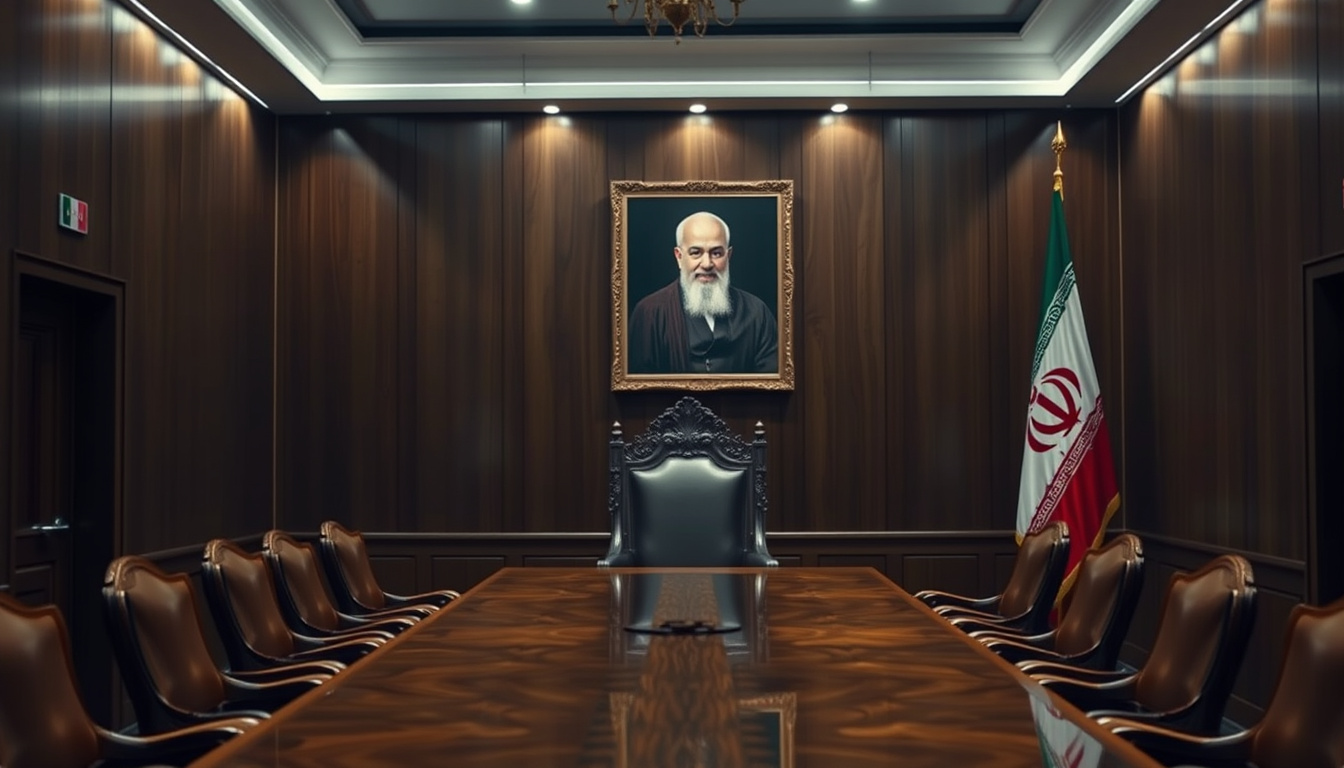
Few moments in modern Middle East politics unravel as quickly as the hours after a leader dies — especially when the reported successor is alive, in charge, and nowhere to be seen. That is the strange position Iran has occupied since reports surfaced that Supreme Leader Ali Khamenei was killed in an Israeli airstrike on 28 February 2026, and that his son Mojtaba Khamenei took over while staying hidden from public view (The Daily Star (Bangladesh daily)).
Current Supreme Leader: Mojtaba Khamenei · Previous Supreme Leader: Ali Khamenei (1989–2026) · Founding Supreme Leader: Ruhollah Khomeini (1979–1989) · Date of Khamenei Assassination: 28 February 2026 · Official Title: Supreme Leader of Iran (Vali-ye Faqih)
Quick snapshot
- Mojtaba Khamenei has been reported as Iran’s new supreme leader; he is the second child of Ali Khamenei; the Assembly of Experts reportedly elected him on 8 March 2026 (The Times (UK newspaper)).
- Extent of Mojtaba Khamenei’s injuries after the reported strike; whether he actually controls the government or is a placeholder; whether undated videos and claims of critical illness are real (The Daily Star (Bangladesh daily)).
- 28 February 2026: reported killing of Ali Khamenei in an airstrike; 8 March 2026: reported election of Mojtaba Khamenei; no verified public appearance since — only an undated video circulated as proof of life (News24 (news outlet)).
- A verified public appearance or speech by Mojtaba would be the clearest sign he is in control; if his silence continues, expect factional maneuvering inside the regime to accelerate; US officials describe him as alive but detached from day-to-day management (Ground News (media aggregator)).
Six facts about the office, one pattern: the position is designed to sit above every other institution in Iran — elected or not.
| Field | Value |
|---|---|
| Official Name | Supreme Leader of Iran (Vali-ye Faqih) |
| Current Incumbent | Mojtaba Khamenei (since March 2026) (The Times (UK newspaper)) |
| Previous Incumbent | Ali Khamenei (1989–2026) (Wikipedia (reference work)) |
| Appointment | Elected by Assembly of Experts (The Times (UK newspaper)) |
| Term | Life tenure |
| Political System | Islamic Republic |
Who is currently the leader of Iran?
- Mojtaba Khamenei, the son of the late Ali Khamenei, is the reported supreme leader of Iran (The Daily Star (Bangladesh daily))
- He was reportedly elected by the Assembly of Experts on 8 March 2026 (The Times (UK newspaper))
- Since the reported appointment, he has not appeared or spoken publicly (The Daily Star (Bangladesh daily))
The absence is not a minor detail. Iran’s supreme leader is not a symbolic figurehead; he is the final authority over the state’s most consequential decisions. A leader who cannot show himself creates an information vacuum — and the vacuum is already filling with rumors.
Iran’s most powerful office is now held by a man the public cannot see or hear — a first in the Islamic Republic’s 47-year history.
Who is Mojtaba Khamenei?
- He is the second child of Ali Khamenei (The Times (UK newspaper))
- The succession makes him the reported third supreme leader in Iran’s history (The Times (UK newspaper))
- The reports circulating about him focus on his injuries, his safety, and his whereabouts — not on any public act he has performed as leader (News24 (news outlet))
The thinness of the public record is itself the story. No supreme leader in the Islamic Republic’s history has taken office in this condition: injured, hidden, and heard only through official intermediaries.
How was Mojtaba Khamenei selected as supreme leader?
- The Assembly of Experts — a clerical body with the constitutional role of choosing the supreme leader — reportedly elected him on 8 March 2026 (The Times (UK newspaper))
- The selection came just over a week after the reported assassination and was conducted through official channels rather than in any public ceremony (The Daily Star (Bangladesh daily))
What this means: the succession followed the constitution’s letter, but its circumstances — war, injury, secrecy — are unlike anything the office has faced before.
The catch: a hidden leader cannot lead, and the regime’s grip on the country depends on whether the invisible man ever reappears.
Who replaced Ayatollah Khomeini?
- Ayatollah Khomeini, the founder of the Islamic Republic, died on 3 June 1989 (Wikipedia (reference work))
- Ali Khamenei replaced him and served until the reported strikes of 28 February 2026 (Wikipedia (reference work))
- Mojtaba Khamenei is now reported as the third person to hold the office (The Times (UK newspaper))
Who was the first supreme leader of Iran?
- Ruhollah Khomeini led the 1979 revolution that toppled the monarchy (Wikipedia (reference work))
- He served as supreme leader from 1979 until his death in 1989 (Wikipedia (reference work))
- His official title, Vali-ye Faqih, means “guardian jurist” — the clerical authority at the center of Iran’s political system
List of Supreme Leaders of Iran
- Ruhollah Khomeini — 1979–1989 (Wikipedia (reference work))
- Ali Khamenei — 1989–2026 (Wikipedia (reference work))
- Mojtaba Khamenei — 2026–present (The Times (UK newspaper))
The pattern: Iran has had only three supreme leaders in 47 years — and the most recent succession happened in wartime secrecy, not in public view.
Is Iran a dictatorship or democracy?
- Iran officially is an Islamic Republic with an elected president and parliament (Wikipedia (reference work))
- But the supreme leader outranks the elected institutions and has final authority over major decisions (Wikipedia (reference work))
- The result is a hybrid: democratic machinery inside a theocratic hierarchy
Most analyses describe Iran as an authoritarian or theocratic system with electoral features. Elections are real enough to matter, but the system is designed so that the unelected leader always has the last word.
Elections in Iran are real but subordinate. The republic votes; the theocracy decides.
When did Iran lose women’s rights?
- The turning point was the 1979 revolution, which replaced the previous civil code with family law shaped by clerical interpretation
- The mandatory hijab followed within a few years of the revolution
- Women kept the right to vote and to work, but marriage, divorce, custody, and dress rules were put under clerical authority
Can a woman divorce her husband in Iran?
- Yes, but the legal grounds are narrower for women than for men
- A wife can petition for divorce on specific grounds — documented harm, a condition written into the marriage contract, or certain medical circumstances — while a husband can initiate divorce more freely
Can a woman wear pants in Iran?
- Yes. Iranian women routinely wear trousers in public
- The legal requirement is loose, modest clothing that covers the body, not a prohibition on pants as such
Can a woman walk alone in Iran?
- Yes. There is no legal ban on a woman walking alone
- The practical constraints are dress-code rules and social norms, not a rule against being unaccompanied in public
Can a man marry more than one wife in Iran?
- Iranian law permits polygamy for men under certain conditions — typically requiring judicial approval or the first wife’s consent
- The practice is legal but not the norm
Do condoms exist in Iran?
- Yes. Iran allows contraception, including condoms, and they are legally available across the country
Why this matters: every question about Iran’s government type eventually lands on the same answer — the supreme leader is the system, and the system is built around him.
Is Ayatollah Khomeini dead?
- Yes. Ruhollah Khomeini died on 3 June 1989 (Wikipedia (reference work))
- He was the founder and first supreme leader of the Islamic Republic (Wikipedia (reference work))
- His death led to the succession of Ali Khamenei (Wikipedia (reference work))
Khomeini is often confused with the current crisis because his name is everywhere in Iran’s political vocabulary. But the man himself has been dead for more than three decades; the leader at the center of the 2026 reporting is his successor’s son.
The point: Khomeini is history. The unresolved question is the man now sitting — invisibly — in the office he created.
Who assassinated Ali Khamenei?
- According to The Daily Star (Bangladesh daily), Ali Khamenei was killed in an Israeli airstrike on 28 February 2026 at the start of the US-Israeli war against Iran; the same reporting says Mojtaba was wounded in the legs, that his wife and mother were among those killed, that Iranian officials insisted he was injured but safe, and that government adviser Pezeshkian said he was “safe and sound.”
- The strike was reported to have hit a compound or bunker in Tehran (Yahoo News (news platform))
- No independent confirmation of these details has been published; available reporting is consistent on the core event but conflicting on nearly everything else (News24 (news outlet))
What happened after the assassination?
- The Assembly of Experts reportedly elected Mojtaba Khamenei as supreme leader on 8 March 2026 (The Times (UK newspaper))
- He has stayed at a highly secure location with limited communication, according to reporting (The Daily Star (Bangladesh daily))
- Unverified claims multiplied quickly: that he was found under rubble, that a circulating video proved he was alive, and that Israeli media said he was critically ill (News24 (news outlet))
Every additional week of silence from Mojtaba Khamenei increases the risk that factions inside the regime start making decisions without him — and that the “leader” becomes a symbol rather than a decision-maker.
Who is the new leader?
- Mojtaba Khamenei, the second child of Ali Khamenei and the reported third supreme leader (The Times (UK newspaper))
- US Vice President JD Vance has said Mojtaba is alive but detached from day-to-day management (Ground News (media aggregator))
- No verified public appearance has emerged — only an undated video of disputed authenticity (News24 (news outlet))
The trade-off: a hidden leader can protect the system from decapitation in the short term, but each week of invisibility gives rival power centers more room to act on their own.
Timeline: Iran’s Leadership Crisis
- – Islamic Revolution; Ruhollah Khomeini becomes first supreme leader; – Khomeini dies; Ali Khamenei succeeds (Wikipedia (reference work)).
- – Ali Khamenei reportedly killed in an Israeli airstrike; family members killed; Mojtaba Khamenei wounded (Yahoo News (news platform)).
- – Assembly of Experts reportedly elects Mojtaba Khamenei as third supreme leader; – No verified public appearance; unverified claims circulate (News24 (news outlet)).
The pattern: each transition has come through crisis — 1979 through revolution, 1989 through natural death, 2026 through war.
What’s Confirmed, What’s Not
With reporting this thin, the honest move is to separate what is solid from what is speculation.
Confirmed facts
- Ruhollah Khomeini founded the Islamic Republic and died in 1989; Ali Khamenei succeeded and held the post from 1989 until February 2026; Mojtaba Khamenei is Ali Khamenei’s son and was reported as the new supreme leader after the strikes (Wikipedia (reference work)).
What’s unclear
- Extent and recovery timeline of Mojtaba’s injuries; whether Mojtaba controls the government or is a placeholder for other power centers; whether unverified reports of him under rubble or hospitalized are true; whether the regime will present him to the public — and when (Wikipedia (reference work)).
The implication: the regime may know exactly what is happening, but externally the gap between confirmed and unconfirmed is widening, not narrowing.
What Officials and Critics Are Saying
The most consequential statements since the strikes come from three different perspectives — a US official, an Israeli opposition leader, and an Iranian adviser.
Mojtaba Khamenei is alive but detached from day-to-day management.
US Vice President JD Vance, as reported by Ground News (media aggregator)
The reported killing of Ali Khamenei was a mistake for Israel.
Yair Golan, leader of Israel’s Democrats party, reported by Yahoo News (news platform)
What to watch: Vance’s assessment — alive but detached — is the most specific statement from a US official. If Mojtaba stays hidden, that “detached” description starts looking permanent.
What This Means for Iran
Iran’s leadership is in a state the constitution was never built to handle: a supreme leader who exists on paper but not in public. The reported succession of Mojtaba Khamenei kept the office inside the regime, but it did not restore the office’s authority — and every week without a verified appearance deepens the question of who actually runs the country. For Iran’s leadership, the implication is clear: present Mojtaba to the public — or watch every unverified claim become the story the country runs on.
news24online.com, ground.news, middleeasteye.net, middleeasteye.net
Frequently Asked Questions
How is the Supreme Leader of Iran chosen?
The Assembly of Experts, a clerical body, elects the supreme leader. According to current reporting, it elected Mojtaba Khamenei on 8 March 2026, days after his father’s reported death. The position is held for life.
What powers does the Supreme Leader have?
The supreme leader has final authority over Iran’s elected institutions, including the presidency and parliament, and holds ultimate power over major state decisions.
Who is the President of Iran currently?
Masoud Pezeshkian is Iran’s president. After the February 2026 strikes, he was reported as saying Mojtaba Khamenei was safe and sound. The presidency runs the day-to-day government but operates under the supreme leader’s authority.
What is the Assembly of Experts?
The Assembly of Experts is a body of clerics responsible for choosing the supreme leader and supervising his performance. It reportedly elected Mojtaba Khamenei on 8 March 2026.
Can the Supreme Leader be removed?
In law, yes: the Assembly of Experts has the authority to dismiss a supreme leader deemed unfit. In practice, no supreme leader has ever been removed since the office was created in 1979.
How long does the Supreme Leader serve?
For life. The role has no fixed term. Ali Khamenei held it from 1989 until his reported death in February 2026.
What is the relationship between the Supreme Leader and the elected president?
The president is elected and runs the daily government, but the supreme leader outranks the presidency and has the final say on major decisions. In current reporting, the supreme leader is described as detached from day-to-day management, which makes that hierarchy harder to observe.
Related stories





Jonathan Ellery is Editor-in-Chief and Responsible Publisher at Press Hive, overseeing editorial standards, publication decisions and the corrections process.