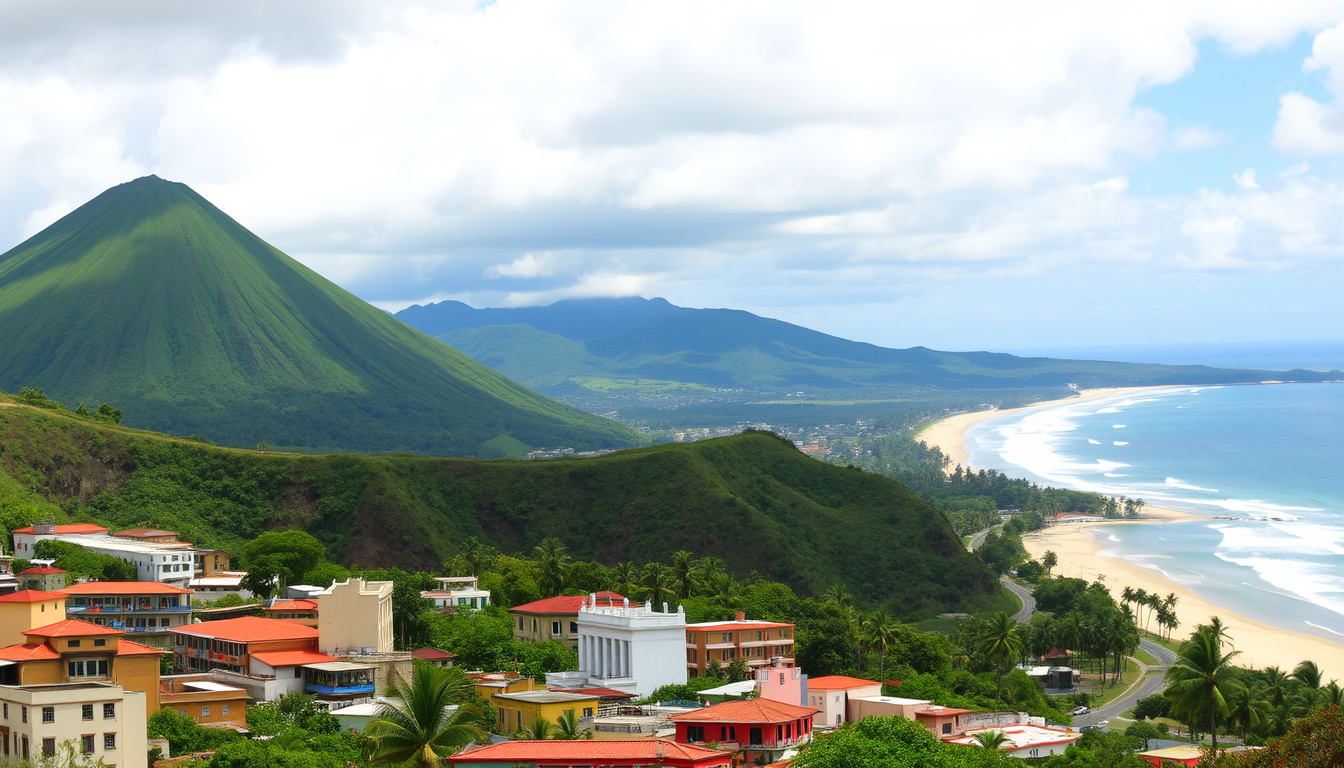
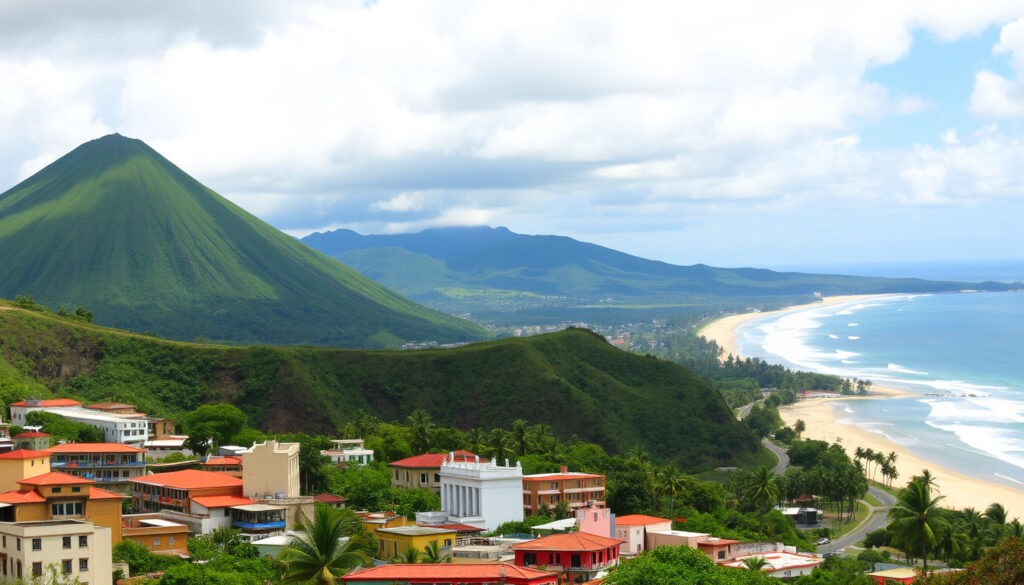
El Salvador has spent the last few years proving it can be more than the sum of its headlines: the U.S. State Department lowered its travel advisory to Level 1 in April 2025, the country recorded over 4.1 million international visitors, and the dollar-driven economy keeps costs competitive for outsiders. The trick is sorting the genuine improvements from the lingering uncertainties.
Capital: San Salvador ·
Population: 6.5 million ·
Currency: United States Dollar (USD) ·
Official language: Spanish ·
Area: 21,041 km² ·
President: Nayib Bukele
Quick snapshot
- Capital: San Salvador (Wikipedia entry for El Salvador)
- Currency: United States Dollar (Britannica entry for El Salvador)
- Official language: Spanish (Wikipedia entry for El Salvador)
- President: Nayib Bukele (Britannica entry for Nayib Bukele)
- Whether the safety gains hold long-term
- Economic stability outside tourism and remittances
- Accuracy of projected versus actual cost-of-living updates for 2025
- Sustainability of infrastructure for visitor growth
- Real-world crime rates outside official tourist zones
- U.S. advisory dropped from Level 2 to Level 1 in April 2025 (OSAC / U.S. Department of State)
- International arrivals increased 5.1% year-on-year to 4.1 million (La Prensa Gráfica)
- Tourism income projected to exceed $3.5 billion for 2025 (La Prensa Gráfica)
- Sustained visitor growth expected in 2025
- Infrastructure under increasing strain
- Potential for more long-term expat and digital nomad presence
The six key facts below outline El Salvador’s administrative profile, one pattern: the country centralized its identity around a dollarized, Spanish-speaking, presidential system that relies heavily on remittances.
| Attribute | Detail |
|---|---|
| Capital | San Salvador |
| Currency | United States Dollar (USD) |
| Official language | Spanish |
| Area | 21,041 km² |
| Population | 6.5 million |
| President | Nayib Bukele |
Is it safe to go to El Salvador now?
The most concrete signal of change came in April 2025, when the U.S. State Department lowered its travel advisory for El Salvador from Level 2 (“Exercise Increased Caution”) to Level 1 (“Exercise Normal Precautions”) — the same level as destinations like the United Kingdom and Italy (Overseas Security Advisory Council / U.S. Department of State). The U.K. Foreign Office also maintains a travel advisory for the country (U.K. Government travel advice).
Travelers staying in established tourist zones like San Salvador’s Zona Rosa, the Ruta de las Flores, or the surf beaches of La Libertad face a very different security environment than the country’s border regions, where standard caution is still advised.
Is El Salvador safe and worth visiting?
- US rated Level 1 as of April 2025 (OSAC / U.S. Department of State)
- Violent crime down sharply since 2019 (InSight Crime, a regional security research organization)
- 4.1 million visitors in 2025 (Government of El Salvador transparency portal)
- Tourist zones generally safe for daytime and evening activity
The pattern: security improvements are real and reflected in official international ratings, but the situation remains recent and long-term stability is an open question.
Is El Salvador a rich or poor country?
El Salvador is classified as a lower-middle-income country by the World Bank. GDP per capita was approximately $4,800 in 2023 (World Bank country overview), which is below the Latin American average. The economy relies on remittances — over 20% of GDP — and rank-and-file wages are low compared to the U.S. and Europe.
El Salvador economy overview
- GDP per capita: ~$4,800 (World Bank)
- Poverty rate: ~26% (World Bank)
- Main exports: apparel (textiles), coffee, sugar
- Remittances accounted for ~20% of GDP in 2023 (World Bank)
The low cost of living that makes El Salvador attractive to foreign visitors directly reflects a domestic economy where a monthly salary of $500 is considered decent. This dual economy creates a comfortable lifestyle for expats but also highlights significant local inequality.
What this means: travelers can live well on a fraction of a Western salary, but the economic reality for most Salvadorans is much tighter. The gap is part of what makes the country affordable for tourists.
Is 100 dollars a lot in El Salvador?
For daily expenses, yes — $100 goes a long way toward meals, transport, and drinks. For a month of rent or a major purchase, it is a modest amount. The country uses the U.S. dollar as its official currency, which eliminates foreign-exchange friction for American visitors.
How much does a meal cost in El Salvador?
- A typical pupusa lunch with a drink: $2–4
- Mid-range restaurant dinner with a beer: $8–12
- Nice dinner for two with wine: $30–50
How much is a beer in El Salvador?
- Local Pilsener or Suprema in a bar: $1–2
- Imported beer in a tourist spot: $3–4
What’s a good salary in El Salvador?
- Local professional: $600–1,200 per month
- Foreign worker / expat: $2,000–3,000 per month is comfortable
How much money do I need to retire in El Salvador?
- Frugal lifestyle in smaller towns: $800–1,000 per month
- Comfortable lifestyle in San Salvador or beach areas: $1,200–2,000 per month
The implication: a Western salary of $50,000–$70,000 per year places a retiree or digital nomad well above the local median income, enabling a lifestyle that includes dining out regularly and a nice apartment — things that would be unaffordable in a US or European city on the same budget.
The implication: El Salvador’s cost advantages are clear, but the trade-offs in infrastructure and inequality remain.
What are Salvadoran girls known for?
This question often reflects a curiosity about local culture and social life. Salvadoran women and men alike are known for their warmth, hospitality, and strong family orientation. The country’s most celebrated cultural exports are food and drink.
What alcoholic drink is El Salvador known for?
- Cuscatleco rum is the most famous local spirit (Britannica entry for rum)
- Pilsener and Suprema are the major local beer lagers
- Fresh tropical cocktails (e.g., caco loco, mojitos) are ubiquitous
The pattern: Salvadoran culture is defined by a genuine openness and a growing food and drink scene that remains one of Central America’s better-kept secrets.
Can tourists visit El Salvador?
Yes — and the country makes it relatively easy. El Salvador’s visa policy is open for most Western and Central American nationalities, and the adoption of the U.S. dollar as the local currency removes a major logistical barrier for Americans.
Entry requirements for tourists
- Visa-free for up to 90 days (citizens of US, UK, Schengen, Canada, Mexico, most of Latin America)
- Passport valid for at least 3 months beyond the intended departure date
- No vaccination requirements for entry
- You must declare if carrying over $10,000 in cash
While entry is easy, overland border crossings — especially the land border with Honduras — are sometimes subject to bribes or slow processing. Flying into San Salvador’s Comalapa airport offers a consistently smoother experience.
Why this matters: El Salvador has removed bureaucratic barriers for tourism, making the biggest remaining challenge simply the decision to go.
Pros and verdict for travelers
Upsides
- Low cost of living and dollarized economy
- Drastically improved safety in tourist zones
- Excellent surfing on the Pacific coast
- Outstanding food culture (pupusas, fresh seafood)
- Warm, welcoming people
Downsides
- Safety is uneven outside tourist areas
- Healthcare infrastructure is limited outside the capital
- Economic and social inequality is stark
- Limited public transport infrastructure
- Corruption at land crossings
The pattern: the improvements are substantial but not uniform, and the visitor experience depends heavily on where you go.
Clarity: what’s confirmed and what’s still open
- Confirmed facts:
- Capital is San Salvador (Wikipedia entry for El Salvador)
- Official language is Spanish (Wikipedia entry for El Salvador)
- Currency is USD (Britannica entry for El Salvador)
- Nayib Bukele is president (Britannica entry for Nayib Bukele)
- U.S. advisory is Level 1 (OSAC / U.S. Department of State)
- What’s unclear:
- Whether safety gains hold long-term
- Economic stability outside tourism
- Accuracy of projected cost-of-living data
- Sustainability of infrastructure
- Real-world crime rates outside official zones
Voices on the ground
“The adjustment in the travel advisory reflects the significant reduction in crime that has taken place in El Salvador.”
— OSAC Advisory Summary, U.S. Department of State (2025)
“Tourism is a real driver of the economy now. We are seeing visitors not just from Central America but from Europe and Asia who want to experience the surf and the food.”
— Salvadoran Tourism Corporation, based on 2025 visitor data
The implication: these perspectives confirm both the achievements and the uncertainties.
Summary
El Salvador offers a compelling combination of low cost, improved safety, and unique culture that few destinations can match in 2025. The official statistics show a country that has successfully reversed a violent past and is now welcoming record numbers of visitors. The unknowns — long-term economic stability, the sustainability of the security model, the speed of infrastructure development — keep the story from being a simple triumph. For anyone weighing a move to Central America, the choice is clear: go for the value and the improved safety, but stay for the food and the coast — and keep an eye on the political runway.
travel.state.gov, derechoynegocios.net, elsalvadorinfo.net, visitelsalvador.ai, citycost.org, elsalvadorinenglish.com
Frequently asked questions
Do I need a visa to visit El Salvador?
Citizens of the United States, Canada, the United Kingdom, and most Western European and Latin American countries do not need a visa for tourist stays of up to 90 days.
What is the best time to visit El Salvador?
The dry season from November to April offers the most reliable weather for travel. The green season (May to October) has rain showers but fewer crowds and lush landscapes.
Is El Salvador good for solo travel?
Yes. The improved safety in tourist areas makes it manageable for solo travelers, particularly along the surf coast and in central San Salvador. Standard precautions apply.
What is the currency in El Salvador?
The official currency is the United States Dollar (USD). There is no foreign-exchange friction for American visitors.
What language do they speak in El Salvador?
The official language is Spanish. English is spoken in many tourist establishments, but learning a few basic phrases helps.
How to get around El Salvador?
Rental cars are common for travelers wanting flexibility. Buses connect most towns. Ride-sharing apps like Uber operate in San Salvador.
What are the must-visit places in El Salvador?
Highlights include the Ruta de las Flores, El Tunco beach, the historic center of Suchitoto, the Pyramids of San Andres, and the Santa Ana volcano.
Related stories





Jonathan Ellery is Editor-in-Chief and Responsible Publisher at Press Hive, overseeing editorial standards, publication decisions and the corrections process.