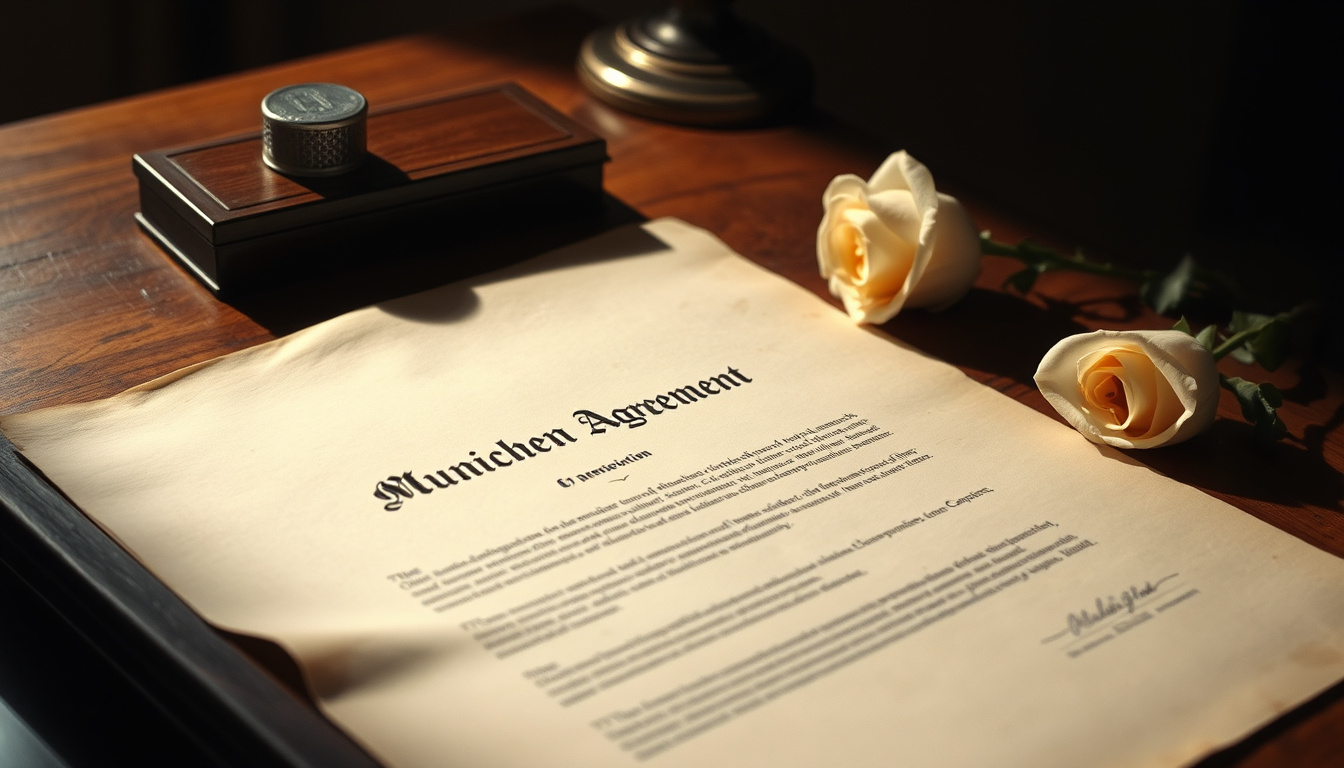
Few historical figures are as quickly summed up by a single phrase as Neville Chamberlain. His declaration of “Peace for our time” after the Munich Agreement has shaped a popular image of weakness and appeasement. But the story of Britain’s prime minister from 1937 to 1940 is more complicated — a blend of domestic reform, constrained diplomacy, and intelligence failures that still divides historians. What you’ll find here is a balanced look at the man behind the caricature.
Tenure as Prime Minister: May 1937 – May 1940 · Political Party: Conservative · Born: 18 March 1869, Birmingham, England · Died: 9 November 1940, Heckfield, England · Famous for: Appeasement policy and the Munich Agreement
Quick snapshot
- Chamberlain was Prime Minister from 1937 to 1940 (GOV.UK (official UK government history))
- He signed the Munich Agreement in 1938 (BBC News)
- He resigned after the Norway debate on 10 May 1940 (UK Parliament Hansard)
- Whether firmer policies before 1939 could have avoided war (National WWII Museum)
- The extent intelligence failures shaped his decisions (Richard W. Smith (historian blog))
- How much his legacy is distorted by the “Guilty Men” narrative (Intelligence Squared (debate platform))
- 1938 Munich Agreement — “Peace for our time” (BBC News)
- May 1940 — Resigns after Norway debate (UK Parliament Hansard)
- Ongoing scholarly debate on his domestic reforms vs. foreign policy failure (GOV.UK)
Seven facts, one pattern: Chamberlain’s career spanned both innovative domestic administration and a foreign policy that still provokes sharp disagreement.
| Label | Value |
|---|---|
| Full Name | Arthur Neville Chamberlain |
| Born | 18 March 1869, Birmingham, England |
| Died | 9 November 1940, Heckfield, Hampshire |
| Political Party | Conservative |
| Tenure as Prime Minister | 28 May 1937 – 10 May 1940 |
| Predecessor | Stanley Baldwin |
| Successor | Winston Churchill |
What was Neville Chamberlain best known for?
Appeasement and the Munich Agreement
- Chamberlain is best known for his policy of appeasement toward Nazi Germany (National WWII Museum).
- He negotiated the Munich Agreement in 1938, ceding the Sudetenland to Hitler (BBC News).
The public memory has been unkind. The National WWII Museum notes that Chamberlain’s name became “synonymous in public memory with appeasement and weakness.” Yet the official UK government history frames him as a reforming minister before his premiership, pointing to his 1929 Local Government Act that reformed the Poor Law and helped lay foundations of the welfare state (GOV.UK).
Chamberlain was simultaneously the Conservative Party’s most effective social reformer of the interwar period and the prime minister who, in the eyes of most Britons, failed to contain Nazi aggression. His legacy splits along that fault line.
Domestic reforms and background
- Chamberlain also pursued social and economic reforms at home, including housing and factory acts (Museum of the Prime Minister).
- His 1929 Local Government Act reorganized local government finance and reformed the Poor Law (GOV.UK).
According to EBSCO Research Starters, Chamberlain was “a major Conservative voice for two decades who sought modest social reforms in housing and health” (EBSCO (academic database)). The Museum of the Prime Minister adds that his premiership saw the Factory Act and Pay Act limiting hours for women and children, along with a Housing Act (Museum of the Prime Minister).
Why was Neville Chamberlain removed as prime minister?
The Norway debate and loss of confidence
- Chamberlain resigned on 10 May 1940 after the Norway debate (UK Parliament Hansard).
- The failure of the Norwegian campaign caused a vote of confidence (BBC News).
The parliamentary vote on 8 May 1940 saw Chamberlain’s majority fall from over 200 to just 81. Two days later, as Germany invaded France and the Low Countries, he tendered his resignation to King George VI.
The timing mattered enormously. Chamberlain stepped down on the very day Hitler launched the western offensive, a coincidence that cemented the narrative of a prime minister caught wrong-footed by events he had tried to prevent.
Resignation and replacement by Churchill
- He was succeeded by Winston Churchill (GOV.UK).
- Chamberlain remained in the cabinet until his death (International Churchill Society).
Churchill kept Chamberlain in the War Cabinet as Lord President of the Council. It was an act of political unity that surprised many who expected the new prime minister to purge the architect of appeasement.
What was Neville Chamberlain’s famous quote?
“Peace for our time”
- Chamberlain famously declared “Peace for our time” on 30 September 1938 (BBC News).
- He spoke the words at Heston Aerodrome after returning from Munich.
Waving the Anglo-German Declaration, he told the crowd: “I believe it is peace for our time.” Less than a year later, Germany invaded Poland and Britain was at war.
Context and subsequent criticism
- The quote is often cited as a symbol of failed appeasement (National WWII Museum).
- BBC News notes Chamberlain’s name became an “abusive synonym for vacillation and weakness” (BBC News).
“I believe it is peace for our time.” — Neville Chamberlain, 30 September 1938
Speech at Heston Aerodrome, quoted widely in newspapers; context from BBC News
What did Winston Churchill say about Neville Chamberlain?
Churchill’s parliamentary tribute
- Churchill said “He was a man of peace” in a tribute after Chamberlain’s death (UK Parliament Hansard).
- He acknowledged Chamberlain’s efforts to avoid war.
Speaking in Church House (the Commons’ wartime home) on 12 November 1940, Churchill said: “He was a man of peace who had laboured to avert this war. Whatever else may be said of him, that was his aim and that was his conviction.” The full Hansard record shows Churchill insisted that no one was obliged to alter opinions while paying respect to Chamberlain (UK Parliament Hansard).
“He was a man of peace who had laboured to avert this war… Whatever else may be said of him, that was his aim and that was his conviction.” — Winston Churchill, 12 November 1940
UK Parliament Hansard
Private remarks and later assessments
- Churchill later criticized the appeasement policy in his memoirs.
- The International Churchill Society situates the tribute within Churchill’s wartime rhetoric of national unity (International Churchill Society).
The Churchill Society article notes that the tribute was delivered after Chamberlain’s death and was part of Churchill’s wider effort to maintain political cohesion. Lord Lexden, writing on his parliamentary history site, calls the Chamberlain-Churchill relationship a “perfect partnership” in the war cabinet (Lord Lexden (historical commentator)).
Churchill’s public tribute to Chamberlain was generous and politically astute, but private memoirs make clear he considered appeasement a fundamental error. For students of leadership, the contrast reveals how political necessity can rewrite even bitter rivalries.
Timeline
| Date | Event |
|---|---|
| 1869 | Born in Birmingham |
| 1918 | Elected to Parliament as MP for Ladywood |
| 1922–1931 | Held various ministerial posts including Postmaster General and Chancellor of the Exchequer (GOV.UK) |
| 1937 | Becomes Prime Minister |
| September 1938 | Munich Agreement; “Peace for our time” speech (BBC News) |
| September 1939 | Britain declares war on Germany after invasion of Poland |
| May 1940 | Resigns after Norway debate; replaced by Winston Churchill (UK Parliament Hansard) |
| November 1940 | Dies from cancer |
Clarity
Confirmed facts
- Chamberlain was Prime Minister from 28 May 1937 to 10 May 1940 (GOV.UK)
- He signed the Munich Agreement on 30 September 1938 (BBC News)
- He resigned after a parliamentary vote on the Norway campaign (UK Parliament Hansard)
- He died of cancer on 9 November 1940 (GOV.UK)
What’s unclear
- Whether Chamberlain could have avoided war through firmer policies before 1939 (National WWII Museum)
- The extent to which intelligence failures shaped his decisions (Richard W. Smith (historian blog))
- How much his legacy is distorted by the “Guilty Men” narrative (Intelligence Squared (debate platform))
Key quotes
“I believe it is peace for our time.” — Neville Chamberlain, 30 September 1938
BBC News
“He was a man of peace who had laboured to avert this war… Whatever else may be said of him, that was his aim and that was his conviction.” — Winston Churchill, 12 November 1940
UK Parliament Hansard
The Chamberlain that emerges from the full record is neither the pure villain of the “Guilty Men” school nor the overlooked reformer that revisionists sometimes claim. He was a capable, methodical administrator whose domestic achievements — the Local Government Act, the Factory Act, a Housing Act — were real but, for most Britons, overshadowed by the catastrophe of a war he could not prevent. For historians weighing his legacy, the implication is clear: Chamberlain’s foreign policy failure was not a simple character flaw but a systemic breakdown of intelligence, timing, and diplomatic options. For the reader trying to understand modern Britain’s reluctance to engage in foreign interventions, the parallel is unavoidable — the ghost of Munich still conditions Whitehall’s instincts.
Related reading: **George III: Madness, Illness, and Legacy** · **Catherine Parr: Henry VIII’s Last Wife Revealed**
For a comprehensive overview of Neville Chamberlains full biography, including his domestic reforms and foreign policy decisions, this resource provides detailed context beyond the Munich Agreement.
Frequently asked questions
What was Neville Chamberlain’s education?
Chamberlain was educated at Rugby School and later at Mason Science College (now the University of Birmingham). He did not attend a traditional Oxbridge university and his background was in business — including a period managing a sisal plantation in the Bahamas — rather than in the legal or military careers typical of Conservative leaders.
Did Neville Chamberlain have children?
Yes, he married Anne Vere Cole in 1911 and they had two children: Frank (born 1911) and Dorothy (born 1914). Frank later served as a diplomat.
What were Neville Chamberlain’s domestic policies?
His domestic legacy includes the Local Government Act 1929 (which reformed the Poor Law), the Housing Act 1936, and the Factory and Pay Acts that limited working hours for women and children (Museum of the Prime Minister).
How is Neville Chamberlain remembered today?
He remains one of the most controversial British prime ministers. The popular image — shaped by the “Peace for our time” speech — is one of gullible appeasement, but historians increasingly highlight his domestic reforms and the constrained options he faced (National WWII Museum).
What did Neville Chamberlain think of Winston Churchill?
Chamberlain had a long and complicated relationship with Churchill. He kept Churchill out of the cabinet for years, but when war came he appointed him First Lord of the Admiralty and later supported his succession — recommending Churchill as his replacement to the King (Lord Lexden).
Why did Neville Chamberlain choose appeasement?
He believed that the Treaty of Versailles had been too harsh on Germany and that economic recovery and collective security could prevent another war. He also knew that Britain was not militarily prepared for a major conflict in 1938, a point confirmed by intelligence assessments of the time (Intelligence Squared).
What was Chamberlain’s relationship with King George VI?
Chamberlain had a warm and respectful relationship with the King. George VI recorded in his diary that Chamberlain was “a good friend” and was deeply distressed by his resignation. The King also supported Churchill’s decision to keep Chamberlain in the War Cabinet.
Related stories




Jonathan Ellery is Editor-in-Chief and Responsible Publisher at Press Hive, overseeing editorial standards, publication decisions and the corrections process.