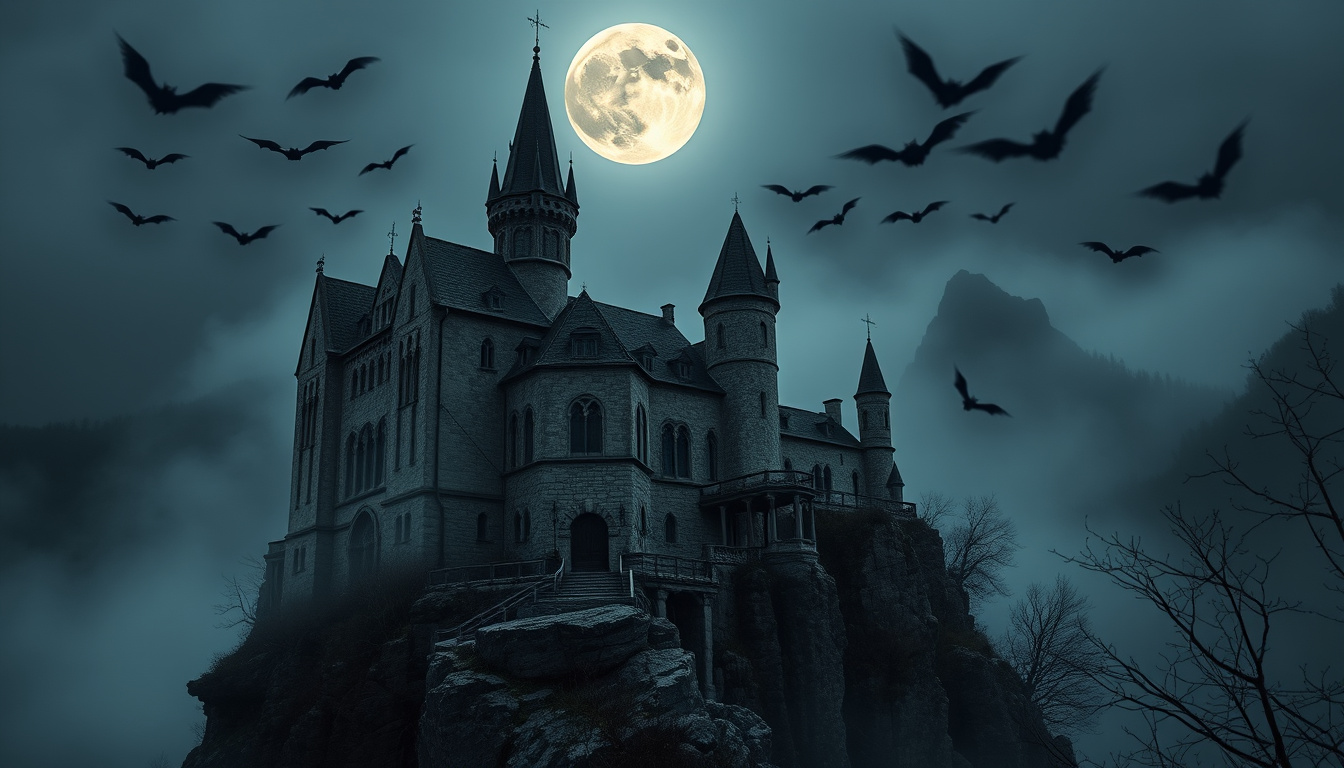
Few historical figures have been as thoroughly rewritten by fiction as Vlad Dracula. The 15th-century Wallachian prince who inspired Bram Stoker’s 1897 novel has become a cultural icon, yet the real Vlad III – known to his enemies as the Impaler – is far more complex than the vampire myth suggests. This guide separates the documented ruler from the fictional count, examining his brutal reign, mysterious death, and the medical puzzle of his reported tears of blood.
Born: 1431 ·
Died: 1476 (in battle) ·
Ruled Wallachia: Three separate reigns (1448, 1456–1462, 1476) ·
Estimated impalement victims: 20,000–30,000 ·
Inspired Bram Stoker’s Dracula: 1897 novel
Quick snapshot
- Vlad III was a 15th-century voivode of Wallachia (Encyclopaedia Britannica)
- He employed impalement as a method of execution (Encyclopaedia Britannica)
- Exact number of impalement victims (20,000–30,000 is a range)
- Whether he actually wept tears of blood
- Identity of the person who delivered the killing blow
- Existence of any proven direct descendants
- He used the name “Dracula” in official documents
- He was killed in battle around December 1476
- Major reign of terror (1456–1462)
- Night attack on Ottoman camp (1462); flees to Hungary
- Killed in battle (1476)
- Ongoing DNA research to verify descendant claims
- New historical analyses of Ottoman–Wallachian conflict
- Medical studies on hemolacria and porphyria
- 1431: Born in Sighișoara, Transylvania (National Geographic)
- Continued tourism at Bran Castle and Poenari Fortress (EF Tours)
The following table summarizes Vlad’s basic biographical details.
| Attribute | Value |
|---|---|
| Full name | Vlad III, also known as Vlad Dracula |
| Born | 1431 (Sighișoara, Transylvania) |
| Died | December 1476 (near Bucharest, Wallachia) |
| Cause of death | Killed in battle (details uncertain) |
| Titles | Voivode (prince) of Wallachia |
| Known for | Impalement of enemies, inspiration for Dracula |
Why is Dracula called Vlad?
The name “Dracula” stems directly from Vlad’s father, Vlad II Dracul, who was inducted into the Order of the Dragon – a chivalric order dedicated to fighting the Ottoman Empire. “Dracul” means “dragon” in Romanian, and the suffix “-a” signifies “son of.” So Dracula literally means “son of the dragon” (Encyclopaedia Britannica). Vlad III himself signed documents as “Vlad Dracula.”
What is the origin of the name Dracula?
- Vlad II Dracul earned his nickname after joining the Order of the Dragon in 1431 (Wikipedia).
- “Dracul” also means “devil” in modern Romanian, adding to the sinister association (Portland Center Stage).
- The name was later adopted by Bram Stoker for his vampire count.
The historical Vlad proudly used “Dracula” as a patronymic. Only later did fiction warp the dragon into a blood-sucking monster.
Why is Vlad Dracula known as a vampire?
- Bram Stoker read about Vlad in William Wilkinson’s book “An Account of the Principalities of Wallachia and Moldavia” and borrowed the name.
- Stoker’s count shares Vlad’s Transylvanian setting but none of the historical figure’s political motives (Encyclopaedia Britannica).
- Modern pop culture – from movies to Castlevania games – cemented the merge of Vlad the Impaler with the vampire archetype.
The real Vlad was a brutal ruler who impaled thousands, but he never drank blood or slept in a coffin. Stoker’s fiction created a creature far more terrifying than any historical prince.
The implication: the name “Dracula” now carries dual meaning – a historical prince and a literary monster. Understanding the difference is key to separating fact from folklore.
How did Vlad turn into Dracula?
The transformation from 15th-century prince to gothic icon happened almost entirely through Bram Stoker’s 1897 novel. Stoker needed a memorable name and a suitably grim setting; he found both in the historical accounts of Vlad the Impaler (Encyclopaedia Britannica).
Did Bram Stoker base Dracula on Vlad the Impaler?
- Stoker never explicitly stated that Vlad was the direct model, but his notes reference Wilkinson’s book.
- He changed almost all biographical details: Vlad was a Wallachian prince, not a Transylvanian count; he lived in the 15th century, not the Victorian era; he had a wife and family, no undead brides.
- Stoker did keep the name “Dracula” and the region of Transylvania.
What is the direct connection between Vlad and the vampire myth?
- Vlad’s practice of impalement created a reputation for savagery that aligned with the vampire’s cruelty.
- Eastern European folklore already contained vampire stories, which Stoker wove into his narrative.
- The actual Vlad was a shrewd politician who fought the Ottoman Empire and defended his principality – hardly a creature of the night.
“We learn from the records of the time that Vlad’s cruelty was not mindless; it was a calculated tool of terror against enemies and a deterrent to crime within his realm.”
Radu R. Florescu, co-author of In Search of Dracula
The pattern: Stoker cherry-picked the name and a few gruesome details, then built a fictional monster that far outlasted the historical memory of Vlad III. For readers, the catch is that nearly everything they think they know about “Dracula” comes from a novel, not history.
Who assassinated Vlad?
Vlad died in battle near Bucharest in December 1476, but the specifics remain murky. He had just reclaimed the Wallachian throne for the third time when he was ambushed and killed.
How did Vlad the Impaler die?
- Contemporary accounts say he was surrounded by Ottoman forces and fell fighting.
- Some sources claim Byzantine agents or rival Wallachian nobles betrayed him.
- His head was reportedly sent to Sultan Mehmed II as a trophy (National Geographic).
- The exact location of his grave is unknown; possible sites include Snagov Monastery and Comana Monastery.
Where is Vlad Dracula buried?
- Tradition holds he was buried at Snagov Monastery, but excavations in the 1930s found no body.
- Another theory places his remains at Comana Monastery, near where he died.
- DNA testing has not been conclusive due to lack of verified samples.
For historians, the uncertainty around Vlad’s death and burial is a reminder that even the most famous “facts” about him are built on fragmentary medieval sources, many from his enemies.
Why this matters: the mystery of Vlad’s death feeds both serious scholarship and tourism. Without a confirmed tomb, every castle and monastery becomes a potential “Dracula’s grave,” drawing visitors but obscuring the real history.
Are there any living descendants of Vlad Dracula?
Several noble families claim descent from Vlad, but verified evidence is thin. The House of Drăculești, the branch of the Basarab dynasty that Vlad belonged to, died out in the male line in the 17th century (Wikipedia).
Who are the current descendants of Vlad Dracula?
- Some modern Romanians trace lineage through female lines, but no direct male descendant has been confirmed by DNA.
- Prince Charles of the United Kingdom has Romanian roots through the Habsburgs, but not directly from Vlad III (National Geographic).
- The claim is often used in tourism marketing to add a “royal connection” to Dracula lore.
Is there any DNA evidence?
- No confirmed DNA sample from Vlad exists.
- Attempts to extract DNA from presumed relatives have been inconclusive or controversial.
- A 2014 study on the Snagov remains was not peer-reviewed and did not settle the question.
The trade-off: the search for descendants sells books and tours, but without genetic evidence it remains more wishful thinking than science. For history enthusiasts, the safest answer is that Vlad’s direct line is extinct.
What disease did Vlad have?
Perhaps the most bizarre claim about Vlad is that he wept tears of blood. This phenomenon, known medically as hemolacria, has sparked speculation about his health.
Did Vlad Dracula love his wife?
- One legend says that Vlad’s wife threw herself from a tower to avoid capture by the Ottomans, and Vlad then wept tears of blood.
- Historical records do not mention this event; it appears first in later folklore.
- Vlad was married at least twice, with three known children (Encyclopaedia Britannica).
Did Vlad have any children?
- His sons Mihnea cel Rău (Mihnea the Bad) and Vlad IV (known as Vlad Călugărul) succeeded him briefly.
- A daughter, possibly named Alexandrina, married into a Wallachian noble family.
- His children continued the Drăculești line for a few generations, but it died out in the male line by 1600.
Medical theories behind the blood tears
- Hemolacria: a condition where tears contain blood, sometimes caused by injury or infection (Portland Center Stage).
- Porphyria: a metabolic disorder that can cause reddish urine and photosensitivity – sometimes linked to vampire myths.
- Lupus: an autoimmune disease that can cause eye symptoms.
- Propaganda: his enemies may have invented the image to paint him as cursed.
“The tales of Vlad’s cruelty were often exaggerated by the Saxon merchants and Ottoman chroniclers who had reason to vilify him. Even the number of impaled victims varies wildly from source to source.”
Laonikos Chalkokondyles, 15th-century Greek historian
The catch: without a medical examination, we can never know. The blood tears story is more valuable as a window into how Vlad’s enemies used supernatural imagery to demonize him.
The boundary between what is proven and what is presumed about Vlad Dracula remains porous, a reminder of how much of history relies on interpretation.
Historical Vlad vs. Fictional Dracula
Three core differences separate the man from the myth, each grounded in sources versus Stoker’s imagination.
| Aspect | Historical Vlad Dracula | Fictional Count Dracula |
|---|---|---|
| Species | Human, mortal prince | Undead vampire |
| Setting | Wallachia (southern Romania) | Transylvania (and England) |
| Period | 15th century (1431–1476) | Late 19th century (novel 1897) |
| Motivation | Political power, defense against Ottomans | Survival, spreading vampirism |
| Diet | Normal human food | Human blood |
| Death | Killed in battle | Staked and decapitated by heroes |
| Powers | Military tactics, cunning | Shape-shifting, mind control, super strength |
“I have copied the names of the authors and their works, and I have taken for my own the name of ‘Dracula,’ which was the name of a tyrant of the fifteenth century.”
Bram Stoker, in a letter to his publisher
What this means: the historical Vlad is far more interesting than any vampire – a ruler who defended his land through terror, who was shaped by Ottoman captivity, and whose legacy was stolen by a novelist.
Timeline of Vlad Dracula’s life and afterlife
- 1431: Born in Sighișoara, Transylvania, to Vlad II Dracul (National Geographic).
- 1442: Taken as hostage to the Ottoman court with his brother Radu (Wikipedia).
- 1448: First brief reign as voivode of Wallachia (a few months).
- 1456: Regains throne with Hungarian support; begins his major reign.
- 1462: Night attack on Ottoman camp at Târgoviște; forced to flee to Hungary.
- 1476: Third and final reign; killed in battle in December.
- 1897: Bram Stoker publishes Dracula, loosely inspired by Vlad.
- 20th century: Film adaptations (Nosferatu, Bela Lugosi, etc.) cement the vampire archetype.
- Present: Tourism in Romania blends historical sites with Dracula legend (Romania Tourism).
The timeline underscores how the fictional count far outlived the real prince.
Related reading: **Sherlock Holmes: Reading Age, Movies, and Best Actors** · **George III: Madness, Illness, and Legacy**
en.wikipedia.org, shop.minimuseum.com, advocate-online.net, youtube.com, shop.minimuseum.com, hoteleokazje.pl
Frequently asked questions
Was Vlad the Impaler a vampire?
No. Vlad III was a human ruler. The vampire myth was created by Bram Stoker and has no basis in Vlad’s actual life.
What does “Tepes” mean?
“Tepes” (often spelled Tepes or Țepeș) means “the Impaler” in Romanian. It was a posthumous nickname derived from his favored method of execution.
How many people did Vlad the Impaler kill?
Contemporary estimates vary wildly. Some Saxon chronicles claim 20,000–30,000 impalements, but modern historians consider these numbers exaggerated propaganda (Encyclopaedia Britannica).
Did Vlad Dracula actually cry tears of blood?
The story appears in folklore but is not verified by contemporary historical sources. It may have been invented by his enemies or may reflect a real medical condition such as hemolacria.
What is the Order of the Dragon?
A chivalric order founded in 1408 by Holy Roman Emperor Sigismund. Vlad II Dracul joined in 1431, adopting the dragon as his symbol. “Dracul” derives from the Latin draco meaning dragon.
Is there a connection between Vlad Dracula and Castlevania?
Yes, the video game series Castlevania features a vampire lord named Dracula inspired by Stoker’s character, which in turn draws from Vlad. However, the game’s lore is entirely fictional.
Where can I find Vlad the Impaler’s remains?
No verified remains exist. The most likely sites are Snagov Monastery or Comana Monastery, but excavations have been inconclusive. His head was reportedly sent to Constantinople.
For anyone curious about the real Vlad Dracula, the clearest takeaway is this: the man was not a vampire, but his life was brutal enough to inspire one. The next time you see a Dracula movie, remember the Wallachian prince who fought the Ottomans, signed his name “Dracula,” and whose true story is still being pieced together from biased, fragmentary sources. The choice for historians is clear: either accept the legend or keep digging for the truth.
Related stories





Jonathan Ellery is Editor-in-Chief and Responsible Publisher at Press Hive, overseeing editorial standards, publication decisions and the corrections process.