
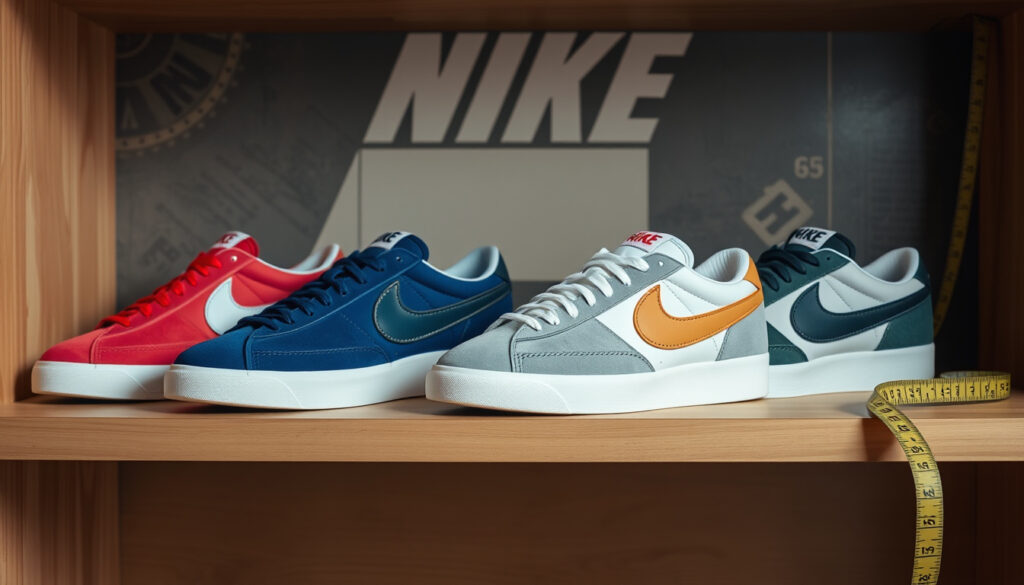
Few sneakers manage to feel both retro and fresh at the same time, but the Nike Blazer has been pulling off that trick for over fifty years, originally a basketball shoe from the 1970s and now a staple of everyday style. This guide brings together the brand’s own fit advice, sneakerhead sizing tips, and practical care instructions so you can pick, wear, and maintain your Blazers with confidence.
Original release year: 1973 ·
Original purpose: Basketball shoe ·
Key silhouette: High-top ·
Notable reissue: Nike Blazer Mid ’77 ·
Primary material: Leather and suede
Quick snapshot
- Debuted in 1973 as a basketball sneaker (Nike (official sizing guidance))
- Leather upper with suede overlays is standard (Sneakerjagers (sneaker community))
- Mid ’77 reissue launched in 2017 with vintage details (Highsnobiety (sneaker culture publication))
- Exact production numbers aren’t publicly shared by Nike (Sneakerjagers (sneaker community))
- Future colorways depend on seasonal trends (Sneakerjagers (sneaker community))
- Leather and suede overlays: some sources treat as standard, but alternative materials exist in collaborations (Sneakerjagers (sneaker community))
- Sizing recommendations vary between sources — half size up vs full size up for wide feet (Sneakerjagers (sneaker community))
- 1973 – First release as basketball shoe (Nike (official sizing guidance))
- 2005 – Nike SB adopts the silhouette for skateboarding (Highsnobiety (sneaker culture publication))
- 2017 – Mid ’77 reissue arrives (Nike (official sizing guidance))
- 2024 – Blazer Mid Roam hiking variant spotted (Highsnobiety (sneaker culture publication))
- New seasonal colourways expected
- Potential further collaborations with streetwear brands
Six key facts at a glance summarise the Blazer’s core specs and current market position.
| Specification | Detail |
|---|---|
| Launch year | 1973 |
| Original purpose | Basketball sneaker |
| Designer | Nike (original team) |
| Key silhouette change | High-top to low-top in later variations |
| Iconic feature | Large white Swoosh on side |
| Current price range | $70 – $150 (depending on model) |
What Are Nike Blazers?
History of the Nike Blazer
Nike launched the Blazer in 1973 as a basketball shoe, named after the Portland Trail Blazers (Nike (official sizing guidance)). For most of the 1970s it was a go-to court shoe, but by the 1980s skaters and streetwear enthusiasts had adopted it. Highsnobiety notes that the first big modern revival came in 2005 when Nike SB added padding and reworked the silhouette (Highsnobiety (sneaker culture publication)).
Key features and design
- High-top or low-top profile with a prominent Swoosh
- Leather upper, suede overlays, rubber outsole with herringbone pattern (Sneakerjagers (sneaker community))
- Vulcanised rubber sole for durability
The Blazer’s longevity isn’t nostalgia—it’s the shape. A clean high-top with a single bold logo has proven more adaptable than any tech-laden modern sneaker.
What Is the Difference Between Nike Blazer Mid and Low?
Height and ankle support
The Blazer Mid offers more ankle coverage and a retro look that matches its 1970s roots. The Blazer Low cuts below the ankle for greater mobility and a sleeker profile (Sneakerjagers (sneaker community)).
Style variations
- Mid: most widely recognised version, often seen in the ’77 reissue
- Low: minimalist, easier to pair with shorts and cropped trousers
- Both available in leather, suede, and canvas colourways
Which one to choose
Pick the Mid if you want the classic Blazer silhouette and don’t mind a little extra height. Choose the Low for a casual, everyday sneaker that slips on quickly. The Mid ’77 is the most popular reissue, while the Low suits those who prefer a lighter feel.
How Do Nike Blazers Fit and Do They Run True to Size?
Sizing guidelines
Nike states the Blazer tends to run half a size small and recommends going half a size up from your usual Nike size for a standard fit (Nike (official sizing guidance)). GOAT’s sizing guide characterises the Blazer as narrow-fitting and true to size for most, but suggests a half-size up for wide feet (GOAT (sneaker marketplace)).
Narrow vs wide feet
- Narrow feet: true to size works fine
- Wide feet: half size up recommended; Sneakerjagers says full size up may be needed (Sneakerjagers (sneaker community))
- Nike’s foot-measurement guide advises using the larger foot’s measurement when the two differ (Nike (foot measurement guide))
Break-in period
Leather Blazers will stretch slightly with wear. Lacing loosely can make them easier to slip on and off during break-in (Nike (official sizing guidance)). Expect a snug initial fit that relaxes after a few wears.
The narrow last can pinch wider feet even after break-in. Trying the low-top first often helps because it leaves more room around the ankle collar.
Are Nike Blazers Good for Basketball Today?
Original basketball performance
When the Blazer debuted in 1973, it was a solid basketball shoe with a high-top cut and herringbone outsole for traction. Players of that era trusted them on the court.
Modern suitability
Today’s basketball shoes use advanced cushioning (Air, Zoom, React) and engineered uppers. The Blazer lacks those technologies, making it unsuitable for serious play. Its flat sole and minimal padding offer little impact protection.
Comparison with modern basketball shoes
- Blazer: leather upper, vulcanised sole, no midsole cushioning
- Modern: knit or mesh uppers, full-length Air or foam, multidirectional traction
- Verdict: a lifestyle shoe, not a performance hoop shoe
How to Style and Care for Nike Blazers
Outfit ideas with jeans, skirts, etc.
- Cuffed jeans or shorts let the high-top shine
- Skirts and dresses pair well with the Low for a sporty-look
- A white Blazer Mid ’77 works with everything from joggers to chinos
Cleaning leather and suede
Hand-wash only. Remove laces, use a toothbrush with mild detergent and water for leather (Sneakerjagers (sneaker community)). For suede, use a suede brush and avoid water—it can damage the nap (Sneakerjagers (sneaker community)).
Storage tips
- Stuff with paper to maintain shape
- Keep away from direct heat to prevent leather cracking
- Store in a cool, dry place
Four timeline milestones show how the Blazer moved from sport to street.
| Period | Event |
|---|---|
| 1973 | Nike Blazer released as a basketball shoe (Nike (official sizing guidance)) |
| 1980s | Adopted by skateboarding and streetwear communities |
| 2017 | Nike re-released the Blazer Mid ’77 with vintage details (Highsnobiety (sneaker culture publication)) |
| 2024 | New colourways and collaborations like Blazer Mid Roam (Highsnobiety (sneaker culture publication)) |
Confirmed facts
- Nike Blazer debuted in 1973.
- Original basketball shoe; now lifestyle.
- Mid ’77 reissue exists.
What’s unclear
- Exact production numbers not disclosed.
- Future colorways depend on seasonal trends.
- Leather and suede as standard materials — some releases use canvas or synthetics.
- Sizing guidance conflicts: half size up vs full size up for wide feet.
“The Nike Blazer embodies iconic style and timeless design.”
— Nike official website (product description)
The Blazer’s shift from basketball to streetwear in the 1980s cemented its cultural status.
— Wikipedia (historical reference)
“The Blazer’s narrow fit is a signature trait that collectors love and new buyers need to plan for.”
— GOAT (sneaker marketplace sizing guide)
For buyers in the US and Europe, the decision is straightforward: the Blazer is a lifestyle classic, not a performance shoe. Sizing up half a step and using a suede brush for maintenance will keep you in good shape for years.
nike.com, youtube.com, nike.com, highsnobiety.com, bigshoes.com, nike.com, nike.com, lageblick.de
For a deeper dive into the original look and how to care for them, check out this complete guide on Nike Blazers history and styles.
Frequently asked questions
Do Nike Blazers come in half sizes?
Yes, most Blazer models are available in half sizes from US 5 to 15.
Are Nike Blazers comfortable for all-day wear?
They offer a snug fit and minimal cushioning, so comfort for all-day wear depends on your foot shape. Many find them fine for casual walking after break-in.
Can I return Nike Blazers if they don’t fit?
Return policies vary by retailer. Nike.com offers free returns within 30 days.
How do I clean suede on Nike Blazers?
Use a suede brush and eraser. Avoid water—it can stain the suede permanently.
Are Nike Blazers good for skating?
Skateboarders have used them since the 1980s, but modern skate shoes offer more cushioning and durability.
What socks go best with Nike Blazers?
Crew socks or no-show socks both work. High-tops often look best with socks that peek above the collar.
For the average shopper in North America or Europe, the choice is clear: pick a Blazer Mid for authentic retro looks or a Low for everyday ease. Size up half a step, treat suede gently, and you’ll have a sneaker that outlasts trends.
Check out our Ray-Ban Ireland: Prices, Authenticity & Buying Guide and Charm Nomination: A Complete Guide to Italian Charm Bracelets for more trusted product guides.
Related stories





Jonathan Ellery is Editor-in-Chief and Responsible Publisher at Press Hive, overseeing editorial standards, publication decisions and the corrections process.