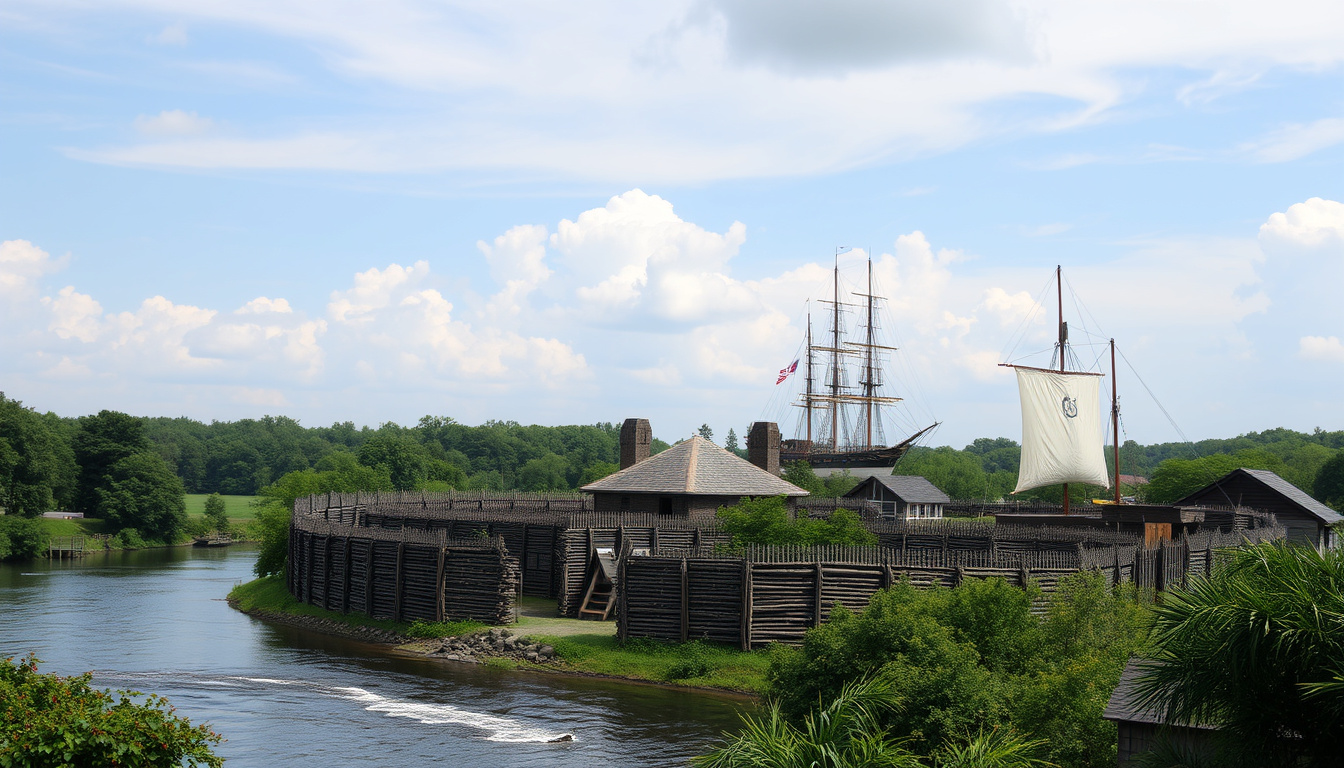
Few stories from early American history are as tangled as Captain John Smith’s — the name conjures images of a swashbuckling explorer saved by a young Native American girl, but the real man was a soldier, mapmaker, and writer who helped plant the first permanent English settlement in North America and shaped his own myth in print.
Born: c. 1579 in Lincolnshire, England · Died: 21 June 1631 in London, England · Known For: Founding Jamestown, exploring New England, relationship with Pocahontas · Occupation: Soldier, explorer, author, admiral · Key Book: The Generall Historie of Virginia, New-England, and the Summer Isles
Quick snapshot
- English soldier, explorer, and author who led Jamestown (Britannica)
- Baptized 6 January 1580 in Willoughby, Lincolnshire (Britannica)
- Died 21 June 1631 in London (Britannica)
- Wrote The Generall Historie of Virginia, New-England, and the Summer Isles (1624) (Britannica)
- The famous Pocahontas rescue story is doubted by many historians (Historic Jamestowne)
- Smith’s account of his own life includes self-serving exaggerations (Live Science)
- Exact cause of death is not definitively recorded (Britannica)
- December 1607: Smith captured by Powhatan’s men (Historic Jamestowne)
- 1608-1609: Served as president of Jamestown colony (Britannica)
- 1609: Left Virginia after injury and never returned (EBSCO Research Starters)
- Smith’s written works continue to be studied by historians (Colonial Williamsburg)
- Jamestown’s 400th anniversary renewed interest in Smith’s role (National Endowment for the Humanities)
- New archaeological finds at Jamestown keep refining the story (National Park Service)
Seven key facts about John Smith, one notable pattern: his life was a series of transitions—from soldier to prisoner to explorer to writer—each phase documented in his own embellished accounts.
| Attribute | Value |
|---|---|
| Full Name | John Smith |
| Birth | c. 1579, Lincolnshire, England |
| Death | 21 June 1631, London, England |
| Nationality | English |
| Occupation | Soldier, explorer, author, admiral of New England |
| Known For | Founding Jamestown, exploring New England, relationship with Pocahontas |
| Notable Work | The Generall Historie of Virginia, New-England, and the Summer Isles (1624) |
What is John Smith best known for?
John Smith is best known as the leader of the Jamestown colony (the first permanent English settlement in North America) and for his dramatic story of being saved by Pocahontas. But that rescue is only part of a much larger career. Before Jamestown, Smith had been a mercenary in Europe and the Ottoman Empire, where he was captured, enslaved, and later escaped. The National Endowment for the Humanities describes him as “a soldier of fortune” who had been a pirate and mutineer before his Virginia venture.
What is John Smith’s famous quote?
Smith is best known for his description of Pocahontas as “the instrument to pursurve this colonie from death, famine, and utter confusion,” according to the National Women’s History Museum. He also wrote the oft-quoted line “He who does not work, shall not eat” while governing Jamestown.
What happened to John Smith in real life?
After a gunpowder injury in 1609, Smith returned to England and never visited Virginia again. He spent his later years writing and publishing detailed maps and histories of the New World, including The Generall Historie. He died in London on 21 June 1631 and was buried at St. Sepulchre-without-Newgate.
Smith the writer was far more influential than Smith the explorer. His published works shaped how Europeans imagined North America for generations, even when his own role was exaggerated.
Was Pocahontas involved with John Smith?
Yes, but not in the romantic way popular culture suggests. Pocahontas was a real Powhatan woman who interacted with the English colonists. According to Smith’s account, when he was captured by Chief Powhatan’s men in December 1607, Pocahontas—then about 11 years old—placed herself between him and his executioners. However, Historic Jamestowne notes that historians have “cast doubt” on whether the rescue actually happened, since Smith did not mention it in his earliest writings on Virginia.
Who was Pocahontas’ baby daddy?
Pocahontas did not have a child with John Smith. She married the English tobacco planter John Rolfe in 1614 and gave birth to a son, Thomas Rolfe. The National Women’s History Museum confirms that Pocahontas and Rolfe had one child together.
Did Pocahontas and John Smith have a child?
No. There is no historical evidence of a romantic relationship between Smith and Pocahontas, and certainly no children. Smith left Virginia in 1609, before Pocahontas was captured by the English in 1613.
Why did Pocahontas marry John Rolfe and not John Smith?
Because by the time Pocahontas married Rolfe in 1614, John Smith had been gone from Virginia for five years and never returned. Smith never married and had no known children. The marriage between Pocahontas and Rolfe was a political alliance that helped secure peace between the Powhatan and the English. Rolfe was a successful tobacco planter, while Smith was a soldier and explorer who had moved on to mapping New England.
Three key differences between the two men, one pattern: Smith was a man of action and writing, Rolfe a planter and diplomat.
| Aspect | John Smith | John Rolfe |
|---|---|---|
| Role in Virginia | Colony leader, explorer, mapmaker | Tobacco planter, introduced cash crop |
| Relationship with Pocahontas | Friendly, possibly saved his life (contested) | Married her in 1614 |
| Marriage | Never married | Married Pocahontas, then later Jane Pierce |
| Children | None known | One son, Thomas Rolfe, with Pocahontas |
| Legacy | Famous for writings and exploration | Known for establishing Virginia’s tobacco economy |
Did John Smith ever marry?
No. John Smith never married. His will, as recorded by Britannica, makes no mention of a wife or children. He had no known legitimate descendants.
Did John Smith have any kids?
There is no evidence that John Smith fathered any children, legitimate or illegitimate. His biographies consistently note that he remained single and childless throughout his life.
What did John Smith pass away from?
John Smith died on 21 June 1631 in London. The exact cause of death is not recorded, but historians believe it was from natural causes. He was buried at St. Sepulchre-without-Newgate church in London.
What happened to John Smith in real life? (death context)
In his final years, Smith lived quietly in London, writing and revising his earlier works. He had never regained the influence he held in Virginia, and his death went largely unnoticed at the time. His grave was marked by a simple stone, but over the centuries his reputation grew enormously.
Smith died in obscurity, yet his self-written legend became one of the most enduring stories in American history. The man who claimed to have been saved by a princess ended up being saved by his own pen.
Timeline of John Smith’s life
- c. 1579 – Born in Lincolnshire, England (Britannica)
- 1596-1604 – Served as a soldier in Europe and the Ottoman Empire; was captured, enslaved, and escaped (National Endowment for the Humanities)
- 1606-1607 – Joined the Virginia Company expedition; Jamestown founded in May 1607 (EBSCO Research Starters)
- December 1607 – Captured by Powhatan’s men; allegedly saved by Pocahontas (Historic Jamestowne)
- 1608-1609 – Served as president of the Jamestown colony (Britannica)
- 1609 – Returned to England after a gunpowder injury; never returned to Virginia (EBSCO Research Starters)
- 1614 – Explored and mapped the coast of New England, naming it “New England” (Colonial Williamsburg)
- 1624 – Published The Generall Historie of Virginia (Britannica)
- 21 June 1631 – Died in London, buried at St. Sepulchre-without-Newgate (Britannica)
Separating fact from legend
Confirmed facts
- Smith was a real English explorer who led Jamestown in its early years (National Park Service)
- He wrote detailed maps and histories of Virginia and New England (Colonial Williamsburg)
- He was captured by Powhatan’s men in December 1607 (Historic Jamestowne)
- Pocahontas was a real person who later married John Rolfe and had a son (National Women’s History Museum)
- Smith never married and had no children (Britannica)
- He died in London in 1631 (Britannica)
What’s unclear
- The Pocahontas rescue story was not mentioned in Smith’s earliest accounts and is doubted by historians (Historic Jamestowne)
- Smith’s own writings are considered self-serving and exaggerated (Live Science)
- His exact cause of death is unknown (Britannica)
- The extent of his military achievements in Europe may be embellished (National Endowment for the Humanities)
- Smith’s exact birth date is not recorded; only a baptismal date exists (Britannica)
- The details of Smith’s escape from slavery in the Ottoman Empire are not well documented (National Endowment for the Humanities)
Quotes from and about John Smith
“She, under the pretence of feasting and dancing, got the men to lay aside their arms, and then she, with her attendants, came and fell upon them, killing many.”
— John Smith, describing an attack by the Powhatan (via Britannica)
Smith was “a compiler and writer of exuberant travelers’ tales as well as explorer, mapmaker, geographer, ethnographer, soldier, governor, trader, sailor, admiral, and editor.”
— Colonial Williamsburg
“He who does not work, shall not eat.”
— John Smith’s rule at Jamestown (recorded in EBSCO Research Starters)
For modern readers, the real John Smith remains a figure of contradictions: a self-promoter who also saved Jamestown, a man who wrote his own myth. The lesson: always question the hero’s story, because the historical record often holds a more complex truth. For educators and students studying early American history, the choice is clear: read Smith’s own works with a critical eye, or risk mistaking the legend for the man.
enchantedlearning.com, en.wikipedia.org, en.wikipedia.org, simple.wikipedia.org, metroreport.uk
While the Jamestown explorer is often romanticized, the true story of John Smith reveals a more complex figure whose legacy extends beyond the Pocahontas legend.
Frequently asked questions
What is the most famous aspect of John Smith’s legacy?
John Smith is best known as a leader of the Jamestown colony and for his legendary rescue by Pocahontas, though the rescue story is disputed by historians.
What was the nature of Pocahontas’s relationship with John Smith?
Historical evidence suggests a friendly but not romantic relationship. Smith claimed she saved his life, but the story is doubted.
Why did Pocahontas choose John Rolfe over John Smith?
Smith left Virginia in 1609 and never returned. Pocahontas was captured in 1613 and later married Rolfe in 1614 as part of a peace alliance.
Was John Smith ever married?
No, John Smith never married and had no known children.
What was the cause of John Smith’s death?
The exact cause of his death on 21 June 1631 is not recorded but is believed to be natural causes.
What is John Smith’s most famous saying?
His most famous quote is “He who does not work, shall not eat,” and he called Pocahontas “the instrument to pursurve this colonie.”
Did Pocahontas have a child with John Smith?
No, there is no evidence of a romantic relationship or children between them. Pocahontas had one son, Thomas Rolfe, with John Rolfe.
Related stories





Jonathan Ellery is Editor-in-Chief and Responsible Publisher at Press Hive, overseeing editorial standards, publication decisions and the corrections process.