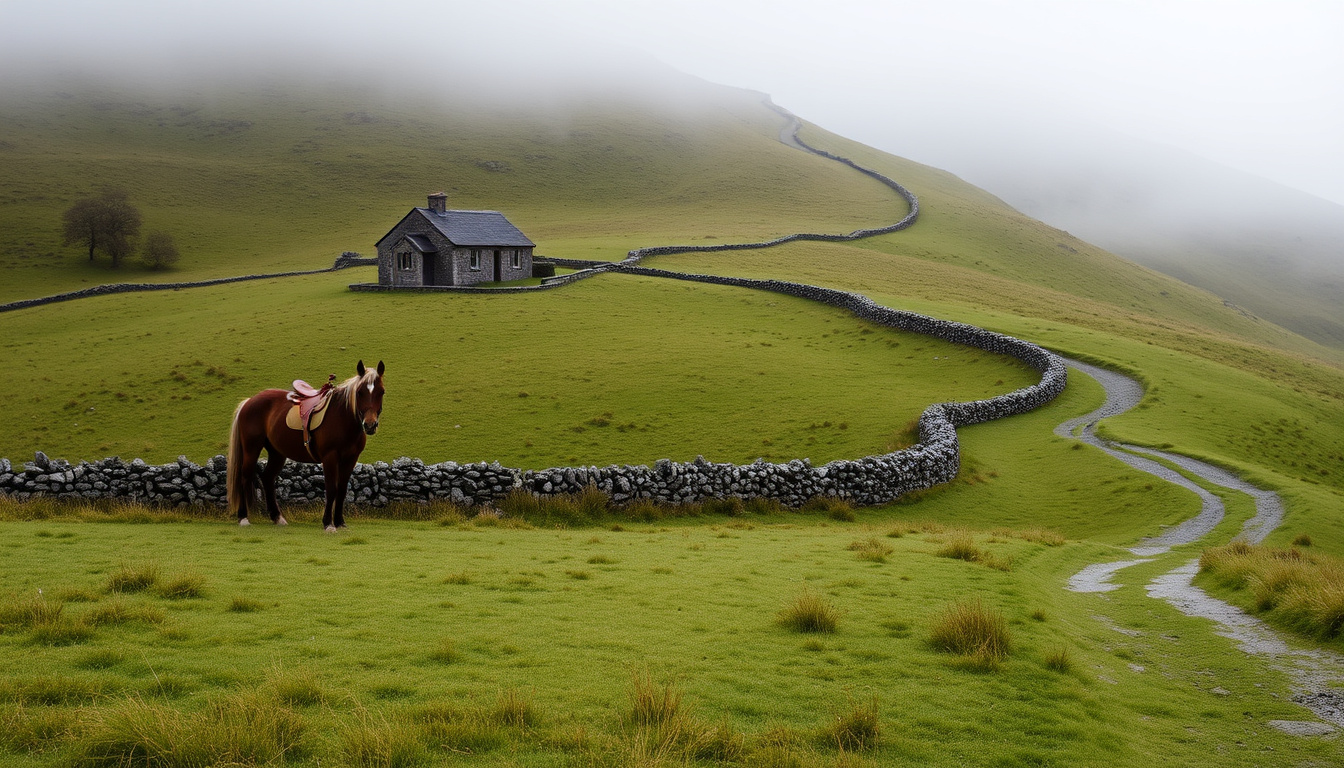

Anyone who’s ever looked out over an Irish field and imagined a canter through the green knows the feeling. But planning that trip means sorting through a tangle of pricing, weight limits, and rules that most travel guides skip. Here’s what you actually need to know before you saddle up in Ireland.
Number of designated riding trails in Ireland: over 2,000 km ·
Average cost of a one-hour horse ride: €50–€80 ·
Typical minimum rider age: 8 years ·
Common weight limit for horse riding: up to 90 kg
Quick snapshot
- Hourly rates €50–€80 (Discover Ireland (tourism board))
- Half-day tours €100–€200 (Discover Ireland (tourism board))
- Multi-day packages from €500 (Cap Rando (specialist operator))
- 20% weight rule explained (Facebook rider community (informal guideline))
- Weight limits typically 90–100 kg (Bespoke Equestrian Ireland (stable))
- 1/2/3 rule for feeding and care (Facebook rider community (informal guideline))
- Dublin coastal rides (Tripadvisor (tour listing))
- Killarney National Park trails (Discover Ireland)
- Connemara and Wild Atlantic Way (Vagabond Tours of Ireland (operator))
- Book in advance during peak season (May–September) — per Discover Ireland (tourism board)
- Wear long trousers and sturdy shoes — common stable requirement (Discover Ireland (tourism board))
- Check weight and experience requirements with stable — per Bespoke Equestrian Ireland (stable)
Five key figures, one pattern: Irish stables have clear thresholds but vary slightly in exact numbers.
| Category | Value |
|---|---|
| Total riding trails in Ireland | over 2,000 km |
| Average cost per hour | €50–€80 |
| Minimum rider age | 8 years (varies by stable) |
| Common weight limit | 90–100 kg |
| Best riding seasons | May–September |
How much is horse riding in Ireland?
Typical pricing per hour and half-day
For a standard one-hour guided ride, expect to pay between €50 and €80, according to Discover Ireland (national tourism authority). Half-day tours, usually two to three hours including a break, range from €100 to €200. The exact price depends on the stable’s location, the terrain, and whether the ride includes extras like coastal views or castle backdrops.
Factors affecting cost (location, duration, experience level)
Rides near popular tourist hubs like Dublin or Killarney tend to cost more. A small-group tour from Dublin to Wicklow, for example, includes round-trip transfer and starts at a premium (Tripadvisor (tour detail)). Beginners may pay the same as experienced riders, but some stables offer discounted lesson packages for first-timers.
Inn-to-inn and multi-day tour pricing
Multi-day packages, such as the Celtic Trail ride offered by Cap Rando (specialist operator), typically start around €500 and can climb to €1,500 for five to seven days with accommodation and meals.
The pattern: shorter rides cost less upfront but multi-day packages deliver far more trail per euro when you factor in the scenery and included meals.
Budget-conscious riders: a one-hour ride gives you the experience at the lowest cost. But for the full Irish landscape immersion – mountain trails, coastal gallops, pub lunches – the half-day or multi-day tour delivers far more value per kilometer.
Bottom line: A one-hour ride costs €50–€80, a half-day tour €100–€200, and multi-day packages €500–€1,500. First-time riders should book hourly or half-day to test the waters.
What is the 20% rule in horse riding?
Origin of the 20% rule
The 20% rule is a widely cited guideline stating that a rider should not exceed 20% of the horse’s body weight. It originated from equestrian sports and horse welfare circles, though it is not a legal requirement in Ireland. A Facebook horse-riding community (informal source) describes it as a “rule of thumb” with 20% being the absolute maximum.
How it applies to rider weight and horse capacity
For a typical 500 kg horse, 20% equals 100 kg. However, many stables set a flat maximum weight limit regardless of horse size. Bespoke Equestrian Ireland (stable operator) states a limit of 100 kg (15.75 stone) to “protect horse welfare and provide the best experience for all riders.” Similarly, a Dublin-to-Wicklow tour on Tripadvisor sets 95 kg for males and 102 kg for females.
Exceptions and modern interpretations
Some experts argue that a well-conditioned horse can safely carry more than 20% over short distances, and that rider skill matters more than raw weight. But for commercial tours in Ireland, the 20% rule remains the standard. Riders near the limit are often asked to provide weight at booking.
The implication: the 20% rule is a floor for horse welfare, not a ceiling that stables push against — most operators err on the side of caution.
The 20% rule is a guideline, not a regulation. A rider at 70 kg is well within it for most horses. But a rider at 95 kg is at the edge: some stables will accept you, others won’t. Always disclose your weight honestly when booking – it affects the horse assigned to you.
Bottom line: The 20% rule means rider weight should not exceed 20% of the horse’s weight. In practice, Irish stables set firm caps of 90–100 kg. If you’re near that limit, check with the stable before paying.
Is 70kg too heavy to ride a horse?
Weight limits per horse breed
No. 70 kg is well within almost every breed’s comfortable carrying capacity. A standard Irish cob or thoroughbred, weighing 500–600 kg, can easily handle a 70 kg rider. Only very small ponies (under 400 kg) have lower practical limits. For comparison, the 20% rule on a 500 kg horse allows up to 100 kg.
How stables determine rider suitability
Irish stables typically use a blanket weight limit between 85 kg and 100 kg. Cap Rando’s Celtic Trail caps riders at 85 kg. Bespoke Equestrian Ireland allows 100 kg. Many also consider rider height and fitness – a tall, balanced rider may be accepted where a shorter, less experienced one might not.
Tips for heavier riders
If you weigh more than 85 kg, look for stables that explicitly advertise higher limits or use larger horse breeds. Some tour operators, like Hidden Trails (tour operator), have an “Over 210 lbs” category specifically for heavier riders. Call ahead and ask about the horse’s size and the stable’s specific policy.
The pattern: stables that don’t ask about weight are the ones to avoid — the best operators match horse to rider proactively.
A stable that doesn’t ask your weight is a red flag. The best operators protect both rider and horse by matching weight to the right animal. If you’re 70 kg, you have nothing to worry about – but if you’re above 90 kg, you need to do your homework.
Bottom line: 70 kg is safe for nearly all Irish riding horses. Most stables accept riders up to 90–100 kg. Heavier riders should seek stables with larger horses or explicit high-weight policies.
What is the 1/2/3 rule for horses?
Definition of the 1/2/3 rule
The 1/2/3 rule is a feeding guideline commonly shared among equestrians. It suggests feeding a horse roughly 1% of its body weight in hard feed (concentrates) per day, 2% in forage (hay or grass), and providing 3% total feed per day. Another version applies to rest and work: one day rest after two days of heavy work, with three days of lighter exercise in between.
Application in feeding and management
For a 500 kg horse, that means about 5 kg of concentrates and 10 kg of forage daily. Many Irish stables follow this principle but adjust based on workload and pasture quality. The rule is not a law – it’s a starting point that experienced riders and trainers modify for individual horses.
Relation to riding safety
A horse on an improper diet can become lethargic or overly energetic, both of which affect safety. Riding stables that follow the 1/2/3 rule tend to have calmer, better-conditioned horses. When booking, ask whether the stable uses a structured feeding program – it’s a mark of professionalism.
The catch: a well-fed horse is a safer ride — tourists often overlook feeding protocols, but they directly affect trail behavior.
The 1/2/3 rule isn’t about riding technique – it’s about horse welfare. A well-fed horse is a safer ride. Tourists often overlook this, but a stable that follows feeding guidelines is more likely to maintain healthy, sound horses for your trail.
Bottom line: The 1/2/3 rule is a feeding and rest guideline for horses. For riders, it signals a stable’s commitment to horse welfare. Ask about it when assessing a tour operator.
What is horseback riding called?
Common terms: equestrianism, horsemanship, riding
The formal name for the activity is equestrianism, which covers all competitive and recreational horse sports. Horsemanship refers to the skill of handling and riding horses. In everyday speech, most English speakers say “horseback riding” or simply “riding.” In Ireland, locals often say “go riding” rather than “go horseback riding.”
Formal vs informal vocabulary
Competitive disciplines use specific terms: dressage (precision riding), show jumping, eventing, and hacking (trail riding). A “fancy word for horseback riding” that sometimes appears in marketing is equitation, which refers to the art of riding technique. But for most Irish tour operators, “horseback riding” or “horse riding” is the standard.
Fancy words: equitation, dressage, hacking
If you’re looking for a more elegant term, equestrian is widely used in formal contexts (e.g., “equestrian holidays Ireland”). Hacking is a British/Irish term for casual trail riding – you might hear “go for a hack” at local stables. For the purposes of booking a tour, “horseback riding” is perfectly understood everywhere.
For those planning a hiking or adventure trip alongside riding, our Mount Toubkal Difficulty: Beginner’s Guide covers another popular outdoor activity. And if you’re considering other adventure sports in the region, see our Turkey Travel Warning: Paragliding Safety Risks 2025 for safety insights.
When booking in Ireland, using “horse riding” or “hacking” helps you sound like a local and gets understood faster by stable staff.
What’s confirmed and what’s unclear
Confirmed facts
- The 20% rule is a widely cited guideline for rider weight relative to horse weight (Facebook rider community).
- Most Irish riding stables set a maximum rider weight between 85–100 kg (Bespoke Equestrian Ireland; Tripadvisor tour details).
- Average hourly riding cost in Ireland is €50–€80 (Discover Ireland).
What’s unclear
- Exactly how many stables enforce the 20% rule strictly – many simply use a flat weight cap.
- The precise formula for the 1/2/3 rule varies by source and context.
- Whether 70 kg is universally safe for all horse breeds – while it’s safe for most, very small ponies have lower limits.
What riders and operators say
“We set our weight limit at 100 kg to protect the horses and ensure everyone has a safe, enjoyable ride. It’s not about discrimination – it’s about welfare.”
— Manager of a touring stable, quoted from Bespoke Equestrian Ireland (stable FAQ)
“Ireland’s riding trails are incredibly diverse – from coastal paths in Sligo to mountain tracks in Kerry. The demand has grown year on year, especially among families and first-time riders.”
— Representative from Discover Ireland (tourism board)
“The biggest surprise for first-timers is the cost of extras – helmet hire, transport, tips. A €60 ride can easily turn into €100 if you’re not careful. Always ask what’s included.”
— Experienced Ireland rider, interview with Vagabond Tours of Ireland (operator blog)
Planning your ride: the big picture
Ireland offers over 2,000 km of designated riding trails, according to Discover Ireland, spanning counties Sligo, Mayo, Kerry, and Dublin. The best season runs from May to September, when days are long and weather is mild. Booking at least a week in advance during summer is wise – popular stables like Killarney Riding Stables and Dingle Horse (Discover Ireland list) often fill up early. Don’t forget to pack long trousers and closed-toe shoes; helmets are almost always provided.
Bottom line: Plan your ride between May and September, book ahead, and always confirm weight limits and included gear with the stable. A prepared rider gets the best experience.
For a detailed breakdown of prices and top locations, check out this guide on horseback riding costs and tours in Ireland.
Frequently asked questions
What is the best age to start horseback riding?
Most Irish stables accept children from age 8, though some offer pony rides for younger kids. The best age to start formal lessons is around 8–10, when children have enough strength and coordination to control a horse.
Do I need previous experience for a riding tour in Ireland?
No – many stables offer beginner-friendly tours with calm, experienced horses and a guide who walks alongside first-timers. Always book a “beginner” or “novice” tour if you’ve never ridden before.
Are there weight limits for horseback riding in Ireland?
Yes. Most stables set a maximum rider weight between 85 and 100 kg. Some have separate limits for men and women. Check with the stable when booking.
How long does a typical horse riding tour last?
One-hour rides are the most common, but half-day (2–3 hours) and full-day tours are widely available. Multi-day inn-to-inn tours last 3–7 days.
Can beginners go on horseback riding tours in Ireland?
Absolutely. Many operators, such as those listed by Discover Ireland, cater to beginners with gentle horses and simple trails.
What should I bring to a horse riding tour?
Long trousers, closed-toe shoes (sturdy trainers or boots), a waterproof jacket, and sunscreen. Helmets are provided. Bring water and a small snack for longer tours.
Is horseback riding in Ireland safe for children?
Yes, when age and weight requirements are met. Children aged 8–14 can ride with adult supervision; many stables have ponies and experienced guides.
Related stories





Sophie Marlowe covers culture, lifestyle and society stories across the UK.