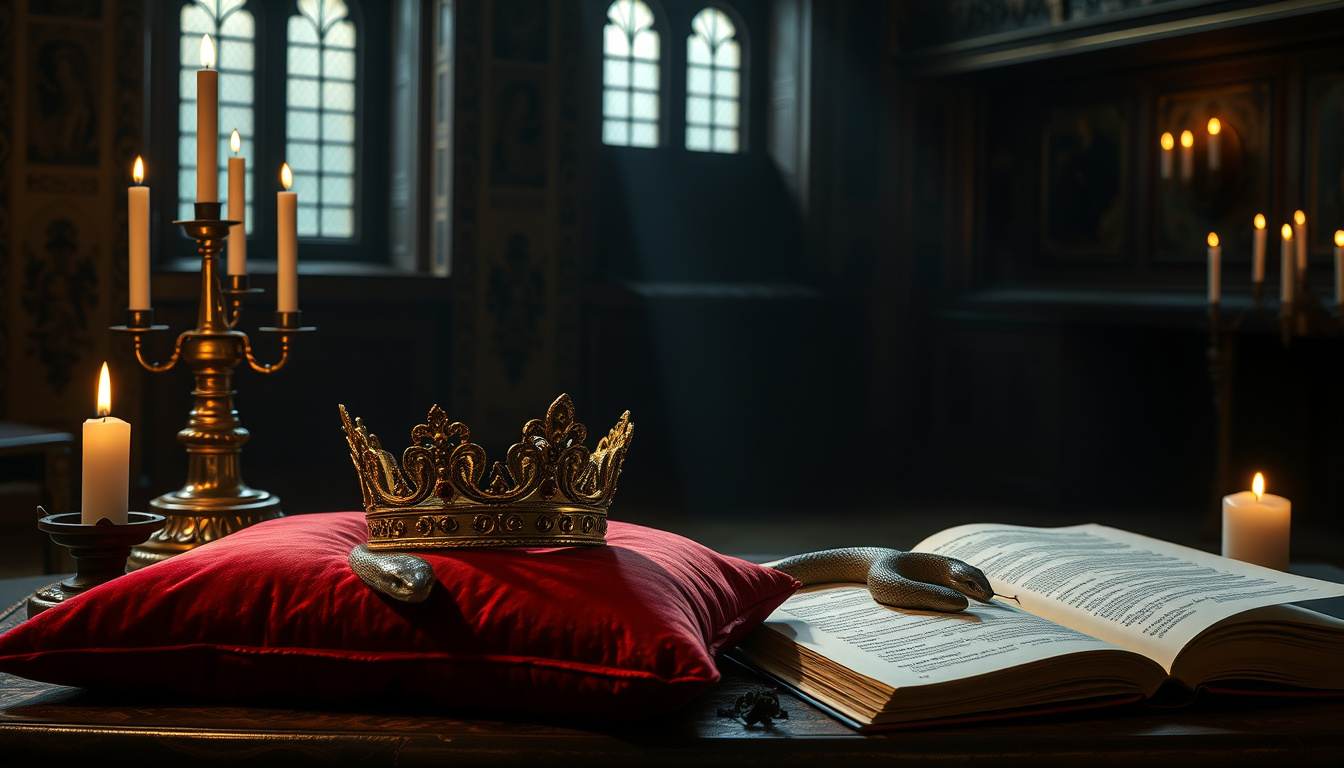
Few figures in French history inspire as much curiosity—and controversy—as Catherine de Medici, born in Florence on 13 April 1519 (Britannica, authoritative historical encyclopedia), who became queen consort of France and later a regent steering the kingdom through religious wars. Whether you know her as the “Serpent Queen” or the “Black Queen,” her story is one of power, survival, and enduring mystery.
Born: 13 April 1519, Florence · Died: 5 January 1589, Blois · Reign as Queen Consort: 1547–1559 · Number of Children: 10 · Regent of France: 1560–1563, 1574–1589
Quick snapshot
- Born 13 April 1519 in Florence (Britannica)
- Married Henry of Orléans in 1533 (BBC History)
- Bore 10 children, 7 survived to adulthood (HistoryExtra, established history magazine)
- Served as regent 1560–1563 and 1574–1589 (Britannica)
- Her exact role in ordering the St. Bartholomew’s Day Massacre (debated among historians)
- Allegations of poisoning political rivals (rumors, no direct proof)
- Her true personal feelings toward Mary, Queen of Scots vs. political necessity
- The St. Bartholomew’s Day Massacre occurred during her influence, but the exact degree of her responsibility is debated
- 1519: Born in Florence (Britannica)
- 1533: Married Henry of Orléans (BBC History)
- 1547: Became queen consort (Britannica)
- 1559: Henry II died; Catherine became regent (BBC History)
- 1572: St. Bartholomew’s Day Massacre (Britannica)
- 1589: Died at Blois (Britannica)
- Ongoing historical reassessment of her legacy
- Popular portrayals in TV series The Serpent Queen and films
- Academic research continues on her influence in the Wars of Religion
Below is a summary of Catherine de Medici’s key biographical details.
| Attribute | Detail |
|---|---|
| Full Name | Catherine de’ Medici |
| Born | 13 April 1519, Florence, Republic of Florence |
| Died | 5 January 1589, Blois, Kingdom of France |
| Spouse | Henry II of France |
| Children | 10 (including Francis II, Charles IX, Henry III, and Elizabeth of Valois) |
| Reign as Queen Consort | 1547–1559 |
| Regency | 1560–1563, 1574–1589 |
Why is Catherine de Medici so famous?
Her role as regent
- Catherine acted as regent for her son Charles IX after Henry II’s death, effectively ruling France from 1560 to 1563 (BBC History, UK public service broadcaster).
- She later remained a central figure during the reign of Henry III, managing the kingdom through the Wars of Religion (Britannica).
Catherine’s regency gave her more direct power than most queens of her era, but it also tied her name to the brutal conflicts that followed.
The St. Bartholomew’s Day Massacre
- The massacre began on 23–24 August 1572, targeting French Huguenots in Paris (Wikipedia, community encyclopedia).
- Britannica describes it as plotted by Catherine de’ Medici and carried out by Roman Catholic nobles (Britannica). However, historians continue to debate how much direct responsibility she bore.
Influence on French politics
- Catherine brokered marriages and alliances, including her daughter Elizabeth of Valois to Philip II of Spain.
- She navigated between Catholic and Protestant factions, attempting to preserve the monarchy’s authority.
The implication: Catherine’s fame rests on a combination of genuine political skill and the dark legend that grew around her – a legend she could not control.
Why was Catherine de Medici the black queen?
Origins of the nickname
- The “Black Queen” moniker first appeared in popular literature, notably a biography by Janie Havemeyer.
- It refers both to her black mourning clothes and to her reputation for ruthless political manipulation.
Black clothing after Henry II’s death
- After Henry II died in a jousting accident in 1559, Catherine wore black for the rest of her life – more than 30 years (BBC History).
- This was unconventional: widowed queens typically wore white. Her permanent mourning became a visual symbol of her authority and grief.
Modern portrayals
- The nickname persists in TV series such as The Serpent Queen and in historical fiction.
- It encapsulates the duality: black as mourning and black as menace.
The “Black Queen” label is more a modern invention than a contemporary epithet, but it captures the enduring fascination with Catherine’s dark legend.
The implication: the “Black Queen” label reflects both her personal style and her fearsome reputation.
Why did Catherine de Medici not like Mary, Queen of Scots?
Political rivalry
- Mary was married to Catherine’s eldest son, Francis II, making Mary queen consort of France.
- Mary’s powerful uncles, the Guise family, threatened Catherine’s influence at court.
Mary’s influence over Francis II
- Young Francis was deeply attached to Mary, and the Guises used their relationship to push a pro-Catholic agenda, weakening Catherine’s position.
Power struggles at court
- After Francis II died in 1560, Mary returned to Scotland, but the Guise family remained a competing faction until Catherine outmaneuvered them.
The pattern: Catherine’s dislike of Mary was less personal jealousy and more a calculated response to a rival power bloc that threatened her regency.
What happened to Catherine de’ Medici when she was 14?
Orphaned during the siege of Florence
- By age 14, Catherine had lost both parents: her mother died when she was an infant, and her father died soon after (BBC History).
- During the Siege of Florence in 1529–1530, she was taken hostage by the city’s defenders.
Imprisonment and transfer to a convent
- After the siege, she was moved to a series of convents for her safety and education.
Marriage arrangement to Henry of Orléans
- Her uncle, Pope Clement VII, arranged her marriage to Henry, Duke of Orléans (later Henry II) in 1533 – a political union that sealed an alliance between France and the Papacy (BBC History).
Catherine’s early trauma – orphaned, imprisoned, then married off at 14 – forged a survivor who would later wield more power than any woman in 16th-century France.
The pattern: early adversity shaped Catherine into a resilient and calculating ruler.
How many babies did Catherine de Medici have?
List of children
- Catherine gave birth to ten children (HistoryExtra, trusted history magazine).
- Seven reached adulthood (BBC History).
Survival rates to adulthood
- Three of her sons became kings: Francis II, Charles IX, and Henry III.
- Her daughters married into European royal families, including Elizabeth of Valois (Spain) and Margaret of Valois (Navarre).
Impact on succession
- Catherine’s fertility ensured the Valois dynasty’s continuation, but all three of her reigning sons died without male heirs, ending the line in 1589.
Why this matters: Catherine’s children were both her legacy and her tragedy – she outlived most of them, watching the dynasty she built collapse.
Timeline
- 13 April 1519 – Born in Florence (Britannica)
- 1533 – Married Henry, Duke of Orléans (BBC History)
- 1547 – Henry II becomes king; Catherine becomes queen consort (Britannica)
- 1559 – Henry II dies; Catherine becomes regent for Francis II (BBC History)
- 1560–1563 – First regency for Charles IX (Britannica)
- 24 August 1572 – St. Bartholomew’s Day Massacre (Musée protestant, French Protestant museum)
- 1574–1589 – Second regency for Henry III (Britannica)
- 5 January 1589 – Died at Blois (Britannica)
The sequence shows how Catherine’s life was marked by both personal tragedy and political influence.
Confirmed facts
- Catherine was born in 1519 and died in 1589 (Britannica)
- She married Henry II and bore 10 children (HistoryExtra)
- She served as regent for her sons (BBC History)
What’s unclear
- Exact degree of her direct responsibility for the St. Bartholomew’s Day Massacre
- Whether she poisoned political enemies (rumors, no proof)
- Her true feelings toward Mary, Queen of Scots vs. political necessity
- The St. Bartholomew’s Day Massacre occurred during her influence, but the exact degree of her responsibility is debated
Quotes from contemporaries and historians
“She was a pragmatic ruler who used the tools available to her.”
– Leonie Frieda, modern historian, HistoryExtra
“The Serpent Queen” – a nickname allegedly coined by the Duke of Guise, reflecting her reputation for cunning.
– Contemporary court gossip, reported in multiple biographies
“Catherine’s life was a series of tragedies that forged an iron will.”
– BBC History profile, BBC History
Catherine de Medici died at Blois on 5 January 1589, having outlived most of her children and watched her dynasty crumble. For historians and critics, she remains a mirror of 16th-century power: a woman who played the game as ruthlessly as any man, but whose reputation was written by her enemies. For anyone studying the Wars of Religion, the choice is clear: treat Catherine as a scapegoat, or as a calculating ruler who did what she believed necessary to keep France intact.
en.wikipedia.org, study.com, en.wikipedia.org, photographfrance.com, youtube.com, ogmagazine.org.au, britannica.com, facebook.com, digikulma.fi
For a deeper look at how her political maneuvering earned her the nickname, explore Catherine de Medicis legacy in more detail.
Frequently asked questions
What did Catherine de Medici do to Diane?
Catherine competed with her husband’s mistress, Diane de Poitiers, for influence. After Henry II’s death, Catherine forced Diane to surrender the crown jewels and leave the court. However, she did not pursue brutal revenge, allowing Diane a comfortable exile.
What was the dark side of the Medici family?
The Medici were known for political intrigue, financial manipulation, and alleged poisonings. Catherine’s branch used arranged marriages and secret alliances to maintain power, but direct evidence of murder remains circumstantial.
How did Catherine de Medici die?
She died at the Château de Blois on 5 January 1589, likely from pneumonia. She was 69 years old (Britannica).
Who was Catherine de Medici’s husband?
She married Henry, Duke of Orléans, who became King Henry II of France in 1547 (BBC History).
What is Catherine de Medici’s legacy?
Her legacy is mixed: a capable regent who held France together during religious wars, but also a figure blamed for the St. Bartholomew’s Day Massacre. She is remembered as the “Serpent Queen” in popular culture.
Did Catherine de Medici really poison her enemies?
Allegations of poisoning are common in anti-Medici propaganda, but no credible historical evidence has ever confirmed that Catherine personally poisoned anyone.
Related reading: Attila the Hun: Biography, Battles, Death & Legacy · Edvard Munch: Biography, The Scream, Controversy & Tragic Life
Related stories





Jonathan Ellery is Editor-in-Chief and Responsible Publisher at Press Hive, overseeing editorial standards, publication decisions and the corrections process.