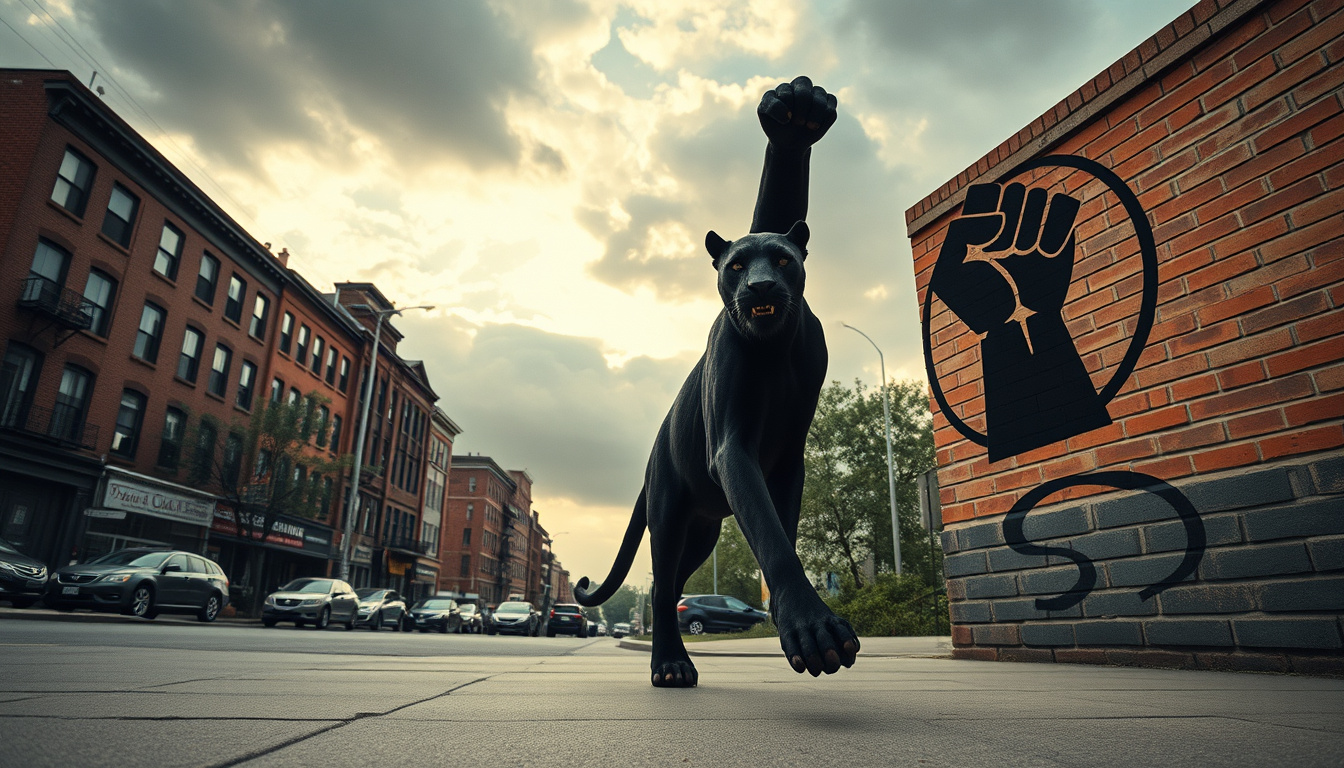
You’ve probably seen the photos: black berets, leather jackets, raised fists. But behind the iconic image of the Black Panther Party lies a far more complex story — one of free breakfasts for schoolchildren, health clinics in underserved neighborhoods, and a political platform that still resonates today. This guide cuts through the myth to explore the party’s origins, community programs, and lasting legacy.
Founded: 1966 ·
Founders: Huey P. Newton and Bobby Seale ·
Headquarters: Oakland, California ·
Peak membership estimate: 10,000 ·
Year dissolved: 1982
Quick snapshot
- Founded in 1966 by Huey P. Newton and Bobby Seale (Smithsonian Magazine)
- Ran over 60 community survival programs (International Journal of Environmental Health and Development)
- Dissolved in 1982 (Smithsonian Magazine)
- Targeted by FBI COINTELPRO operations (PBS NewsHour)
- Exact peak membership numbers (Smithsonian Magazine estimates ~5,000+ members)
- Whether Martin Luther King Jr. planned to join the party (PBS NewsHour notes no evidence)
- Extent of genuine LGBTQ support among rank-and-file members (Smithsonian NMAAHC documents Newton’s 1970 statement but notes uneven adoption)
- Exact number of party chapters at peak (WHYY cites nearly 70 communities)
- October 1966: Party founded (Smithsonian Magazine)
- January 1969: Free breakfast program launched (International Journal of Environmental Health and Development)
- 1969: Fred Hampton killed in police raid (Smithsonian NMAAHC)
- 1982: Official dissolution (PBS NewsHour)
- Modern groups (e.g., New Black Panther Party) claim the name but differ ideologically (ARCC)
- Community program model influences current mutual aid networks (PBS NewsHour)
- Declassified FBI files continue to reveal new details (Smithsonian NMAAHC)
Here are the essential facts at a glance.
| Key fact | Detail |
|---|---|
| Founded | 1966 |
| Founders | Huey P. Newton, Bobby Seale |
| Headquarters | Oakland, California |
| Ideology | Marxist-Leninist, Black Power |
| Peak membership | Approximately 10,000 (early 1970s) |
| Newspaper | The Black Panther |
| Dissolved | 1982 |
What were the Black Panthers known for?
Origins and ideology
The Black Panther Party for Self-Defense was founded in October 1966 in Oakland, California, by college students Huey P. Newton and Bobby Seale. Their goal, as Smithsonian Magazine (a leading cultural history publication) notes, was to “serve and protect the African-American community of the San Francisco Bay Area.” The party’s ideology blended Marxist-Leninist analysis with a Black Power worldview, and it demanded an end to police brutality, full employment, and land, among other rights.
We want freedom. We want power to determine the destiny of our Black Community.
— Huey P. Newton and Bobby Seale, Ten-Point Program
The Panthers weren’t just reacting to oppression — they built a coherent political platform. The Ten-Point Program, published in their newspaper The Black Panther, remains one of the most specific manifestos of the Black Power era.
Community programs: free breakfast, health clinics
The party’s “Survival Programs” were its most tangible community contribution. The free breakfast program, launched in January 1969, fed thousands of schoolchildren daily. The Smithsonian National Museum of African American History and Culture (a U.S. federal institution) confirms the party also ran free health clinics and sickle-cell testing centers. By 1969, roughly 65 such programs operated across party chapters, including food distributions, legal aid, and safe transportation for seniors.
Police patrols and self-defense
The Panthers are perhaps most famous for their armed citizen patrols that monitored police activity. Their open-carry presence — legal in California at the time — drew media attention and law enforcement hostility. The FBI’s COINTELPRO program specifically targeted the party, leading to infiltration, harassment, and the 1969 killing of Illinois chapter leader Fred Hampton in a police raid.
The Black Panther Party is the greatest threat to the internal security of the country.
— J. Edgar Hoover, FBI Director
Bottom line: The Black Panther Party was simultaneously a revolutionary Marxist organization and a pragmatic community service network. For readers interested in civil rights history, the key takeaway is that the militant image often overshadows their concrete social programs. For those studying community organizing, the survival program model offers a template that modern mutual aid groups still follow.
Was MLK involved with the Black Panthers?
MLK’s stance on the Black Panthers
Martin Luther King Jr. and the Black Panthers occupied different poles of the civil rights spectrum. King’s philosophy of nonviolent resistance was at odds with the Panthers’ willingness to use armed self-defense. King publicly expressed sympathy for the conditions that created the Panthers but criticized their militancy as counterproductive.
The claim that MLK planned to join the party
No confirmed evidence supports the claim that King planned to formally join the Black Panther Party. The rumor appears to stem from a misinterpretation of private conversations and the fact that some King associates later worked with Panthers. PBS NewsHour (a trusted public media outlet) notes that while King and the Panthers both fought for racial justice, their tactical differences were fundamental and unresolvable.
The conflation of MLK with the Panthers muddies understanding of both. King’s nonviolent campaign was a distinct strategic choice, not a gateway to armed resistance. For students of civil rights, the split illustrates a crucial tactical debate that still shapes activism today.
The implication: King’s nonviolent approach and the Panthers’ militancy represent two strands of the struggle that never merged.
Was Tupac part of the Black Panthers?
Tupac’s family connection to the Black Panthers
Tupac Shakur was not a formal member of the Black Panther Party, but his mother, Afeni Shakur, was a prominent member and one of the “Panther 21” defendants acquitted in 1971. His stepfather, Mutulu Shakur, was also involved in the Black liberation movement. This family lineage deeply influenced Tupac’s political consciousness and music.
Tupac’s own political views
As an adult, Tupac often referenced Panther ideology in his lyrics and interviews, but he never joined the party (which had dissolved in 1982, when he was 11 years old). His politics were a blend of Panther-influenced Black nationalism, street realism, and personal experience.
Bottom line: Tupac was shaped by the Panther legacy through his family, not as a member. For fans researching his political roots, the key distinction is that his radicalism was inherited — but independently expressed through his art.
Do the Black Panthers accept white members?
Race and membership in the Black Panther Party
The Black Panther Party was primarily a Black nationalist organization that prioritized the liberation of Black people. However, its membership was not exclusively Black. The party formed alliances with white radical groups such as the Young Patriots (a white Appalachian group) and the Young Lords (a Puerto Rican organization), creating what they called a “Rainbow Coalition.”
Alliances with white groups
In later years, particularly after 1970, the party accepted white members in limited capacities. ARCC (a racial justice research organization) notes that the pragmatic need for a broad anti-capitalist coalition pushed the party to open its doors, though the leadership remained overwhelmingly Black.
The “no white members” reputation is partly true (the party’s primary focus was Black self-determination) but oversimplified. The party’s coalition-building with other racial groups shows more ideological flexibility than its image suggests.
The catch: The party’s coalition-building demonstrates ideological flexibility beyond its Black nationalist image.
Did the Black Panthers support LGBTQ?
Huey Newton’s 1970 statement
In August 1970, Huey P. Newton issued a landmark statement supporting gay rights, arguing that homosexuals and women were “oppressed groups” whose liberation was part of the revolutionary struggle. This made the Panthers one of the first major Black organizations to take a progressive stance on LGBTQ issues.
We must relate to the homosexual movement because it is an oppressed group that has been denied freedom. We must also relate to the women’s movement because women are an oppressed group.
— Huey P. Newton, August 1970
Internal debates and uneven adoption
Despite Newton’s statement, the party’s stance was not universally adopted by local chapters. Some members held homophobic views, reflecting the broader cultural conservatism of the era. The statement was progressive, but implementation was uneven.
The Black Panther Party was ahead of its time on paper but inconsistent in practice. For LGBTQ activists studying historical allyship, Newton’s 1970 declaration is a progressive landmark, but it didn’t translate into uniform organizational culture.
The paradox: Newton’s progressive stance was ahead of its time but inconsistently applied.
Do the Black Panthers still exist?
The original party’s dissolution
The original Black Panther Party officially dissolved in 1982, after years of internal conflict, FBI infiltration, and declining membership. By the early 1970s, factional disputes between Newton and Eldridge Cleaver had fractured the leadership, and COINTELPRO operations accelerated the decline.
Modern groups claiming the Black Panther name
Several organizations have revived the name, including the New Black Panther Party (NBPP), founded in 1989. The NBPP is widely considered a separate organization with a different ideology — it is accused of racial separatism and antisemitism, positions the original party rejected. Other local groups, such as the Black Panther Party Cubs, exist but have no formal connection to the 1966-1982 organization.
Bottom line: The original Black Panther Party is gone, but its name lives on. For readers encountering modern “Panther” groups, the critical distinction is that none are official successors. The original party’s ideology included coalition-building and leftist economics; many modern imitators promote a very different, often exclusionary politics.
Timeline
- October 1966: Black Panther Party for Self-Defense founded in Oakland, California (Smithsonian Magazine)
- 1967: Huey P. Newton arrested after police shootout; “Free Huey” campaign begins (PBS NewsHour)
- 1968: Bobby Seale tried as part of the Chicago Eight; party expands to 68 cities (Smithsonian Magazine)
- January 1969: Free breakfast program launched (International Journal of Environmental Health and Development)
- December 1969: Fred Hampton killed in police raid; party’s community programs at their peak (Smithsonian NMAAHC)
- 1970s: Internal disputes, COINTELPRO infiltration, membership decline (PBS NewsHour)
- 1982: Black Panther Party officially dissolves (PBS NewsHour)
bppaln.org, nmaahc.si.edu, dialecticalartist.wordpress.com, revolution.berkeley.edu, thinkglobalhealth.org, pmc.ncbi.nlm.nih.gov, en.wikipedia.org, presslineuk.co.uk
Frequently asked questions
What did the Black Panthers believe in?
The Black Panthers believed in Black self-determination, community control of institutions, and armed self-defense against police violence. Their Ten-Point Program demanded land, housing, employment, and an end to police brutality.
What was the Black Panther Party’s Ten-Point Program?
The Ten-Point Program was the party’s founding manifesto, published in 1966. It demanded freedom, full employment, housing, education, healthcare, an end to police brutality, and other rights. It appeared in every issue of The Black Panther newspaper.
How did the Black Panthers impact the civil rights movement?
The Black Panthers shifted the movement’s focus from integration to self-determination and community power. Their community programs demonstrated a model of grassroots service, while their militant stance forced a national conversation about police brutality.
Why did the Black Panther Party decline?
Internal factional splits (between Newton and Cleaver), FBI COINTELPRO surveillance and sabotage, police raids, and the incarceration of key leaders all contributed to the party’s decline in the mid-1970s.
Did the Black Panthers have a newspaper?
Yes — The Black Panther newspaper was published weekly and distributed nationally. It featured the Ten-Point Program, political analysis, poetry, and community news. At its peak, circulation exceeded 100,000.
What was the Black Panthers’ relationship with the FBI?
The FBI’s COINTELPRO program specifically targeted the Black Panthers. Operations included infiltration, disinformation, and provocation — all aimed at neutralizing the organization. FBI Director J. Edgar Hoover called the Panthers “the greatest threat to the internal security of the country.”
How did the Black Panthers influence modern activism?
The Panthers’ community survival programs — free breakfasts, health clinics, and education — directly influenced modern mutual aid networks. Black Lives Matter and other movements have drawn on Panther tactics of grassroots organizing and police accountability.
Related reading
- The Black Power Movement: A Historical Overview
- Community Organizing: Lessons from the Black Panthers
The Black Panther Party’s legacy is one of bold action and unresolved tension. For community organizers today, the survival program model offers a proven framework for delivering concrete aid while building political power. For those studying racial justice, the party’s rise and fall remains a cautionary tale about what happens when systemic oppression meets organized resistance. The choice facing modern activists is not whether to adopt the Panthers’ tactics — it’s whether to build the kind of durable community infrastructure they pioneered, or let the militant image define the legacy.
Related stories





Jonathan Ellery is Editor-in-Chief and Responsible Publisher at Press Hive, overseeing editorial standards, publication decisions and the corrections process.