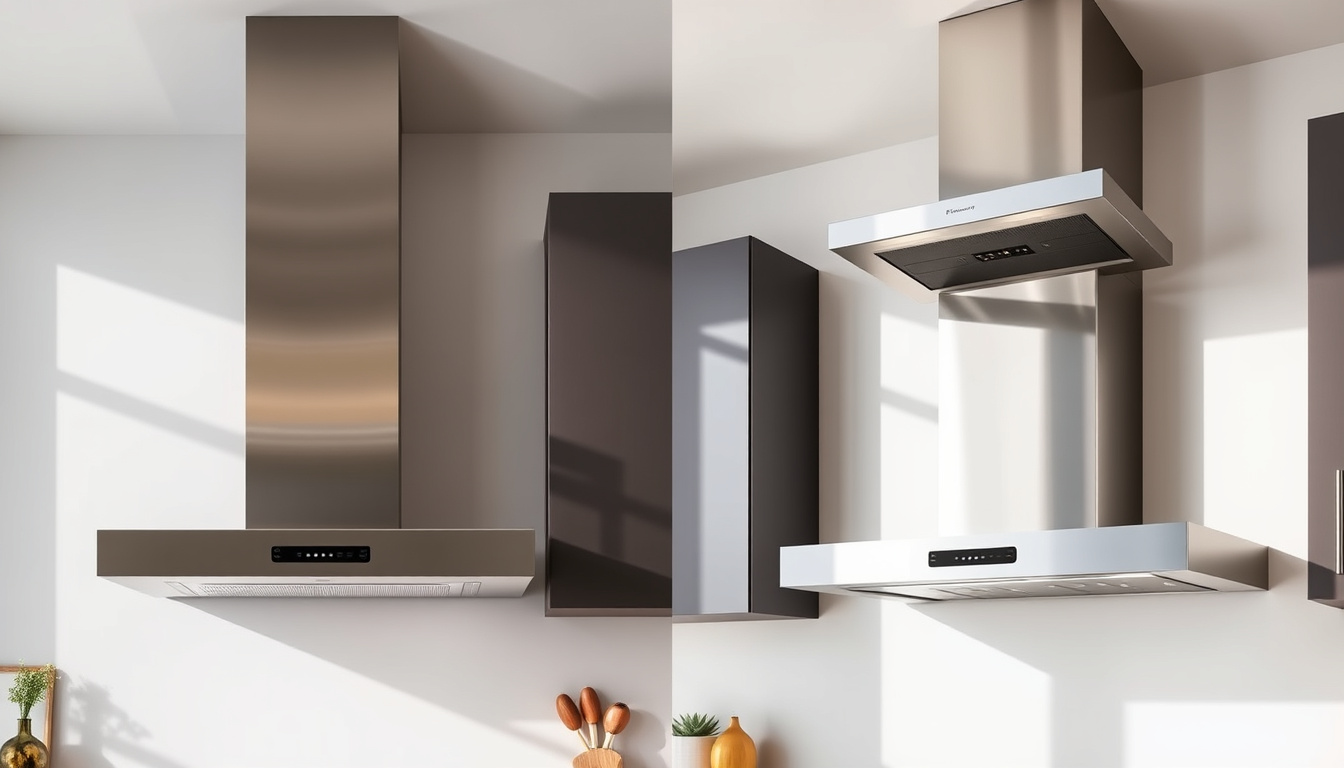
Anyone who has walked into a kitchen after frying bacon and found the smell lingering for hours already knows the value of good ventilation — a cooker hood does more than pull smoke away: it shapes how your kitchen feels, how clean the air stays, and even how much your heating system works. The following breaks down the main types, installation realities, sizing, and trade-offs that matter most when choosing one.
Typical extraction rate range: 200 to 1,000 m³/h ·
Common widths: 60 cm and 90 cm ·
Noise level range: 40 to 65 dB ·
Energy rating scale: A+ to F (EU energy label) ·
Percentage of new kitchens with hood: Over 70%
Quick snapshot
- Most efficient at removing steam and odors (ROBAM Living (cooker hood manufacturer))
- Requires external venting and professional installation (ROBAM Living (cooker hood manufacturer))
- Higher upfront cost but better performance for heavy cooking (ROBAM Living (cooker hood manufacturer))
- Easier to install, no external vent needed (The AirHood (cooker hood specialist))
- Uses charcoal filters that need replacing every 3-6 months (The AirHood (cooker hood specialist))
- Good for apartments and rental properties (The AirHood (cooker hood specialist))
- Exact percentage of UK kitchens using recirculating vs ducted
- Optimal extraction rate for kitchens above 20 m²
- Long-term cost comparison including energy savings
- Smart hoods with auto-sensing and app control are gaining share
- Energy rating standards tightening from 2025 in EU markets
- Integrated extraction into hobs (downdraft systems) growing in popularity
The table below summarises common specifications across standard cooker hood models.
| Specification | Typical Value |
|---|---|
| Average extraction rate | 400-600 m³/h for standard home kitchens |
| Most common width | 60 cm (matching standard hob) |
| Noise level at max speed | Typically 50-65 dB |
| Filter type | Grease filter (metal or foam) + charcoal filter for recirculation |
| Recommended height above gas hob | 65-75 cm |
| Energy label common | A, A+, B |
What is the best cooker hood to buy?
There is no single “best” cooker hood for every kitchen — the right choice depends on your cooking style, kitchen layout, and budget. Ducted models generally provide stronger smoke and odor removal, while ductless units offer easier installation in homes without external venting. The key is matching the hood to your actual needs rather than just aesthetics.
What to look out for when buying a cooker hood?
- Ducted vs ductless: Ducted hoods vent air outside through ductwork and are more effective at removing smoke, steam, and odors (Futuro Futuro (kitchen design resource)). Ductless hoods filter air through charcoal and recirculate it back into the kitchen.
- Width match: The hood should be at least as wide as your hob — ideally wider. For a standard 60 cm hob, a 60 cm or 90 cm hood is typical.
- Noise levels: Most hoods range from 40 dB (quiet) to 65 dB (loud at max speed). Check the dB rating at normal and boost settings.
- Energy rating: EU energy labels run from A+ to F. A-rated models save on electricity over time.
- Filter type: Metal grease filters are washable; charcoal filters for recirculation need replacement every 3-6 months according to manufacturer recommendations.
Which type of cooker hood is best?
Five common types dominate the UK market, each suited to different kitchen layouts and design preferences.
- Chimney hoods: Wall-mounted and visible, offering high extraction power. Common in traditional kitchens.
- Island hoods: Suspended from the ceiling above an island cooktop. Often powerful but require careful ducting planning.
- Integrated hoods: Hidden inside a cabinet above the hob. Sleek but generally less powerful than chimney units.
- Under-cabinet hoods: Fitted beneath a wall cabinet. Compact and affordable, suitable for smaller kitchens.
- Telescopic hoods: Slide out from a narrow housing when in use. Ideal for tight spaces where a fixed hood would be intrusive.
For households that cook daily with high heat — stir-frying, searing, or deep-frying — ducted chimney or island hoods are the most effective. Lighter cooking in a rental or flat may make an integrated or telescopic ductless unit a practical fit.
Ducted chimney hoods pull out more air and noise in the process. A buyer who prioritises silent operation over max extraction may prefer a ductless unit with a remote motor — but they trade moisture removal for peace and quiet.
The choice ultimately depends on your cooking habits and kitchen constraints.
Which is better, a cooker hood or extractor fan?
Cooker hoods and extractor fans serve overlapping but distinct roles. A cooker hood sits directly above the hob and captures grease, smoke, and steam at the source. An extractor fan is typically mounted on a wall or ceiling and removes general kitchen air but does not filter grease effectively.
What is the difference between a cooker hood and an extractor fan?
- Filtration: Cooker hoods use grease filters and, in ductless mode, charcoal filters to trap particles and odors. Extractor fans lack grease filtration — they simply move air outside.
- Effectiveness: Because a hood is positioned over the cooktop, it captures cooking byproducts before they spread. An extractor fan further away allows more particles to settle on surfaces.
- Installation: Both can be wall-mounted, but hoods require more precise positioning (65-75 cm above a gas hob) and often dedicated electrical circuits.
- Cost: Basic extractor fans are cheaper (from around £30) compared to cooker hoods (from £100 upward), but hoods offer better air quality outcomes for regular cooks.
According to Topstrong Appliances (appliance retailer), ducted hoods generally provide stronger smoke, odor, heat, and moisture removal than ductless alternatives. An extractor fan falls short of even a basic ductless hood in terms of grease capture.
The implication: for anyone who cooks more than once a week, a cooker hood is the better investment. An extractor fan may suffice in a kitchen used only for light reheating, but it will not protect cabinets and walls from grease buildup.
Do all cooker hoods need to be vented outside?
No — ductless (recirculating) cooker hoods filter air and return it to the kitchen. They are a practical option in flats, apartments, or homes where drilling an external vent is structurally difficult or prohibited by building regulations.
Can I just plug in a cooker hood?
Some cooker hoods are designed to plug into a standard UK 13-amp socket. Others require hardwiring by a qualified electrician. Integrated and larger chimney hoods often need a dedicated circuit. Always check the manufacturer’s electrical specifications before purchasing.
Tip: Check the manufacturer’s electrical specifications before purchasing to avoid compatibility issues.
UK Building Regulations Approved Document F recommends minimum extraction rates for kitchen ventilation — ductless hoods with charcoal filtration can comply, but the long-term cost of replacing filters every 3-6 months should be factored into the decision.
Do you need an electrician to install a cooker hood?
If the hood replaces an existing unit that already has a nearby switched outlet, a competent DIYer may manage the swap. For new installations, especially where a new electrical spur or relocation of wiring is needed, a Part P registered electrician is required under UK building regulations. Ducted installations also typically involve a builder or kitchen fitter for the ductwork and external vent.
A buyer choosing ductless to avoid installer costs should budget £30–£60 per year for charcoal filter replacements. Over 5 years, that recurring cost can exceed the one-time ductwork installation fee — making ducted the cheaper long-term option for a permanent kitchen.
The choice between ducted and ductless hinges on installation feasibility and long-term costs.
Which type of cooker hood is best?
That depends on your kitchen’s physical layout and your cooking habits. Each type has strengths and limitations.
What are the different types of cooker hoods?
- Chimney (wall-mounted) hoods: The most common type. They sit against the wall above the hob and vent through the wall or ceiling. Extraction rates are generally high — from 400 m³/h upward.
- Island hoods: Suspended from the ceiling over a kitchen island. They require ducting through the ceiling, which can be complex in upper-floor flats.
- Integrated hoods: Built into a cabinet above the hob. The hood is hidden behind a panel that matches the cabinetry. Extraction rates tend to be lower than chimney models.
- Under-cabinet hoods: Fixed beneath a wall cabinet. Compact and budget-friendly, they work well in smaller kitchens with limited headroom.
- Telescopic or slide-out hoods: A slim unit that slides forward when needed and retracts when not in use. Good for kitchens where a fixed hood would block storage.
For open-plan living where the kitchen is part of a living area, a quiet, high-performance island or chimney ducted hood is recommended. For a small galley kitchen in a rental, a telescopic or integrated ductless model may be the most practical fit.
Integrated hoods look clean but often underperform. A homeowner who values design over function may end up with a hood that cannot keep up with their actual cooking — leaving steam to settle on surfaces and odors to linger.
Selecting the right type means balancing power, design, and space.
What size cooker hood do I need?
Size is the most straightforward factor: the hood should match or exceed the width of your hob. A 60 cm hob calls for a 60 cm or 90 cm hood. Larger hoods capture more air and are more forgiving of cross-drafts.
How to measure for a cooker hood
- Width: Measure your hob width. Choose a hood at least equal to that width. A 90 cm hood over a 60 cm hob provides better capture performance.
- Height above hob: For gas hobs, manufacturers recommend 65-75 cm clearance. For electric or induction hobs, 50-65 cm is standard. Check the specific model’s manual.
- Extraction rate: Aim for a hood that can cycle the kitchen’s total air volume 10-15 times per hour. Calculate kitchen volume (length × width × height in metres) and multiply by 10-15 to find the ideal m³/h rating.
- Ceiling height and ducting: Higher ceilings and longer duct runs reduce effective extraction. For ducted installations, keep ducting as short and straight as possible to maintain performance.
As an example, a typical UK kitchen measuring 4 m × 3 m with a 2.4 m ceiling has a volume of 28.8 m³. Multiply by 12 (mid-range) gives 346 m³/h — so a hood rated at 350-400 m³/h is a good match.
What this means: buying an undersized hood is the most common mistake. A 300 m³/h hood in a large kitchen will struggle to keep air fresh even if the price is right.
Ducted vs Ductless: Side-by-Side
Two broad categories, one clear trade-off: ducted removes air entirely, ductless filters and returns it. Below is how they compare across the factors that matter most.
| Factor | Ducted Cooker Hood | Ductless / Recirculating Hood |
|---|---|---|
| Installation difficulty | Higher — requires ductwork and external vent | Lower — no external vent needed |
| Air removal effectiveness | Excellent — expels smoke, steam, odors entirely | Moderate — filters but leaves some moisture and particles (Futuro Futuro (kitchen design resource)) |
| Upfront cost range | £150 – £800+ (including installation) | £100 – £500 (often DIY-friendly) |
| Ongoing costs | Minimal — occasional grease filter cleaning | £30–£60/year for charcoal filter replacements |
| Noise level | Varies; can be quieter with remote motor | Motor inside unit — often louder at equivalent power |
| Best for | Heavy cooking, open-plan kitchens, homes with exterior wall access | Apartments, rentals, homes without external venting options |
The pattern: ducted wins on air quality but loses on ease and flexibility. For anyone who rents or cannot alter the building fabric, ductless is often the only choice — and that is fine for moderate cooking. For homeowners who cook daily, ducted is the stronger long-term investment.
Installation Steps for a Cooker Hood
Installing a cooker hood involves several clear stages whether you go ducted or ductless. Always consult the manufacturer’s instructions for your specific model.
- Step 1: Prepare the site
- Turn off power at the mains. Check that the electrical supply matches the hood rating.
- Mark the position on the wall — centre the hood over the hob at the manufacturer’s recommended height.
- For ducted: plan the duct route to an external wall or roof vent. Keep ducting as short as possible.
- Step 2: Mount the bracket and hood body
- Fix the mounting bracket securely to the wall using appropriate wall plugs for your wall type (brick, plasterboard, etc.).
- Lift the hood onto the bracket and check it is level before tightening fully.
- Step 3: Connect ducting (ducted models only)
- Attach ducting to the hood outlet using foil tape or clamps. Run ducting to the external vent opening.
- Ensure ducting is rigid (not flexible) where possible — flexible ducting reduces airflow.
- Step 4: Electrical connection
- If hardwired: have a qualified electrician connect to a dedicated spur. If plug-in: ensure a nearby socket is accessible and switched.
- Test the hood at all speed settings before finishing.
- Step 5: Install filters and chimney covers
- Fit the grease filters (and charcoal filter if recirculating).
- Attach the chimney/telescopic cover sections according to the manual.
The catch: a poor installation — especially long or kinked ductwork — can cut a ducted hood’s performance by 30-50%. Even the best hood will underperform if the duct path is not optimised.
Confirmed Facts and What Remains Unclear
Confirmed facts
- Ducted hoods are more effective at removing smoke and steam than ductless (Topstrong Appliances (appliance retailer))
- Cooker hoods must be installed at a safe height above the hob — 65-75 cm for gas, 50-65 cm for electric
- Most cooker hoods require a dedicated electrical circuit if hardwired
- Charcoal filters in ductless hoods need replacement every 3-6 months (ROBAM Living (cooker hood manufacturer))
- Ductless hoods are commonly recommended for apartments and homes where external venting is not feasible (ROBAM Living (cooker hood manufacturer))
What’s unclear
- Exact percentage of UK kitchens using recirculating versus ducted hoods
- Optimal extraction rate for very large kitchens (above 20 m²)
- Long-term total cost comparison including energy savings between ducted and ductless
- Whether ductless hoods can adequately manage moisture in high-humidity kitchens without additional ventilation
- Exact split between ducted and ductless installations in UK kitchens
These uncertainties highlight the need for site-specific assessment when selecting a cooker hood.
Expert Perspectives
The following quotes reflect current guidance and consumer experience from authoritative sources in the UK kitchen ventilation space.
“Kitchens should have adequate means of ventilation to remove moisture and pollutants. Mechanical extract ventilation, including cooker hoods, is recommended to achieve the required extraction rates.”
— UK Building Regulations Approved Document F
“If you have a ducted cooker hood, the warm air from cooking is expelled outside — meaning your heating system has to work harder to replace that heat. With a ductless hood, the air is recirculated, so less heat escapes.”
— Energy Saving Trust (energy efficiency advisory body)
“Which? members consistently rate ducted chimney hoods higher for overall satisfaction, particularly for performance and ease of cleaning. However, ductless models score better for ease of installation.”
— Which? (UK consumer association)
These expert perspectives underscore the importance of regulatory compliance and energy efficiency.
Summary
A cooker hood is one of the few home appliances that touches both air quality and energy costs. The ducted-versus-ductless decision is not about which is “better” in the abstract — it is about what your home allows and how you cook. Ducted hoods deliver superior air removal for frequent, heavy cooking and can be quieter with remote motors. Ductless models offer flexibility and lower upfront cost but come with ongoing filter expenses and less effective moisture control. For the typical UK household in a home with external wall access, a ducted chimney or under-cabinet hood remains the most balanced choice. For renters and flat dwellers, a quality ductless unit with proper filter maintenance is a solid compromise. The bottom line: measure your kitchen, match the width, check your building’s venting options, and choose based on actual cooking volume — not just aesthetics or price.
For the average UK homeowner renovating a kitchen, the choice is clear: invest in a ducted chimney hood with a minimum 400 m³/h extraction rate, or accept the recurring cost and lower moisture performance of a ductless alternative if external venting is off the table.
Related reading: Tongue and Groove Cladding: Types, Fitting & Costs Guide
Frequently asked questions
How often should I clean the grease filter on my cooker hood?
Metal grease filters should be cleaned every 4-6 weeks depending on cooking frequency. Most are dishwasher-safe. A clogged grease filter reduces airflow and makes the hood work harder.
Can a cooker hood be installed without ducting in a flat?
Yes — ductless (recirculating) hoods are designed for exactly this scenario. They use a charcoal filter to trap odors before returning air to the room. No external vent is needed, making them suitable for flats and apartments.
Do cooker hoods help reduce condensation in the kitchen?
Ducted hoods are very effective at removing moist air, which helps reduce condensation. Ductless hoods recirculate air and are less effective at moisture removal — they capture some steam but do not expel it from the room.
What is the best material for a cooker hood?
Stainless steel is the most common and practical material — it is durable, easy to clean, and resists heat and grease. Glass-fronted hoods are also popular for modern kitchens but require more frequent cleaning.
Are built-in (integrated) cooker hoods less powerful than chimney hoods?
Generally yes. Integrated hoods are designed to fit within a cabinet and usually have smaller motors and ducting. Typical extraction rates for integrated models range from 250-400 m³/h, while chimney hoods often reach 500-800 m³/h.
How long does a typical cooker hood last before needing replacement?
With proper maintenance, a quality cooker hood can last 10-15 years. The motor and electronics are generally reliable, but filters, switches, and lights may need attention sooner. Cheaper models may show wear after 5-8 years.
Can I use a cooker hood with a gas hob?
Yes, but the clearance height must be greater than for electric hobs — typically 65-75 cm from the hob surface to the underside of the hood. Check the manufacturer’s specification for your model.
What is the quietest cooker hood on the market?
Quietest models typically operate at 35-45 dB on low speed. Brands such as Bosch, Miele, and NEFF offer models with sound ratings as low as 38 dB. Look for the dB (A) rating on the energy label — lower numbers mean quieter operation.
Related stories





Sophie Marlowe covers culture, lifestyle and society stories across the UK.