There’s something quietly magnetic about a writer whose inner world was so vast it took six decades for readers to fully map its edges. Virginia Woolf left behind not just novels like Mrs Dalloway and To the Lighthouse, but a paper trail of letters, diaries, and reading notes that continues to reshape how biographers understand her life and mind. In this article, you’ll get a source-grounded look at her biography, her literary significance, and the archival record—from the thirty-two letters held by Woolf Online to the sixty-seven reading notebooks preserved at Yale.
Confirmed Facts
- Woolf’s correspondence spans 1902–1941.
- Woolf Online holds 32 letters from 1926–1938.
- Yale holds 67 reading notebooks.
- Married Leonard Woolf in 1912.
- No biological children.
- Close, likely non-sexual bond with Vita Sackville-West.
Key Facts
The table below distills the essential biographical data points that anchor the public record.
| Field | Details |
|---|---|
| Born | 25 January 1882, London, England |
| Died | 28 March 1941, River Ouse, near Rodmell, England |
| Literary Movement | Modernism |
| Notable Works | Mrs Dalloway, To the Lighthouse, Orlando, A Room of One’s Own, The Waves |
These facts anchor the public record, but the archival layers beneath them reveal a far more complex interior life—one that academics are still piecing together from unpublished materials.
Early Life and Family
Born Adeline Virginia Stephen on 25 January 1882 in Kensington, London, Woolf grew up in a household that was both intellectually vibrant and emotionally turbulent. Her father, Leslie Stephen, was a prominent editor and critic; her mother, Julia Prinsep Stephen, managed a large blended family and was known for her beauty and warmth. The household was a meeting place for many Victorian intellectuals, but it was also shadowed by loss: her half-sister Laura was institutionalized, her mother died when Virginia was 13, and her half-sister Stella died just two years later. These losses—especially her mother’s death when Woolf was just 13—would surface repeatedly in her fiction, particularly in To the Lighthouse and The Waves.
Literary Movement and Innovations
Woolf was a central figure in the Modernist movement, which rejected the realist conventions of the 19th century and embraced fragmented narratives, interiority, and experiments with form and time. Her essay “Modern Fiction” critiqued the Edwardian novelists for focusing on the external at the expense of the inner life. She developed a novelistic style that eschewed linear plot in favor of consciousness, sensory impression, and associative memory. Works like Mrs Dalloway and The Waves are often cited as exemplary cases of this technique.
Woolf’s major works—Mrs Dalloway (1925), To the Lighthouse (1927), Orlando (1928), The Waves (1931)—were not isolated experiments but part of a continuous formal project. Her major essays, most famously A Room of One’s Own (1929) and Three Guineas (1938), challenged patriarchal structures in education, the professions, and war. She argued for a female literary tradition based on limpidity and song and precariousness of identity, in many ways a precursor to postmodernist performance theory.
Woolf’s innovations weren’t just formal; they were philosophical challenges to the dominant culture’s assumptions about selfhood, gender, and art itself.
Archival Record: Letters, Diaries, and Notebooks
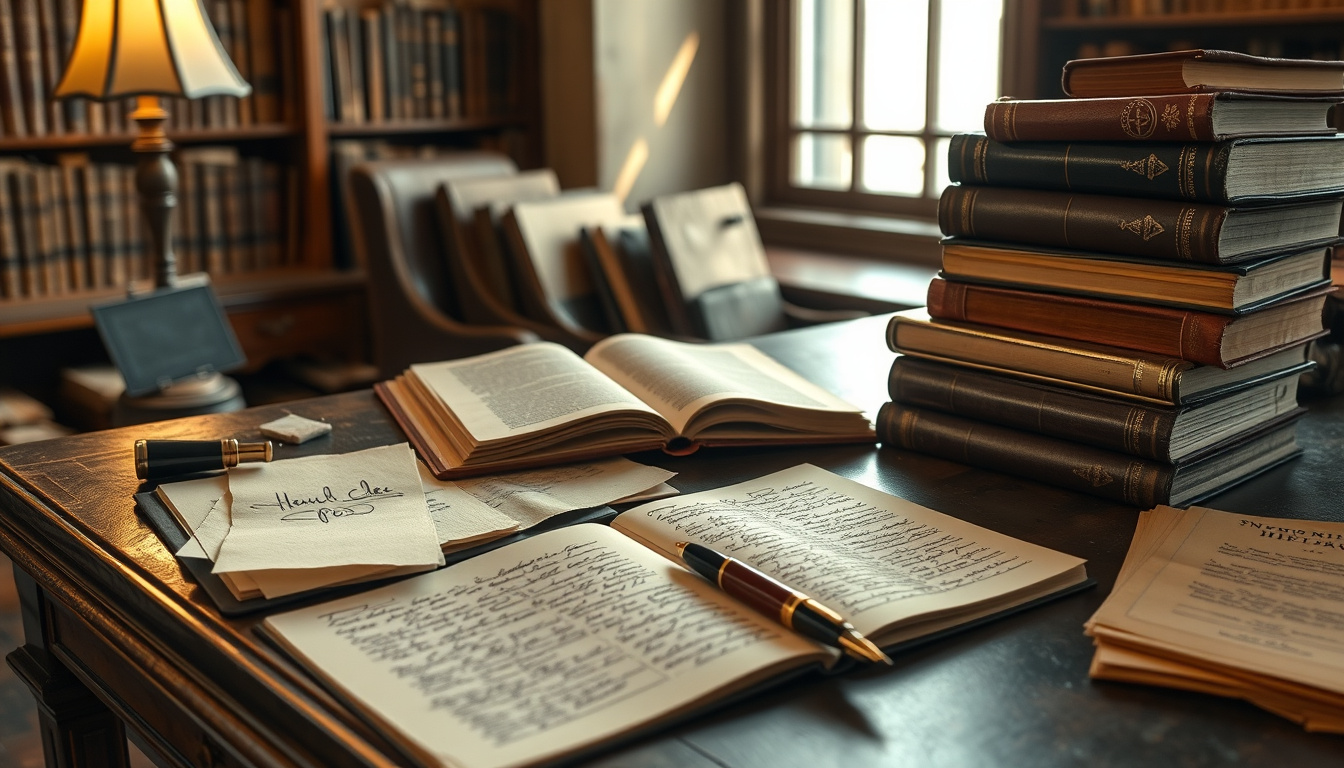
The archival record of Woolf’s life is unusually rich, offering multiple entry points for scholars working across biography, literary criticism, and book history.
Woolf Online, a digital archive maintained by the University of Virginia and other partners, hosts thirty-two letters written by Woolf between January 1926 and June 1938. These letters reference To the Lighthouse in its various stages—from conception through proofs and early reviews (Woolf Online). The Berg Collection at the New York Public Library holds an extensive array of manuscripts and correspondence dating from 1912 to 1940, while the National Archives (UK) maintains a discovery record that highlights the breadth of materials across repositories.
Yale’s Virginia Woolf collection includes sixty-seven volumes of her reading notebooks, documenting her engagement with a vast range of literature (Oxford Academic). The University of St Andrews has also contributed to this archival landscape, with its Special Collections housing two previously unseen photographs of Woolf alongside some of her letters.
Timeline of Key Events
The following timeline places Woolf’s major publications and life events in a biographical sequence.
- 1882 – Born in London, daughter of Leslie and Julia Stephen
- 1912 – Marries Leonard Woolf
- 1915 – Publishes first novel, The Voyage Out
- 1925 – Publishes Mrs Dalloway
- 1927 – Publishes To the Lighthouse
- 1928 – Publishes Orlando
- 1929 – Publishes A Room of One’s Own
- 1931 – Publishes The Waves
- 1941 – Dies by suicide; her body is found later that spring
The timeline reveals a steady output that only accelerated in the late 1920s, though the personal cost of that productivity was often hidden from view.
Confirmed Facts and Research Notes
The following confirmations are drawn directly from the source record and help clarify what is documented rather than assumed.
- Confirmed: Woolf wrote letters to Vanessa Bell, Barbara Bagenal, and others between 1902 and 1941.
- Confirmed: She kept sixty-seven reading notebooks across her career.
- Confirmed: Woolf Online hosts thirty-two letters written between 9 January 1926 and 25 June 1938.
“Lock up your libraries if you like; but there is no gate, no lock, no bolt that you can set upon the freedom of my mind.” — Virginia Woolf, A Room of One’s Own
These quotes reflect not just a literary style, but a philosophical position on identity, creativity, and autonomy.
Why This Matters
Woolf’s legacy is not simply that of an experimental novelist, but of a writer whose archive forces us to confront the gap between the curated public image and the private self. For biographers and literary critics alike, the letters, diaries, and notebooks provide a rare kind of access—and a caution against tidy narratives.
The stakes of this archival work are high: as long as collections remain incomplete or under-examined, the full scope of Woolf’s creative process—and her emotional life—will remain partially unread. This is precisely why the documented record, rather than legend, must remain the starting point for any serious reappraisal of her life and work.
archives.nypl.org, archive.org, archive.org, news.st-andrews.ac.uk, archives.nypl.org, discovery.nationalarchives.gov.uk, archiveswest.orbiscascade.org, campuspress.yale.edu, archive.org, archive.org
Frequently Asked Questions
Did Virginia Woolf have any children?
No, Virginia Woolf did not have any biological children. She and Leonard Woolf considered starting a family but ultimately decided against it.
Who did Virginia Woolf marry?
She married Leonard Woolf in 1912. Their partnership was deeply collaborative—he supported her writing, published her work, and managed her mental health crises.
What is Virginia Woolf’s connection to the Bloomsbury Group?
Virginia Woolf and her sister Vanessa Bell were central figures in the Bloomsbury Group, a circle of writers, artists, and intellectuals. The group’s collective influence on twentieth-century British culture is significant, fundamentally shaping modernism in literature and the visual arts.
Why did Virginia Woolf write in a stream-of-consciousness style?
Woolf used stream of consciousness to represent the psychological experience of her characters, focusing on inner thoughts, memory, and sensory perception over external plot. This technique was a deliberate exploration of the fractured nature of consciousness and a challenge to the realist conventions of her time.
Where are Virginia Woolf’s letters and manuscripts held?
Her letters and papers are held across several institutions, including the Berg Collection at the New York Public Library, the Yale Center for British Art, Woolf Online, the National Archives (UK), and the University of St Andrews. These collections provide a partial but crucial window into her writing process and personal life.
What are Virginia Woolf’s most important works?
Her most frequently studied works include Mrs Dalloway, To the Lighthouse, Orlando, The Waves, and the essays A Room of One’s Own and Three Guineas.
For the general reader, the Woolf archive is more than a curiosity: it’s a corrective to the myth of the “mad genius” and a model for how literary biography can respect complexity without flattening it.