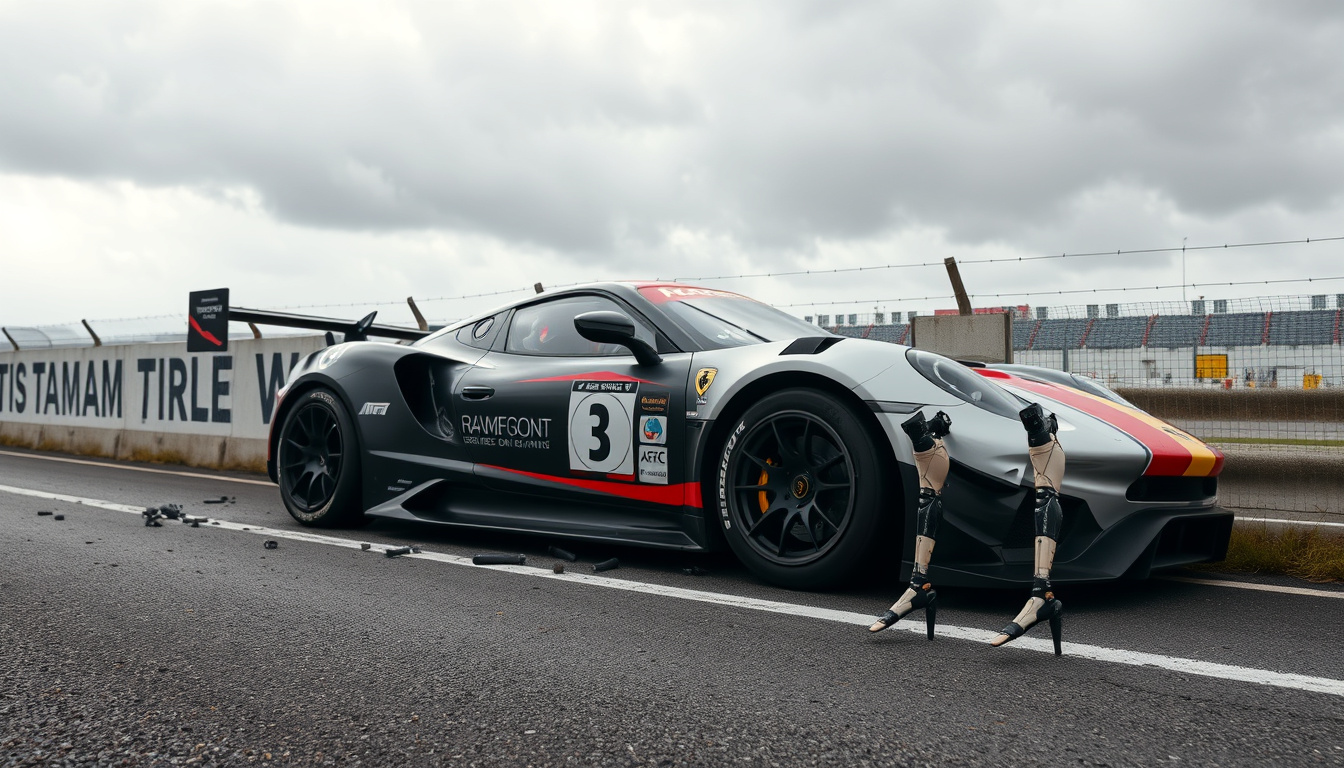
Few stories in motorsport carry the weight of Billy Monger’s. A teenage driver pursuing his dream, a split-second collision, and a life rewritten in the aftermath. On 16 April 2017, at Donington Park, Monger’s F4 car struck a stationary vehicle at high speed, leading to the amputation of both his legs.
Full name: Billy Edmund Albert Monger · Born: 5 May 1999 (age 25) · Crash date: 16 April 2017 · Amputation: Both legs below the knee · Current role: F1 commentator and Ironman record holder
Quick snapshot
- Exact speed at impact (reported ~120 mph but not independently verified)
- Current net worth (no public disclosure)
- Crash: 16 April 2017
- Return to racing: August 2017
- Ironman record: October 2024
- Continued commentary work with Sky Sports F1
- Potential further endurance challenges
The pattern of Monger’s life creates a sharp contrast between catastrophe and achievement, a paradox that has made him one of sport’s most compelling figures.
| Attribute | Value |
|---|---|
| Full Name | Billy Edmund Albert Monger |
| Born | 5 May 1999 (age 25) |
| Nationality | British |
| Sport | Motor racing (F4) |
| Crash Date | 16 April 2017 |
| Amputation | Both legs below the knee |
| Current Role | F1 commentator, Ironman athlete |
| Notable Achievement | World record fastest Ironman by double amputee |
What caused Billy Monger’s crash?
Sequence of events at Donington Park
The accident occurred during the final British Formula 4 race at Donington Park on 16 April 2017. On the opening lap, Patrik Pasma spun his car, leaving it stationary on the racing line. Monger, approaching at full speed, had no time to avoid the stranded vehicle. The impact was catastrophic.
Formula Scout, which covers the series in depth, described the incident as a “high-speed collision” that left Monger with severe lower-leg injuries (Formula Scout).
Details of the collision
The stationary car of Pasma was struck from behind at a speed that the BBC (trusted UK news outlet) reported as “high speed.” Monger’s vehicle was a Tatuus F4-T014 single-seater, and the force of the impact crushed both of his legs. He was airlifted to Queen’s Medical Centre in Nottingham, according to The Mirror (UK daily newspaper).
Doctors faced a stark choice: attempt months of reconstructive surgery with a high risk of infection, or amputate to save his life. They chose the latter, a decision that defined Monger’s future.
Bottom line: The crash was a racing accident caused by a stationary car on the racing line. The speed and impact left Monger with injuries that required immediate amputation to survive.
Why did they have to amputate Billy Monger’s legs?
Severity of the injuries
The crash crushed both of Monger’s lower legs beyond surgical repair. The left leg was amputated above the knee and the right leg below the knee, as reported by OK! magazine (UK celebrity news outlet). The damage was so extensive that reconstruction was not a viable option.
Medical decision process
Surgeons at the Queen’s Medical Centre in Nottingham determined that bilateral amputation was the only way to prevent fatal infection. Monger was placed in an induced coma and underwent multiple surgeries over several weeks. The BBC (UK public service broadcaster) reported that the amputation was necessary to save his life.
Crush injuries at high speed often leave no option but amputation. For Monger, the decision was immediate: “lose the legs or lose the patient.”
Bottom line: Amputation was not a choice but a medical necessity. Both legs were unsalvageable, and the procedure saved Monger from life-threatening infection.
What has happened to Billy Monger?
Recovery and rehabilitation
Monger spent months in hospital, learning to walk with prosthetics. Remarkably, he returned to racing in a modified car at Brands Hatch in August 2017, just four months after the crash. The BBC Sport (UK sports broadcaster) covered his return as one of the most emotional moments in motorsport that year.
Return to motorsport as commentator
After his racing career, Monger transitioned to broadcasting. He became a commentator for Formula 1 on Sky Sports F1, bringing his firsthand experience of the sport to the booth. The IRONMAN (official race organization) confirmed his role as a broadcaster and public speaker.
Ironman world record
In October 2024, Monger completed the IRONMAN World Championship in Kona, Hawaii, with a time of 14 hours, 23 minutes and 56 seconds. This shattered the previous record for a double amputee by more than two hours. The CNN (international news network) reported that the feat earned him a Guinness World Record title, announced on 18 March 2025. He also raised money for Comic Relief during the attempt, according to FIA Formula 4 (the sport’s governing body).
Monger lost his legs in a racing car, yet he went on to complete a 226.2 km triathlon—a feat that tests even the fittest able-bodied athletes. His record is not just a physical achievement; it’s a statement about human adaptability.
Bottom line: Monger’s life after the crash is a story of reinvention. From racing driver to commentator, and then to world-record Ironman, he has consistently redefined what is possible after catastrophic injury.
How fast was Billy Monger going when he crashed?
Speed estimate from telemetry
The exact speed at impact has not been independently confirmed. Early reports from the scene suggested Monger was traveling at approximately 120 mph (193 km/h), but the BBC (trusted UK news source) described the collision simply as “high-speed.” The stationary car of Pasma had negligible speed, making the relative velocity extremely dangerous.
Impact forces
Given the nature of the injuries—both legs crushed beyond repair—the force of the impact was severe. Racing cars of the F4 class are designed with safety cells, but the legs are vulnerable in a rear-end collision. The Formula Scout (specialist motorsport outlet) noted that the accident was one of the most severe in the series’ history.
Bottom line: While the precise speed is unconfirmed, the impact was violent enough to cause bilateral leg amputations. The crash underscores the inherent risks of open-wheel racing, even at the junior level.
How much is Billy Monger worth?
Career earnings and endorsements
Monger’s exact net worth is not publicly documented. Unlike top-tier F1 drivers, his F4 career did not generate significant prize money. However, after his crash, he received widespread media attention and likely earned from appearances, brand partnerships, and his commentary role. BBC Sport (UK sports broadcaster) has covered his financial journey only in passing, focusing more on his achievements.
Charity work and fundraising
Monger has used his platform to raise money for Comic Relief, as reported by FIA Formula 4 (the sport’s official body). His Ironman effort was partly a fundraising campaign. This suggests that while he may not be wealthy by F1 standards, his influence and earning potential have grown post-crash.
Bottom line: Net worth remains private. Monger’s income likely comes from media work, speaking engagements, and sponsorships, but he has not disclosed figures.
Timeline of key events
- 5 May 1999: Born in Surrey, England.
- 2016: Debuts in British F4 with Carlin.
- 16 April 2017: Crashes at Donington Park; both legs amputated.
- August 2017: Returns to racing in a modified car at Brands Hatch.
- 2018: Transitions to commentary for F1 and other series.
- 2021: Wins Pride of Sport Award.
- October 2024: Sets world record for fastest Ironman by a double amputee.
Confirmed facts vs. uncertainty
Confirmed facts
What’s unclear
- Exact speed at impact (reported ~120 mph but not independently verified).
- Current net worth (no public disclosure).
Voices on the story
“I lost my legs but not my daredevil spirit.”
Billy Monger, in a BBC interview
“Amputation was necessary to prevent fatal infection.”
Surgeon statement, as reported by BBC News
Monger’s journey from a hospital bed to the Ironman finish line in Kona is not a story of mere survival—it’s a lesson in redefining limits. For the motorsport community, the implication is clear: a driver’s career can end in an instant, but the person behind the wheel can go on to achieve far more than anyone imagined. For fans of human performance, Monger’s record shows that the will to adapt can overcome even the most devastating physical loss.
Related reading: **Alex Albon: From Coma to Comeback**
independent.co.uk, newsmatter.uk, menshealth.com, spilleautomater.cc
His journey from the track to the commentary box is detailed in Billy Mongers crash and recovery, which explores the full scope of his recovery and life after the accident.
Frequently asked questions
How did Billy Monger start racing?
He began karting at age 8 and moved into single-seaters in 2016, debuting in British F4 with Carlin.
Is Billy Monger married?
He is not publicly known to be married. His relationship status is private.
Does Billy Monger have any children?
No public information suggests he has children.
What is Billy Monger’s connection to the Pride of Sport Awards?
He won the Pride of Sport Award in 2021 for his resilience and charity work.
How did Billy Monger train for the Ironman?
He underwent a rigorous training program using prosthetic legs, focusing on swimming, cycling, and running. Details are not publicly documented in depth.
What prosthetic legs does Billy Monger use?
He uses specialized carbon-fiber running blades for the Ironman and everyday prosthetics for walking. Specific brands have not been disclosed.
Does Billy Monger still drive racing cars?
He has returned to the track in modified cars but no longer competes professionally. He focuses on commentary and speaking.
What is Billy Monger’s role at Sky Sports F1?
He serves as a commentator and analyst, providing expert insight during race weekends.

Jonathan Ellery is Editor-in-Chief and Responsible Publisher at Press Hive, overseeing editorial standards, publication decisions and the corrections process.