Few things can ruin a good night’s sleep like the thought of tiny bugs crawling into your mattress. Bed bugs are back in the headlines, and while they’re not dangerous, they are persistent — and spotting them early is half the battle.
Adult bed bug length: 5–7 mm (size of an apple seed) · Feeding frequency: Every 5–10 days · Eggs laid per female per day: 1–5 eggs · Lifespan without feeding: Up to several months · Active time: Primarily at night · Common hiding spots: Mattress seams, headboards, bed frames
Quick snapshot
- Bed bugs feed on human blood at night (Cleveland Clinic (health information))
- Heat above 118°F kills all life stages (U.S. EPA (federal environmental agency))
- Bites often appear in linear patterns (CDC transcript (public health authority))
- Exact long-term effectiveness of essential oils for repelling (U.S. EPA (federal environmental agency))
- Future resistance patterns to newer insecticides beyond pyrethroids (CDC transcript (public health authority))
- Eggs hatch in 6–10 days, leading to rapid population growth (U.S. EPA (federal environmental agency))
- Combined heat+chemical+encasement treatment is the only proven permanent solution (U.S. EPA PDF (federal environmental agency))
| Label | Value |
|---|---|
| Scientific name | Cimex lectularius |
| Adult size | 5–7 mm (apple seed) |
| Diet | Blood (humans and animals) |
| Active period | Night (peak feeding 1–5 AM) |
| Lifespan (fed) | 6–12 months |
| Egg hatching time | 6–10 days |
What are the first signs of bed bugs?
Early signs on skin
- Bite marks appear in lines or clusters, often mistaken for mosquito bites (CDC transcript (public health authority)).
- Bites commonly occur on exposed skin: face, neck, arms, and hands (CDC transcript (public health authority)).
Visual evidence in your bed
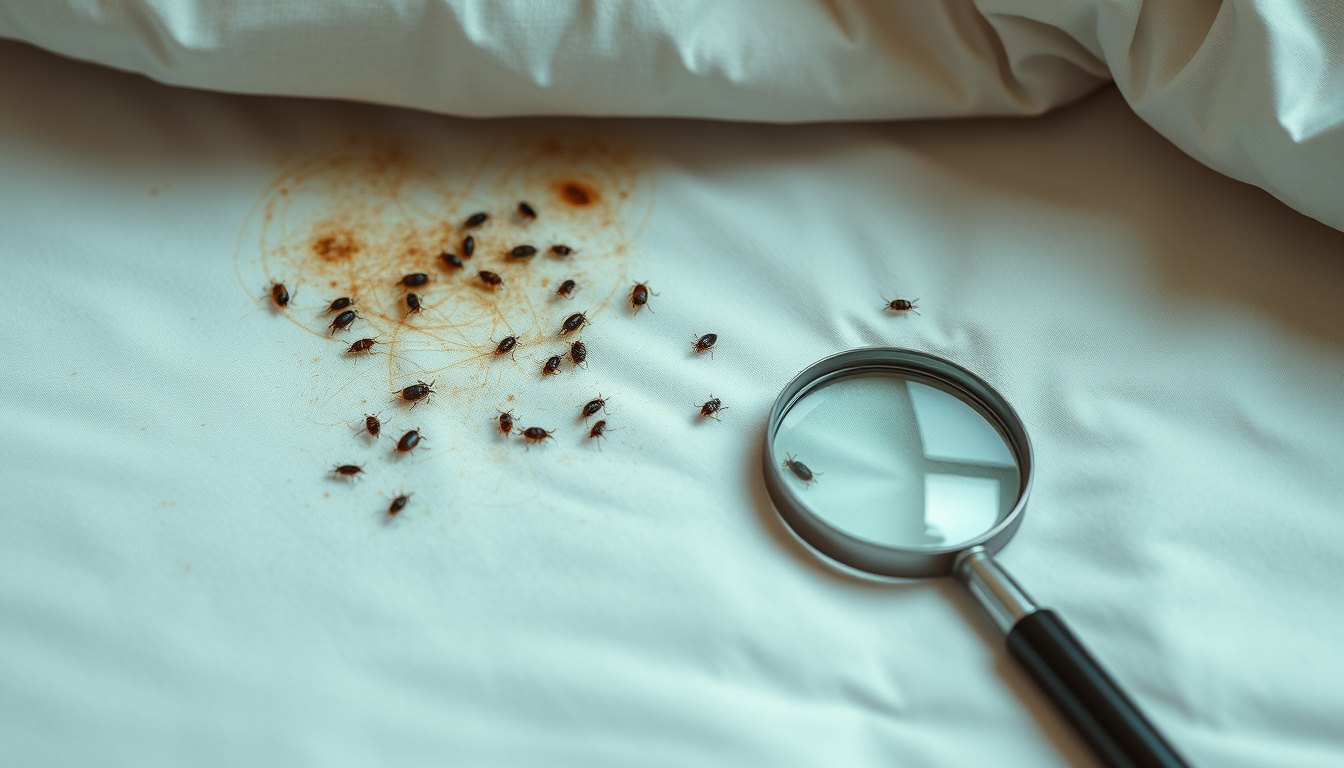
- Rusty or dark spots on sheets are bed bug excrement (U.S. EPA (federal environmental agency)).
- Pinpoint blood stains from crushed bugs (Mayo Clinic (medical institution)).
- Pale yellow eggshells or shed skins in mattress seams (Cleveland Clinic (health information)).
Odor and other signs
- A sweet, musty odor from scent glands (Cleveland Clinic (health information)).
- Live bugs themselves in mattress seams, headboard cracks, or behind loose wallpaper (U.S. EPA (federal environmental agency)).
Bites alone are not enough to confirm an infestation — they can be mistaken for other skin conditions (Cleveland Clinic (health information)). Always look for physical evidence like bugs, skins, or spots.
The pattern: Bites are a signal, but physical evidence is the only hard proof. If you see rust spots, you’re past the early stage.
What kills bed bugs permanently?
Heat treatment explained
- Heat treatment at a minimum of 118°F (48°C) for 90 minutes kills all life stages (U.S. EPA PDF (federal environmental agency)).
- Professional heat treatment can reach the necessary temperatures inside walls and furniture.
Chemical insecticides
- EPA-registered insecticides (pyrethroids, neonicotinoids) can be effective, but resistance is common (U.S. EPA PDF (federal environmental agency)).
- No single chemical method guarantees 100% removal.
Integrated Pest Management (IPM)
- A combination of heat, chemical, and physical removal is required for permanent control (U.S. EPA PDF (federal environmental agency)).
- Professional fumigation and steam treatment are the most reliable permanent solutions.
A single method rarely works because bed bugs hide deep and resist many chemicals. The combination approach — heat then chemical then physical barriers — is the only way to break the cycle.
The trade-off: Heat is thorough but expensive; chemicals are cheaper but may fail against resistant bugs. IPM balances both.
What is the main cause of bed bugs?
Travel and secondhand furniture
- Primary cause is human travel — infested luggage, clothing, and used furniture (NHS (UK national health service)).
- They spread through shared walls in apartments, hotels, and dorms.
Misconceptions about cleanliness
- Bed bugs are not caused by poor hygiene; they are found in both clean and dirty places (NHS (UK national health service)).
- Five-star hotels and clean homes get infestations just as easily.
How they spread between units
- Bed bugs can crawl through wall voids, electrical outlets, and pipe chases (U.S. EPA (federal environmental agency)).
- Reducing clutter helps inspection but does not prevent initial introduction.
The implication: Stop blaming hygiene. Focus on inspecting what enters your home — luggage, furniture, visitors’ bags.
What do you do if you find a bed bug?
Immediate containment steps
- Do not panic or sleep in another room — that spreads the infestation (Mayo Clinic (medical institution)).
- Capture the bug for identification — tape it on a white piece of paper.
- Isolate the bed with interceptors (traps under bed legs) and encase the mattress (Cleveland Clinic (health information)).
When to call a professional
- Call a licensed pest control operator if you see more than a few bugs, eggs, or if the infestation is in a multi-unit building.
- Professional fumigation and steam treatment are the most reliable permanent solutions.
DIY first-response kit
- Start treatment immediately: vacuum, steam, or apply EPA-registered spray (Mayo Clinic (medical institution)).
- Wash infested items in water at least 120°F (48.9°C) and dry on high heat for 20 minutes (Mayo Clinic (medical institution)).
The catch: DIY can work for a small, early infestation. Once it spreads, professional help is the only way to avoid months of frustration.
Are bed bugs due to poor hygiene?
The truth about bed bugs and cleanliness
- Bed bugs are attracted to warmth and carbon dioxide, not dirt or filth (NHS (UK national health service)).
- Five-star hotels and clean homes get infestations.
Why the stigma is harmful
- The hygiene myth delays treatment — people feel ashamed and avoid reporting (U.S. EPA (federal environmental agency)).
- Early reporting is critical for containment.
Prevention regardless of cleanliness
- Reducing clutter helps inspection but does not prevent initial introduction.
- Regular inspection of luggage after travel and secondhand furniture is the real prevention.
The pattern: Bed bugs are equal-opportunity pests. The only effective prevention is vigilance, not bleach.
Two treatment paths, one key difference: cost versus certainty. Here’s how they stack up.
| Factor | DIY treatment | Professional treatment |
|---|---|---|
| Cost | $50–200 (supplies) | $300–1,500 (per room) |
| Effectiveness | Moderate — 60–80% if caught early | High — 95%+ with heat + chemical |
| Time to results | 2–4 weeks (multiple applications) | 1–2 days (one heat treatment) |
| Risk of resistance | High (over-the-counter sprays) | Low (professional-grade rotation) |
| Safety | Low — misuse of pesticides | High — licensed applicators |
The trade-off: DIY saves money upfront but risks failure and spread. Professional treatment costs more but offers a permanent solution faster.
Upsides
- Heat treatment kills all life stages in one go
- EPA-registered insecticides are widely available
- Encasements and interceptors are low-cost prevention
- IPM approach reduces chemical use over time
Downsides
- Heat treatment requires professional equipment
- Chemical resistance is increasing
- DIY methods often fail without proper inspection
- Heat can damage electronics or furniture
How do I confirm if I have bed bugs?
Inspection checklist
- Look in mattress seams, box spring crevices, headboard cracks, and behind loose wallpaper (U.S. EPA (federal environmental agency)).
- Check furniture joints, nightstands, and baseboards.
Where to look in your bedroom
- Focus on the bed area first: seams, tags, folds, and under the mattress.
- Then expand to nearby furniture within 10 feet.
Using a flashlight and credit card
- A flashlight illuminates dark crevices; a credit card helps scrape bugs out of seams.
- Look for live bugs, shed skins, and eggs — definitive proof (CDC transcript (public health authority)).
The pattern: The first 15 minutes of inspection should focus on the bed. If you find nothing, check the frame and headboard.
“Heat treatment must be done carefully because bed bugs can be eliminated by properly applied high temperatures, but severe infestations may require additional methods.”
— U.S. EPA (federal environmental agency) guidelines
“Bed bugs are not caused by poor hygiene; they are found in both clean and dirty places.”
— NHS (UK national health service) statement
For anyone dealing with an active bed bug infestation, the choice is clear: start with a thorough inspection and immediate containment, then move to a combination of heat treatment and chemical control. For a single room, professional heat treatment offers the fastest permanent solution. For a multi-unit building, an integrated pest management plan with landlord cooperation is the only way to prevent reinfestation. The hygiene myth is a distraction — focus on travel history and secondhand furniture.
webmd.com, aad.org, medway.gov.uk, thedoctorsofficeurgentcare.com
Frequently asked questions
Can bed bugs fly?
No, bed bugs do not have wings. They crawl, but they can move quickly across floors and walls.
Do bed bugs spread disease?
According to the CDC (public health authority), bed bugs are not known to transmit diseases, but their bites can cause secondary infections from scratching.
How long does it take to get rid of bed bugs?
With professional heat treatment, 1–2 days. With DIY methods, 2–4 weeks of repeated applications.
Can you see bed bugs with the naked eye?
Yes, adult bed bugs are about the size of an apple seed (5–7 mm) and are visible. Nymphs and eggs are smaller but still visible with good light.
Should I throw away my mattress if I have bed bugs?
No, the U.S. EPA (federal environmental agency) advises against throwing away a mattress; it can spread the infestation. Instead, encase it and treat it.
Do bed bugs only live in beds?
No, they hide in headboards, nightstands, furniture, baseboards, and even behind loose wallpaper.
Can bed bugs bite through clothes?
Bed bugs prefer exposed skin. They can bite through thin fabrics but usually target uncovered areas.
Related reading: Washing Hands: 7 Steps, Benefits, & Best Hand Wash for Dermatitis · Mini Dachshund Guide: Temperament, Diet & Health
Related stories





Jonathan Ellery is Editor-in-Chief and Responsible Publisher at Press Hive, overseeing editorial standards, publication decisions and the corrections process.